Every gamer who was alive in the eighties remembers the hot winning streak that Nintendo was on during that period. Especially in the late half of the decade when they truly established themselves as the kings of 8-bit gaming after the release of the Famicom in Japan and the Nintendo Entertainment System (NES) in America, followed by games that practically built their own genres like Super Mario Bros. (1985) and The Legend of Zelda (1986). So when your company is known for perfecting the side-scrolling platformer and the top-down open world adventure, where do you go from there? For Nintendo the answer to that question was a combination of the two: a side-scrolling open world adventure. The resulting game, an ambitious sci-fi action platformer called Metroid, ended up becoming one of the biggest watershed moments in the history of gaming.
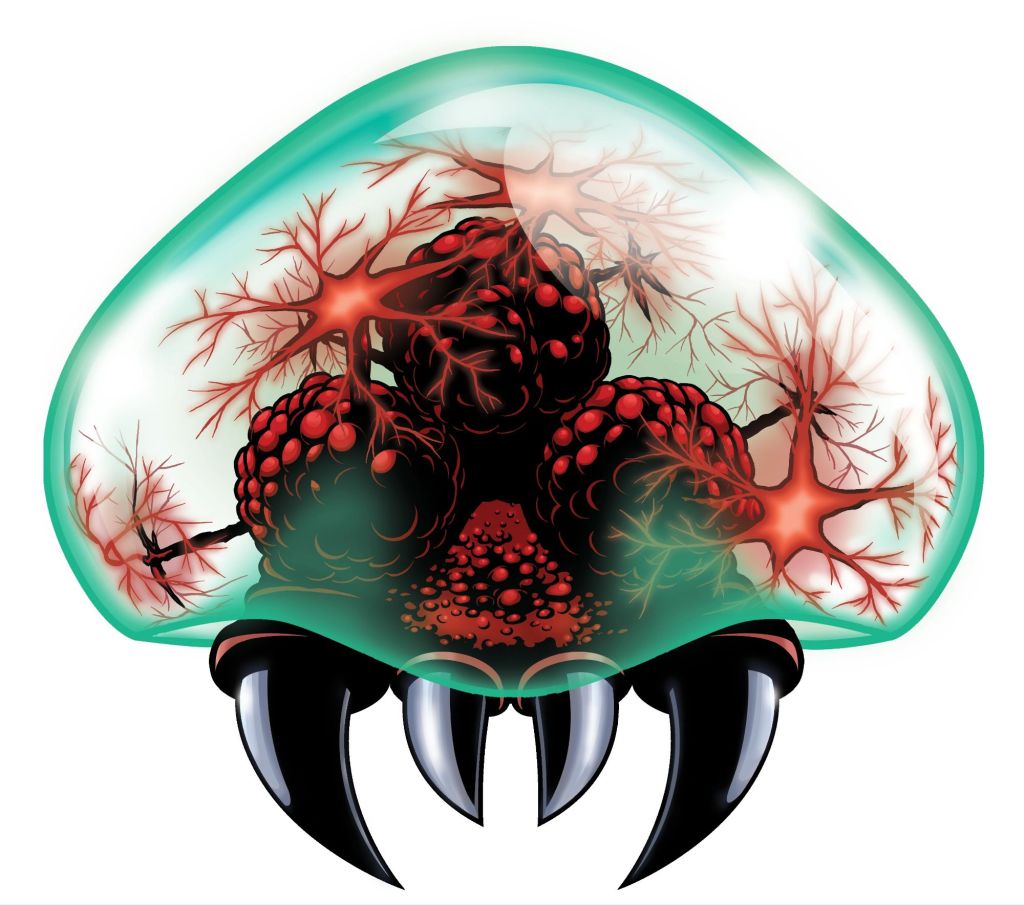
The game was set in the year 20X5 and the plot gets kicked off when a group of Space Pirates attack a space research vessel that contains samples of lifeforms called Metroids. Metroids are dangerous parasitic creatures that can latch themselves onto living organisms and drain the life out of them. Scientists at the Galactic Federation first discovered the Metroids on Planet SR388 and captured them for research purposes, but the Space Pirates plan to steal the Metroids from the Galactic Federation and utilize them in biological warfare, destroying all living beings who oppose their reign. The Galactic Federation finds out that the Space Pirates’ headquarters are located on Planet Zebes and they infiltrate Zebes to detain them, but the Pirates overpower the Federation and force them to retreat. It is at that point that the Federation has no choice but to call on their last resort: a bounty hunter named Samus Aran.
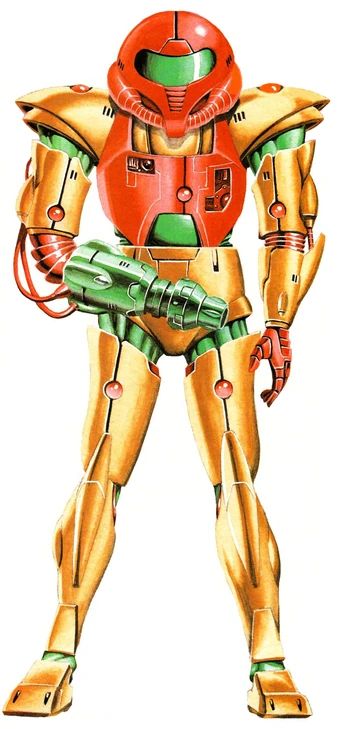
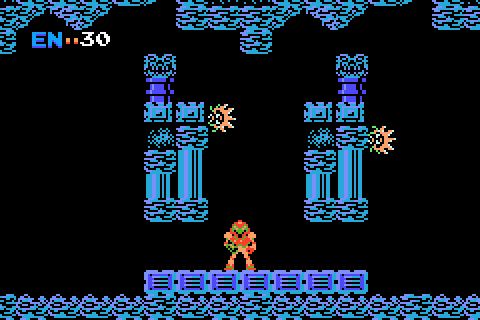
The game immediately begins with Samus’s arrival on Zebes and the gameplay consists mainly of you navigating the planet’s maze-like caverns which are connected by tunnels, doors and elevators and infested by countless predatory lifeforms. Initially Samus wears a Power Suit with an arm cannon that can shoot a Power Beam, but as she explores the planet she collects power-ups as well as various armor and weapon upgrades, such as the Morph Ball which allows you to morph into a ball and roll through narrow pathways, as well as the Bomb, the High Jump Boots, the Ice Beam, and the Screw Attack which electrifies your armor as you jump and damages enemies. Oftentimes finding these upgrades allows you to access areas you previously could not before, so the more upgrades you find, the wider the exploration possibilities.
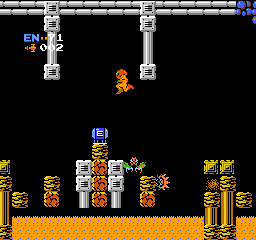
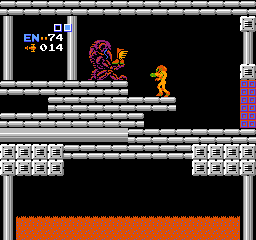
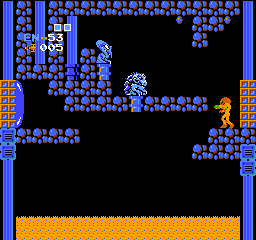
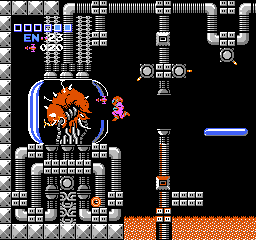
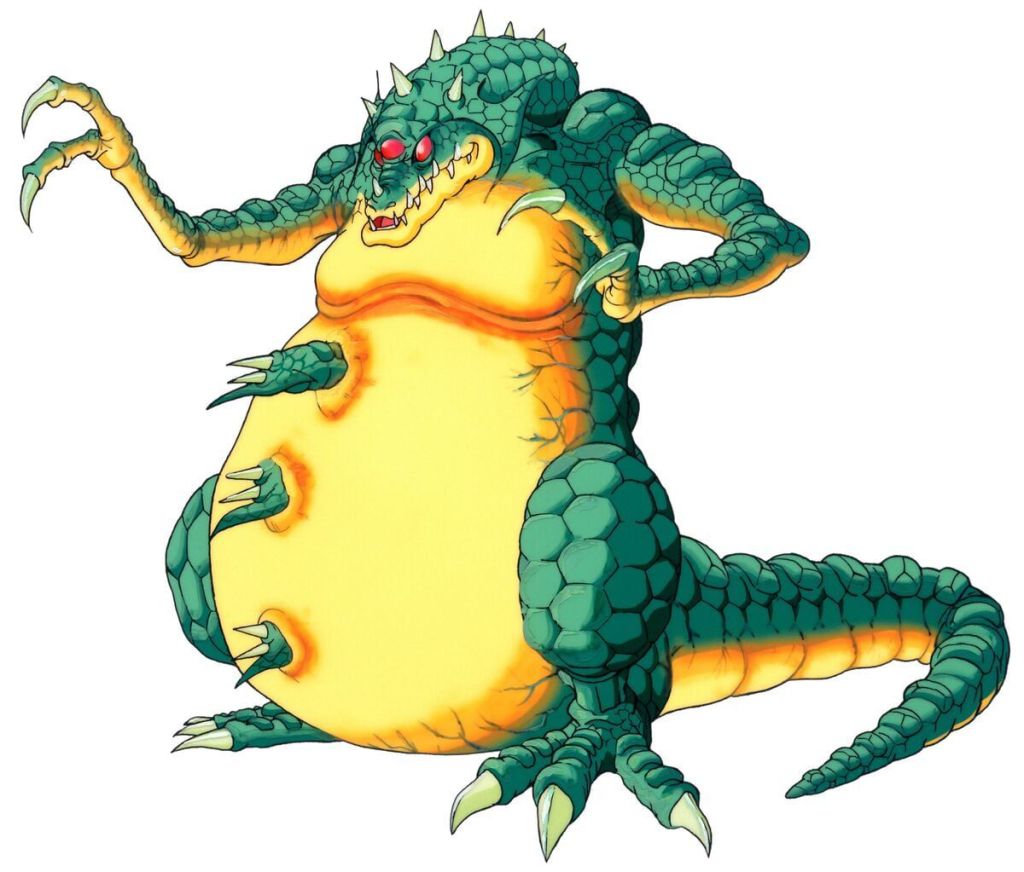
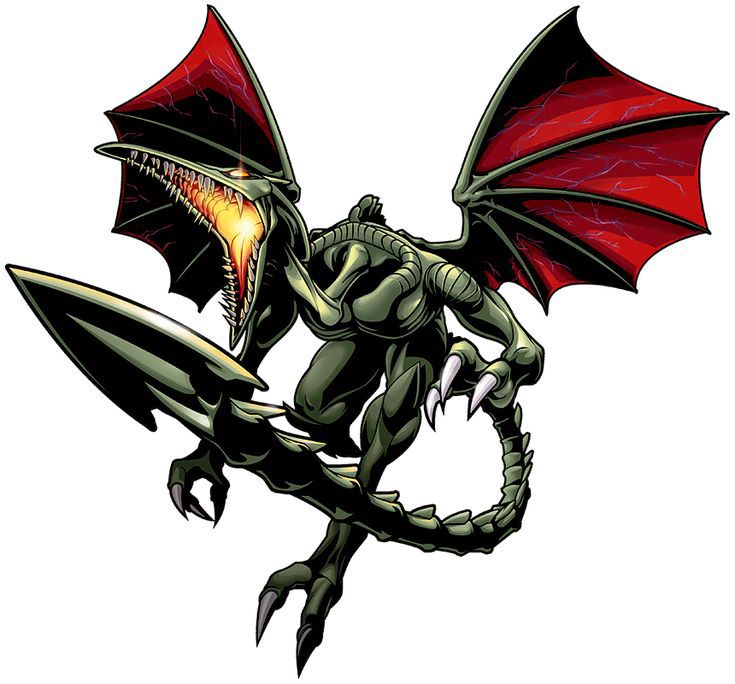
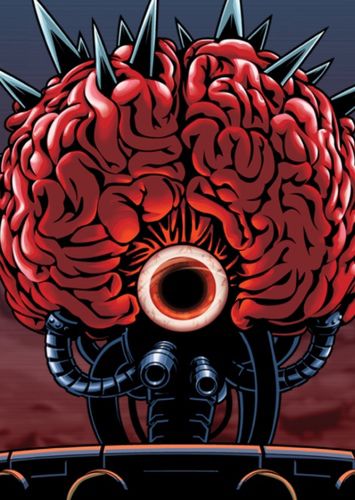
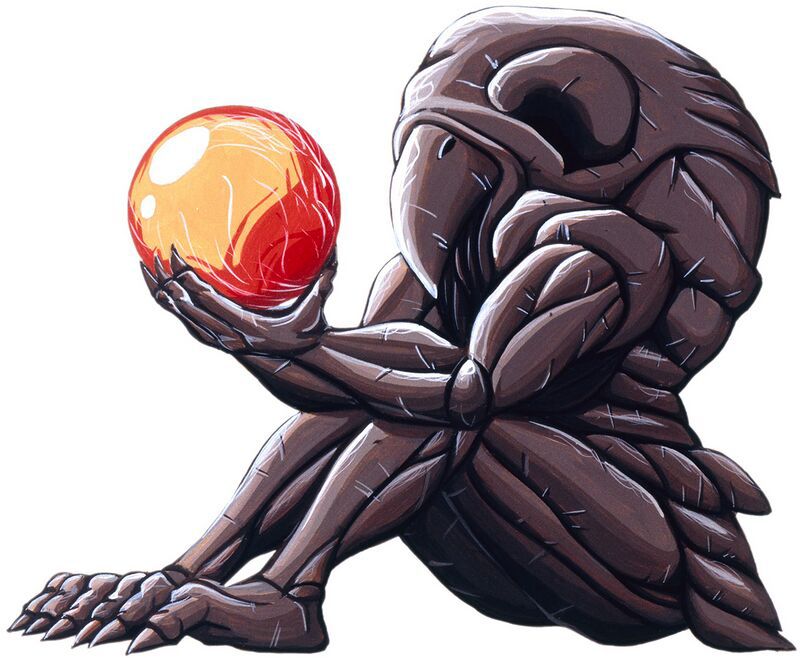
While Zebes is crawling with dangerous creatures, the three main enemies you will face in this game are Kraid, a large reptilian Space Pirate who resides in the depths of the jungles of Brinstar, the flying dragon-like Ridley, a high-ranking and respected Space Pirate who resides in the volcanic underground caverns of Norfair, and Mother Brain, a cold, calculating and vicious lifeform who leads the Space Pirates and resides in their command center Tourian. Mother Brain is an artificially intelligent being that was originally created by a highly advanced society of bird-like humanoid creatures called the Chozo (the same race of creatures who raised Samus as an orphan and built her Power Suit) for self-defense purposes, but Mother Brain became too independent-minded, turning on the Chozo and choosing to help the Space Pirates instead, setting in motion her plan to weaponize the Metroids (which the Chozo ironically also had a hand in creating) for galactic dominance. As for the whereabouts of the Chozo, they have largely gone extinct (possibly because the Metroids killed them but the official reason remains a mystery), although statues of the Chozo can still be found throughout the game holding power-ups in their claws for Samus to obtain.
Metroid was produced by Gunpei Yokoi, a long-time Nintendo designer whose contributions go all the way back to 1966 with Nintendo’s toy Ultra Hand before he became more well-known for producing Nintendo’s Game & Watch series of handheld LCD games in the 1980s and helping put Shigeru Miyamoto on the map by producing the arcade game Donkey Kong in 1981. Meanwhile lead Game & Watch designer Makoto Kano wrote the concept for the game’s story and game engineer Satoru Okada directed the game. A lot of Metroid‘s design influence came from Ridley Scott’s 1979 sci-fi horror film Alien, in particular the work of Xenomorph designer H.R. Giger, while Hiroji Kiyotake, a graphic designer for the NES games Duck Hunt and Wrecking Crew, was the one responsible for designing the armored appearance of Samus Aran.
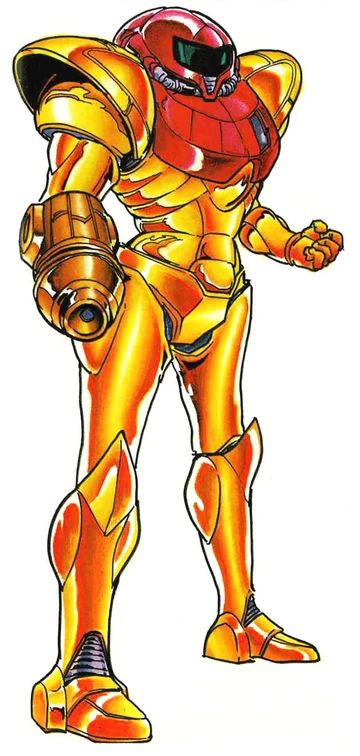
Exploration and hunting were a big part of the experience of playing Metroid, and that was also a big part of its appeal to gamers at the time. The concept of retracing your steps in a vast maze-like environment while finding power-ups and gear that you can’t progress without, which is a concept popularized by both this game and The Legend of Zelda (which came out the same year), were especially groundbreaking ideas when temporary power-ups like Pac-Man’s Power Pellet and Mario’s Starman were still fresh on the minds of gamers back then.
Another part of the game’s appeal was the work done by sound effects programmer turned musician Hirokazu Tanaka, who added a lot to the atmosphere with his moody compositions. Tanaka deliberately kept the game’s soundtrack minimalistic to keep with the “solitary explorer in an alien world” vibe the game was going for. In contrast with the soundtracks for games with lighter moods like Super Mario Bros. and The Legend of Zelda, the background music for Metroid consisted more of mood pieces than hummable tunes.
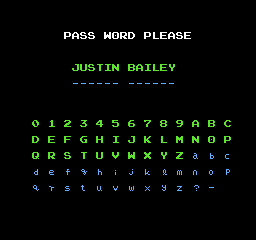
I discussed in previous articles how the ability to save your progress on the Famicom Disk System was an innovative and revelatory feature, and Metroid‘s big environment was definitely the reason why Nintendo chose to release it for that console, but because a disk-based version of the NES never came out in America, a save feature would have to be built into the NES game cartridge if Nintendo wanted to port the game to America. The only problem was that none could be implemented by the time Nintendo of America wanted it on the U.S. market, which meant that the programmers had to get creative. This led to the creation of the American version’s password system, which allowed you to continue where you left off when you last turned the game off, itself an innovative concept at the time.
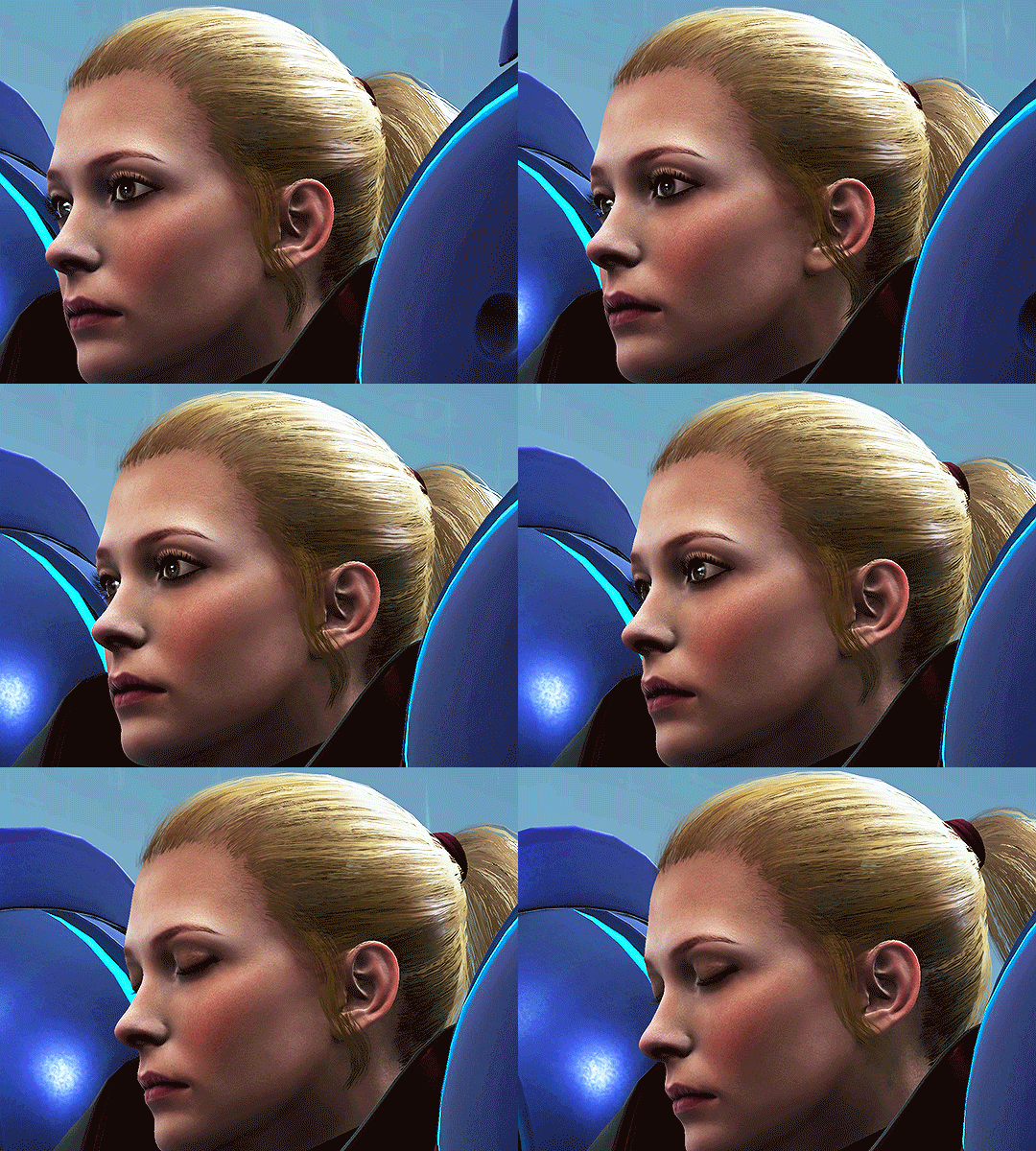
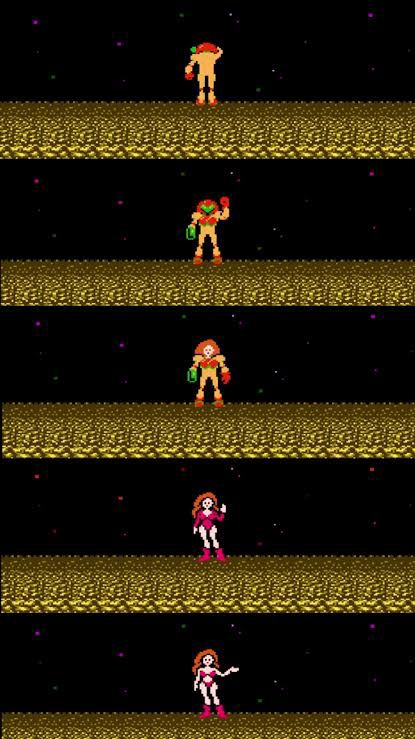
In typical Nintendo fashion, in order to keep the gameplay experience interesting, there were five different endings you could see depending on how fast you complete the game (as with the password system, Metroid is one of the earliest video games to utilize the concept of multiple endings too), and depending on which of the five endings you get, Samus may take off her helmet and reveal her face for the first time, surprising many gamers who assumed the armored bounty hunter was a man (apparently including the writer of the game’s instruction manual which refers to Samus with male pronouns). The decision to make the hero in the space armor a woman was a last-minute decision by the game’s developers, who added it in when one of them suggested the idea as an interesting surprise for those who finish the game (and possibly more inspiration from the movie Alien).
Metroid was released in 1986 and became a commercial hit that blew the minds of gamers everywhere for its fresh, clever and well-executed gameplay that took the best elements of platforming and open-world exploration and combined them into a challenging and rewarding action-adventure game that felt like nothing that came before. Hirokazu Tanaka’s soundtrack was also praised for making the whole thing feel cinematic while perfectly capturing the eerie isolation of the experience. The exploration-focused core of the gameplay even influenced other games at the time like Konami’s Castlevania, which together with Metroid led to a type of action-adventure subgenre that gamers dubbed the Metroidvania genre. A perfect name because when you hear it, you immediately know what type of game it is.
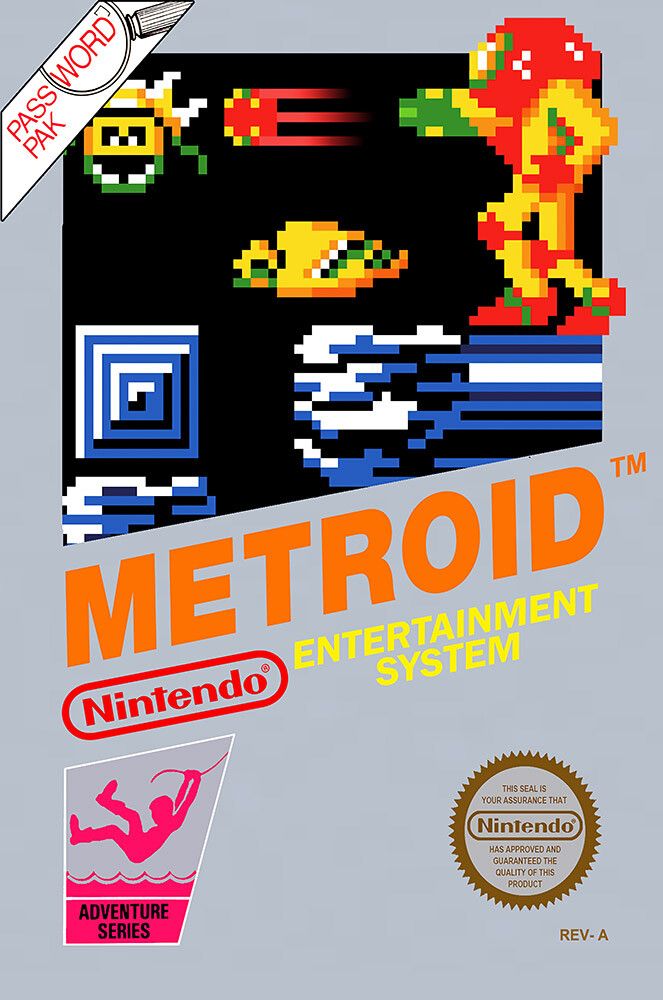
As one of Nintendo’s most highly regarded classics, Metroid has been re-released multiple times, including on the Game Boy Advance, the Wii Virtual Console, the NES Classic Edition and Nintendo Switch Online, although whether or not it holds up when you play it today is a subject of debate, as it definitely can feel like a punishing, technically unrefined and lackluster experience from a modern perspective (which can admittedly be said about a lot of 8-bit games from that period), but you kind of had to be there in the eighties to appreciate it because compared to the video games that came before, it was practically earth-shattering in its innovation, and to this day it is often ranked among the best games on the NES and among the best video games of all time in general.
The game was popular enough that Nintendo continued the franchise with a steady series of sequels, many of which are also beloved by gamers and have become classics in their own right. I won’t be doing any deep dives into any of those games but among the highlights through the years are the well-received handheld side-scroller Metroid II: Return of Samus (1991) for the Game Boy, the critically acclaimed 16-bit masterpiece Super Metroid (1994) for the Super NES, Metroid Fusion (2002) for the Game Boy Advance, Retro Studios’ first-person shooter Metroid Prime (2002) for the GameCube which brought the series into the third dimension for the first time and was so popular that it spawned its own subseries of Metroid games, the brilliant Metroid: Zero Mission (2004) which was a Game Boy Advance remake of the original NES game, Metroid: Other M (2010) which was a third-person 3D action-adventure game co-developed by Team Ninja with more cinematics and voice acting than usual for a Metroid game, and the widely acclaimed Nintendo Switch side-scroller Metroid Dread (2021) co-developed by MercurySteam. Samus also appeared in and made cameos in other games, such as Super Mario RPG, Kirby’s Dream Land 3, Team Ninja’s Dead or Alive: Dimensions and the Super Smash Bros. series, so she’s definitely been around the galaxy with more exciting destinations for her and the Metroid series to come in the future, I’m sure.