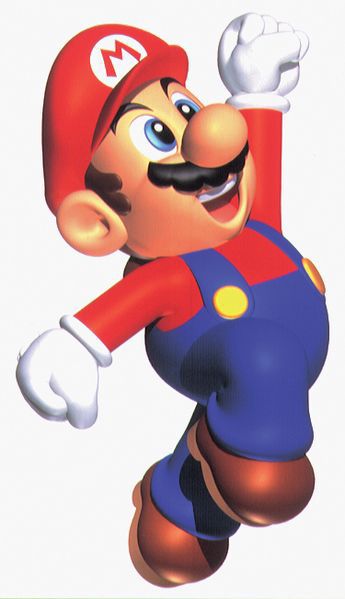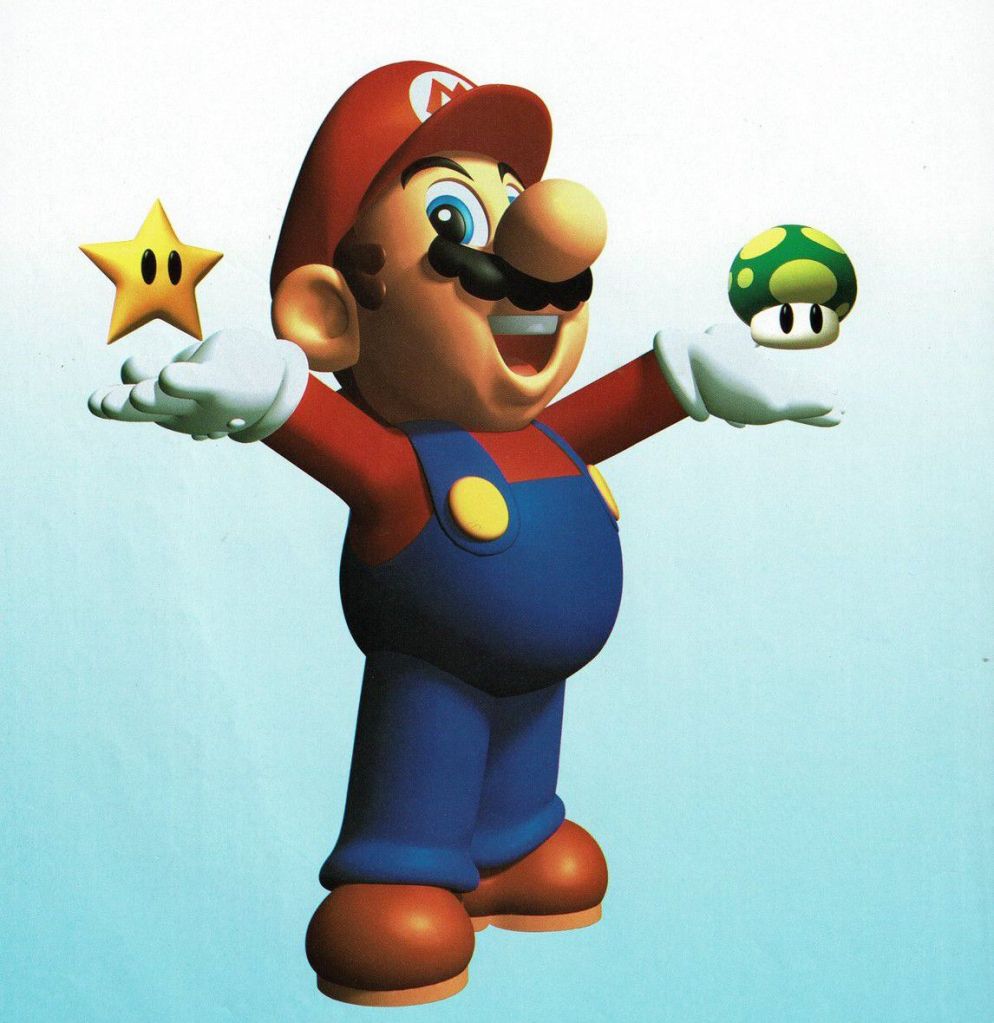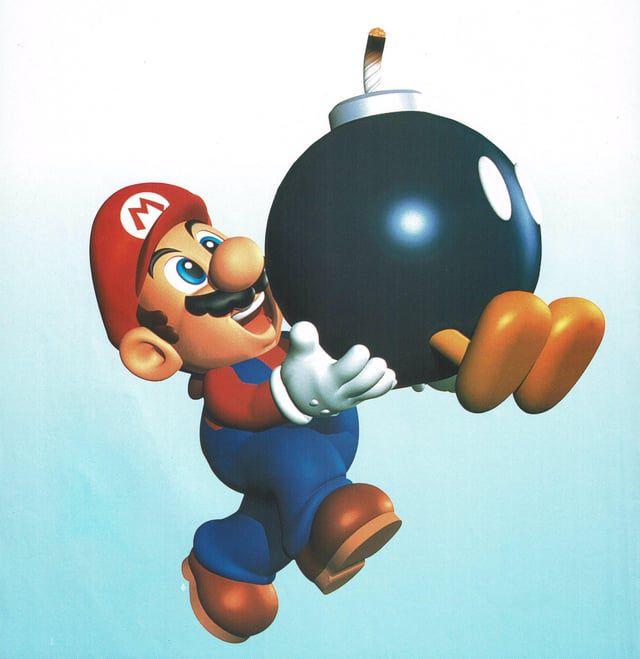
I’ve written about Nintendo’s platforming adventure game Super Mario 64 many times in the past when I have written about the history of Mario, the history of the Nintendo 64 and my favorite Nintendo games of all time, but I have never actually dedicated an entire article solely to the game and that needs to change because the game was a huge cornerstone for Mario, Nintendo and the video game industry as a whole. Up to the point when it was introduced, Mario platformers had been side-scrollers, but with the onset of the N64 came Nintendo and Shigeru Miyamoto’s biggest challenge: making a 3D game that still felt like a Mario game.
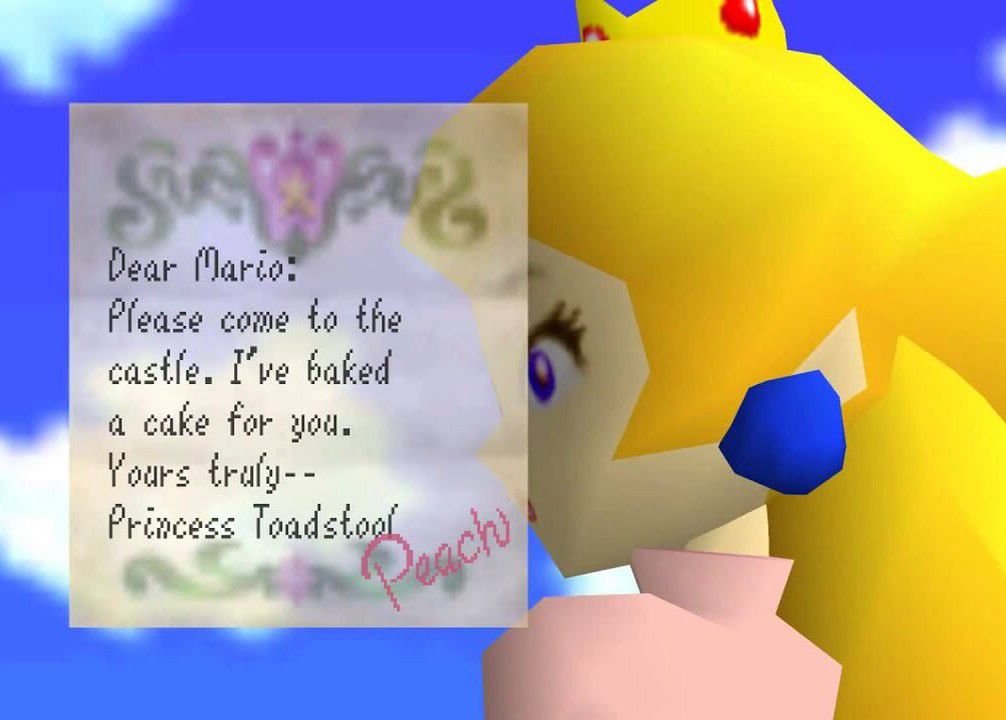
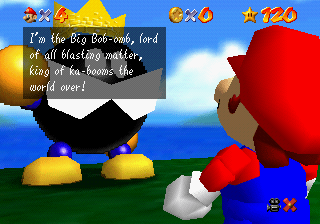
The game’s plot starts out innocently enough with Princess Peach inviting Mario to her castle to catch up over some cake, but by the time he warp pipes his way over, Bowser has taken over the castle, has stolen the Power Stars and has used them to trap Peach inside the castle walls. Many of Bowser’s minions are guarding the Power Stars inside the paintings on the castle walls and the goal of the game is for Mario to jump inside various paintings and warp to various worlds, hunting down the Power Stars (there are 120 total) until he has enough power to break the magic seals on all the castle doors as he gradually makes his way to the top floor, where Bowser resides.
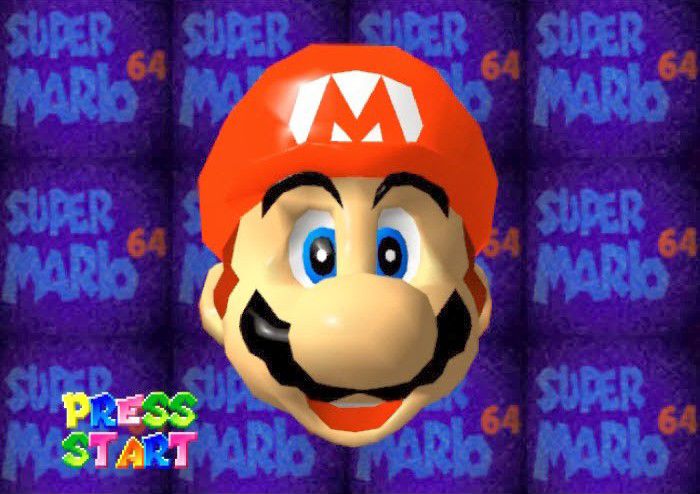
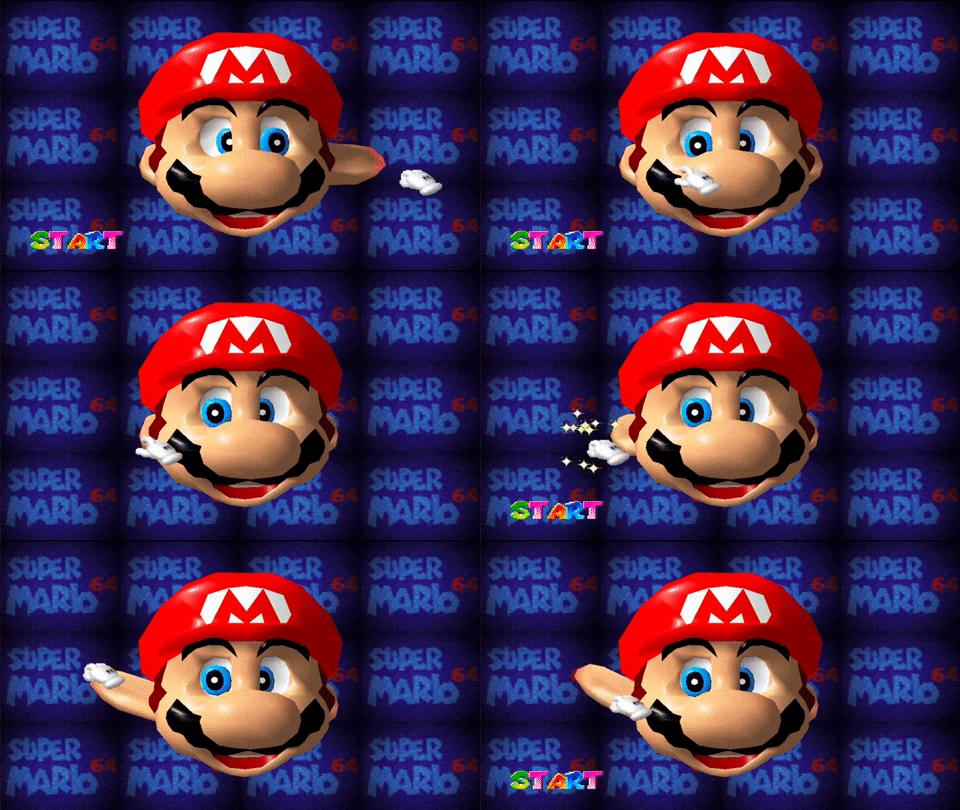
Shigeru Miyamoto produced and directed this game and developed it alongside his team at Nintendo EAD, the same group responsible for all of the most popular Mario games from Super Mario Bros. to Super Mario World. The concept for a 3D third-person Mario game was conceived by Miyamoto while he was collaborating with Argonaut Software on the 3D Super NES shooter game Star Fox. Miyamoto considered using the same Super FX chip-powered graphic system to develop a Super NES game called Super Mario FX, but he came to the conclusion that the Nintendo 64 would be a more capable console for realizing his vision for the game, specifically because the N64 has a wider variety of button commands. Giles Goddard, the Argonaut employee who co-developed both Star Fox and Stunt Race FX for Nintendo, was actually brought over to work on Super Mario 64 and was the one responsible for programming the talking Mario head at the beginning of the game and the way you could interact with it. A prototype version of the interactive Mario head that was first introduced at the Consumer Electronics Show in 1993 served as the basis of this feature, and its inclusion in the final product made Super Mario 64 entertaining before you even got to the file select screen.
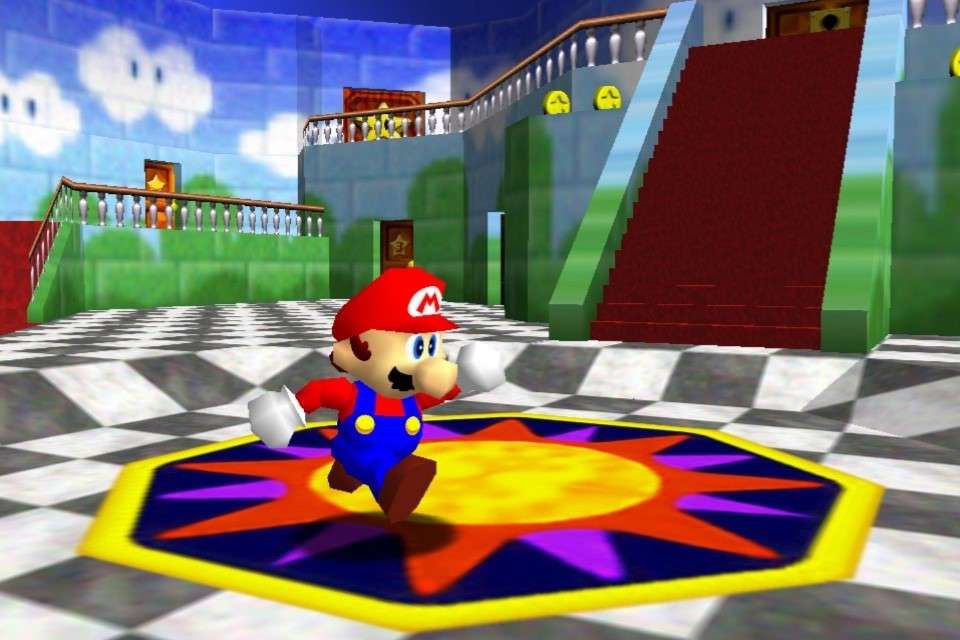
Production on the game began in 1994. The controls, the programming, the player’s interaction with the environments and the smooth animation of the graphics were all perfected before anything else, with the team’s philosophy being to make sure the game felt fun to play and intuitive to control. Mario himself also featured more expression than he did in any other game, and it was Miyamoto’s intention to make it seem like you were controlling an interactive cartoon.
Bringing Mario to life also led to Mario having a voice actor in a video game for the first time. Kind of. Charles Martinet had voiced the character earlier in the American PC games Mario Teaches Typing and Mario’s Game Gallery, but Super Mario 64 was Martinet’s debut in a mainline game that was actually developed and published by Nintendo, and he went on to voice the character in every Mario game all the way until 2023 when Kevin Afghani took over the role. The Italian accent and his iconic phrases like “Mamma Mia,” “Here We Go” and “It’s-a Me, Mario” were also introduced to the world for the first time thanks to this game. Meanwhile Leslie Swan, the localization manager at Nintendo of America who wrote the game’s English script, was the voice actor behind Peach.
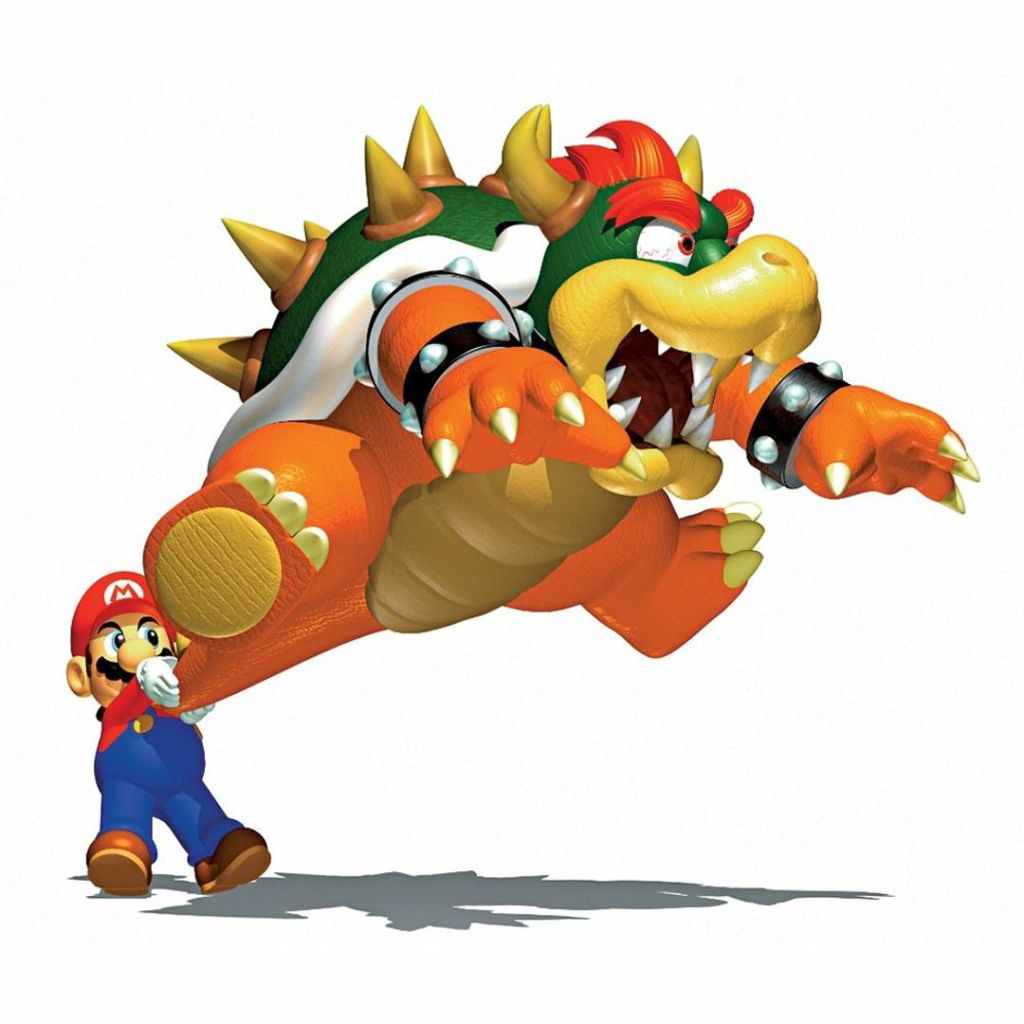
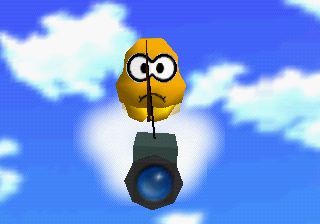
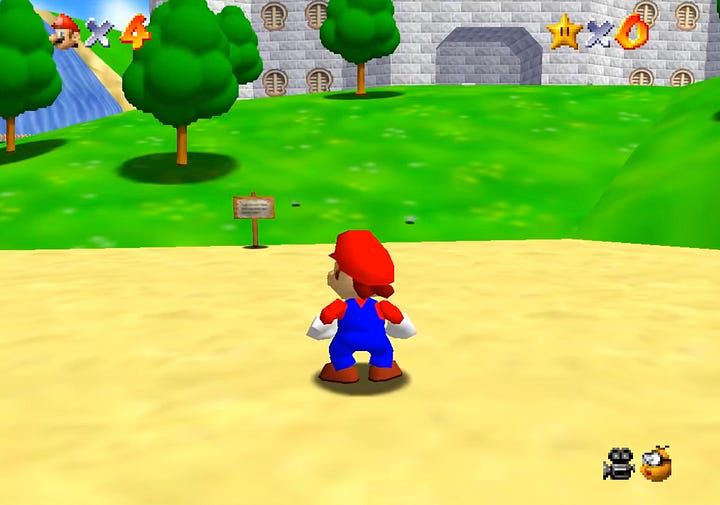
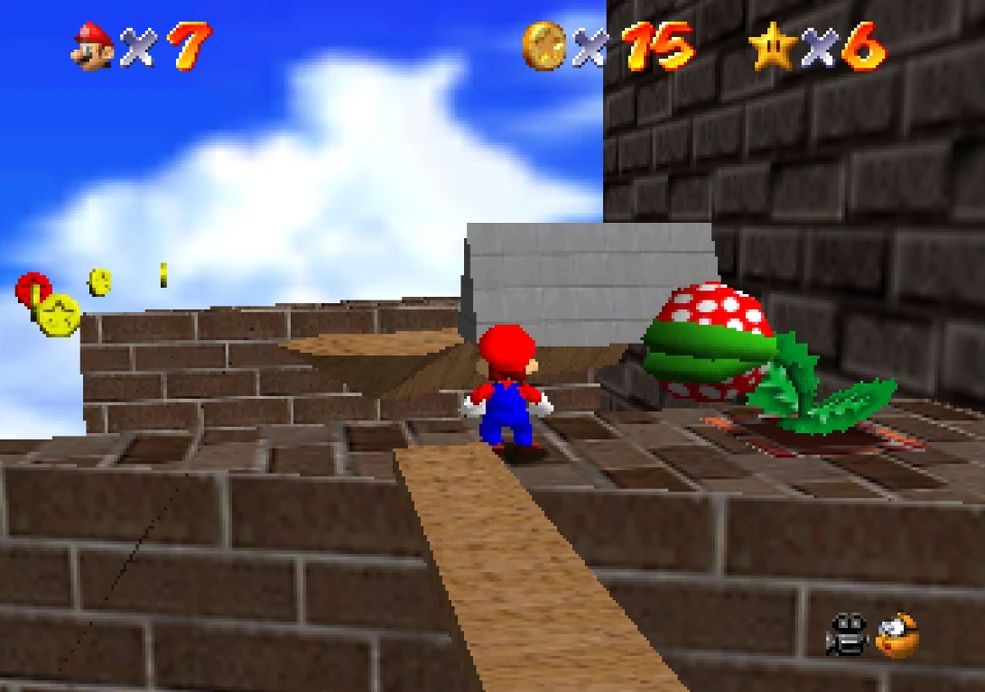
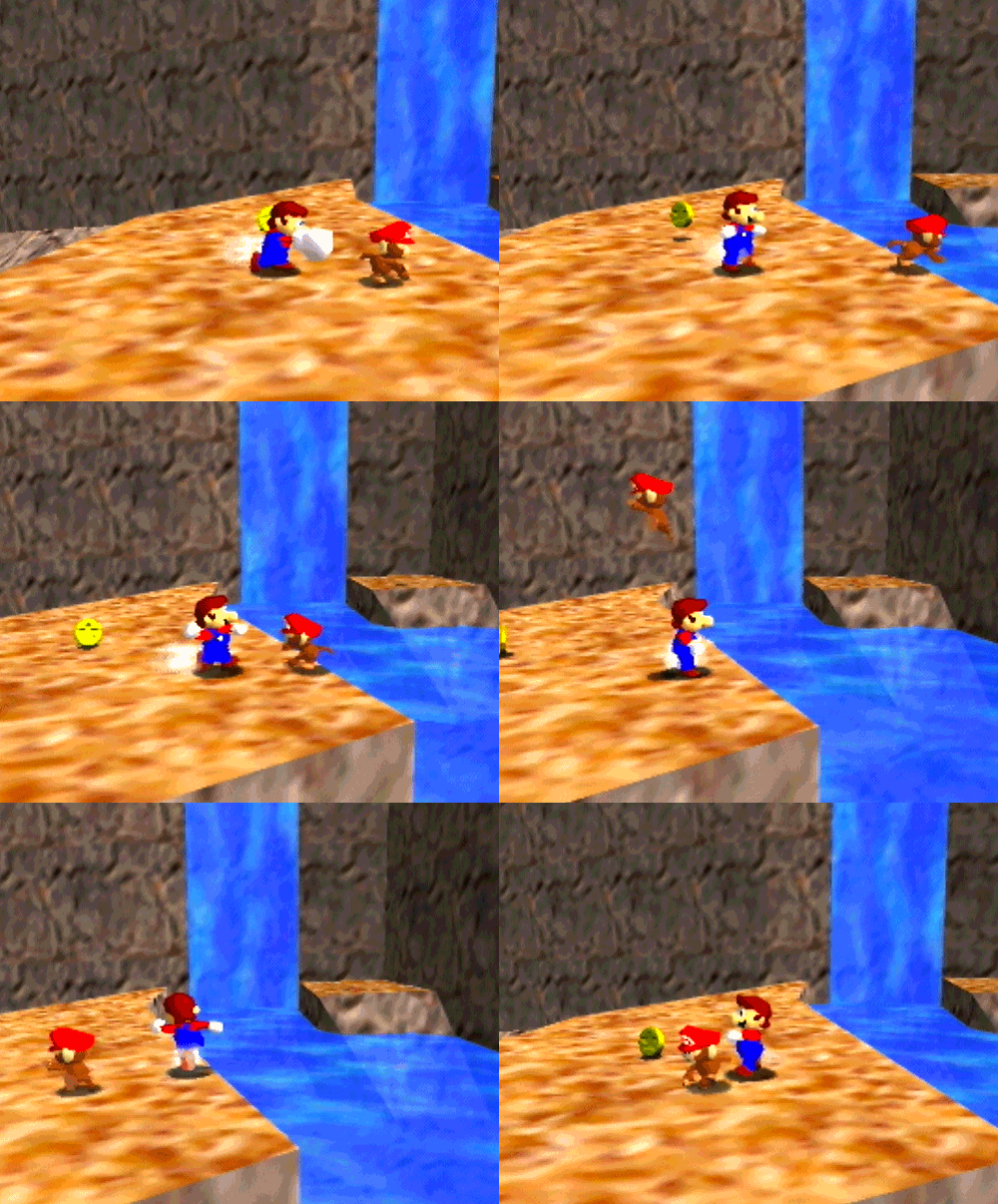
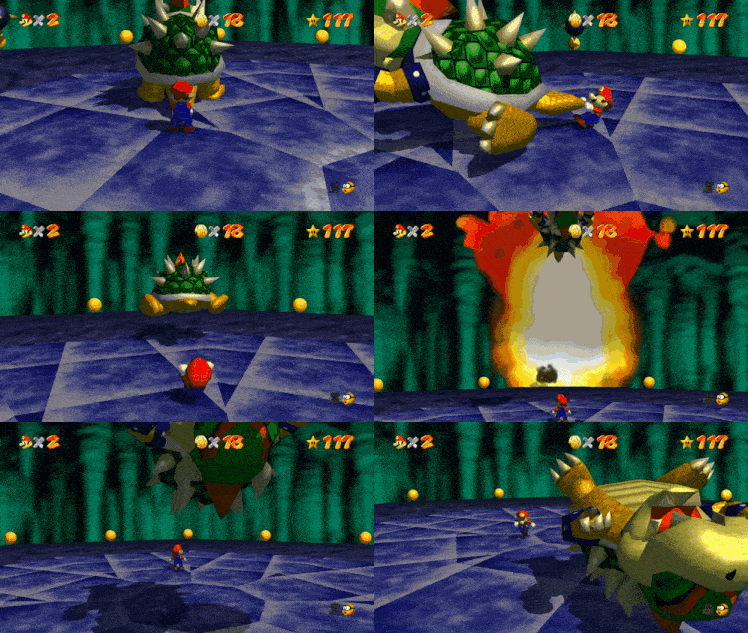
Mario also has a more diverse array of moves than in previous Mario platformers, with this game introducing the ability to crawl on the ground, crab walk against walls, hang off ledges, backflip, kick jump between two walls, hang from the ceiling and move around monkey bar-style and perform a running long jump across wide gaps. Meanwhile you can control the camera angle around Mario for the first time using the four-directional C buttons and you can toggle between third-person and first-person views. The control stick is used in creative ways too, allowing Mario to tiptoe, run and everything in between depending on how far you push the stick (tiptoeing comes in handy when walking next to sleeping Piranha Plants). The ability to rotate the control stick even comes into play, such as how you can defeat certain enemies by running around them and making them dizzy, and how you can grab Bowser by the tail and spin him around in circles.
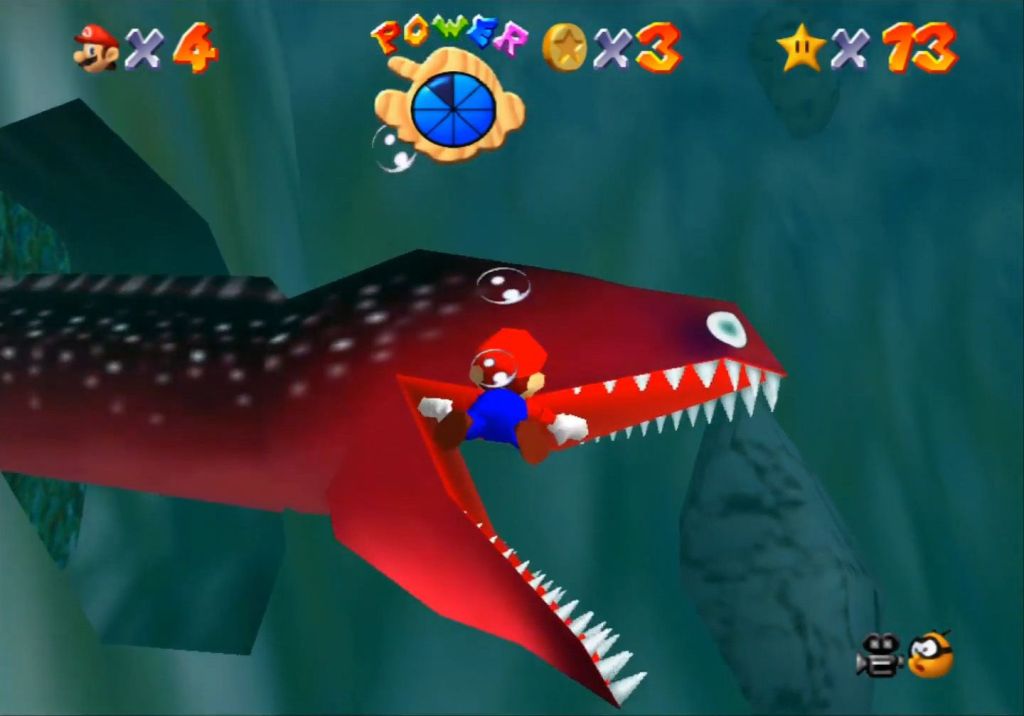
Another difference between this game and previous Mario platformers is that Mario has a health point system, which can be replenished by grabbing coins, walking through a spinning heart or jumping into a body of water. And speaking of water, diving underwater will replace your health point system with an air supply system that slowly drains the longer Mario holds his breath under the surface, adding to the challenge of water-themed levels.
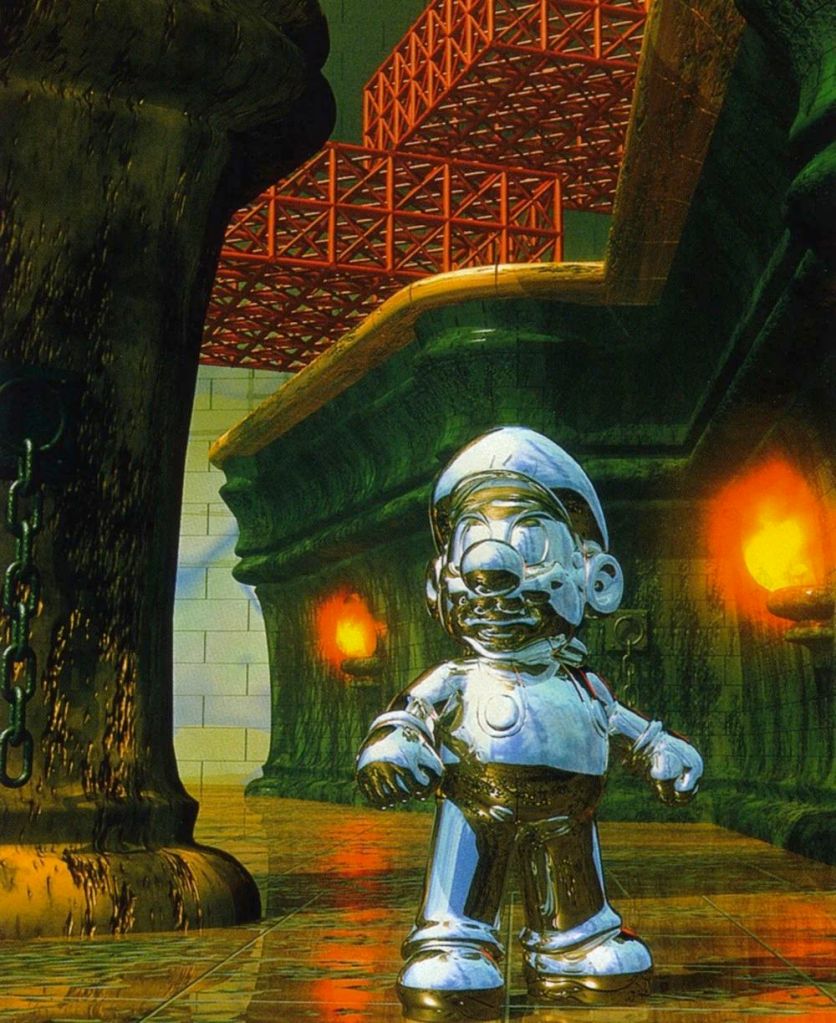
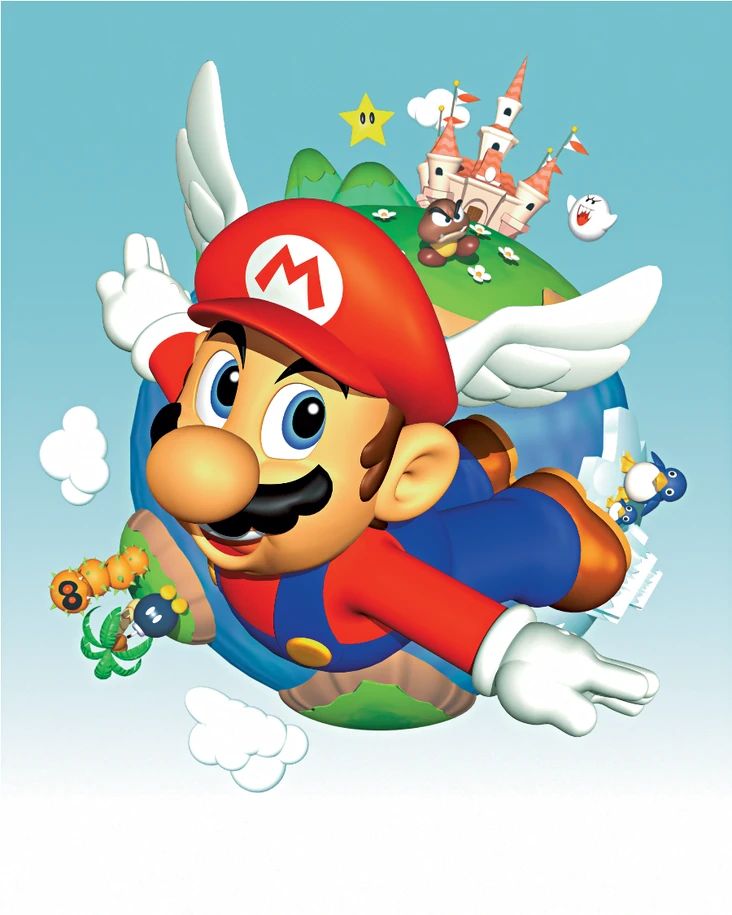
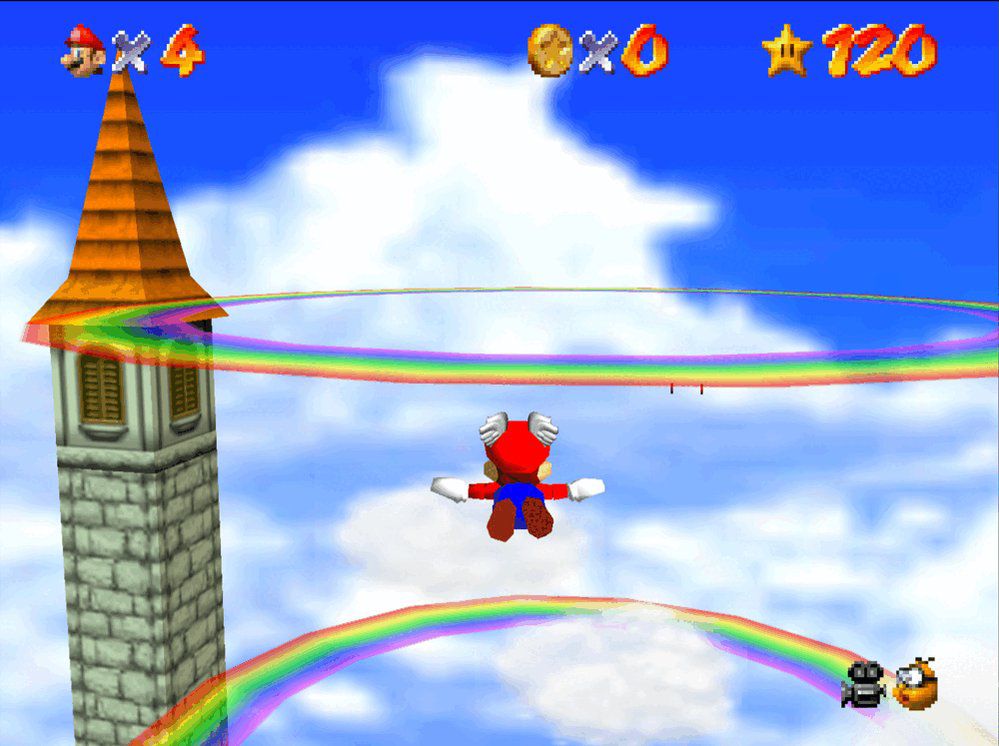
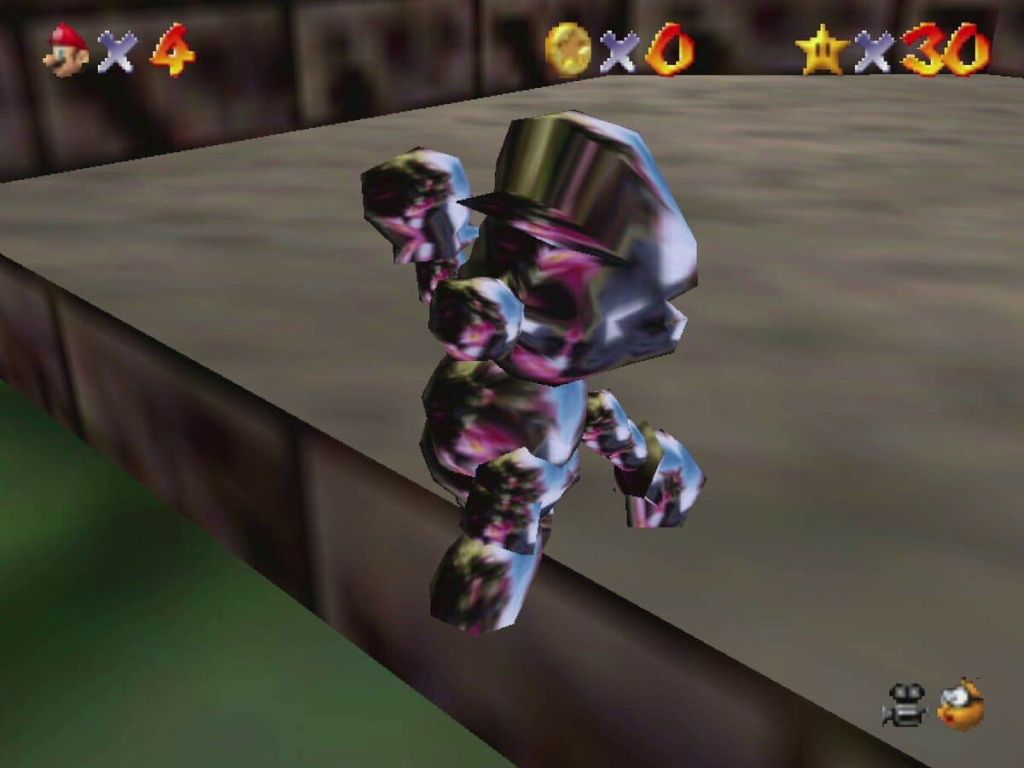
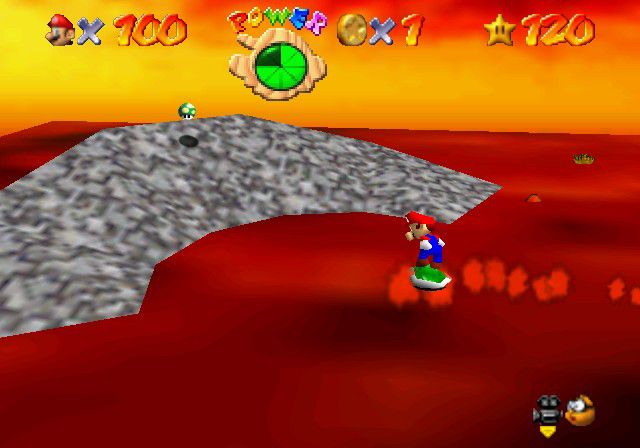
In addition to coins and mushrooms, the power-ups in this game feature a variety of caps Mario can wear, including the Wing Cap, which can be found inside red blocks and allows Mario to fly, the Metal Cap, which can be found inside green blocks and gives Mario a metallic body while allowing him to walk underwater and walk through fire and toxic gas, and the Vanish Cap, which can be found in blue blocks and turns Mario translucent while allowing him to walk through walls. Plus stomping on a Koopa Troopa and making him lose his shell will give you the opportunity to ride the shell like a skateboard, allowing you to run over enemies and surf across water, lava and quicksand.
Super Mario 64 was seen as a killer app for the Nintendo 64, and the fact that the console was coming out at the same time as the game made the game a critical demonstration for the N64’s capabilities as a system. Fortunately it lived up to the high expectations of gamers and received acclaim from critics, with praise aimed at the level designs, intuitive controls, challenging puzzles, sense of freedom and its flawless conversion of the Mario platformer from 2D to 3D – not to mention the vibrant and catchy soundtrack by Koji Kondo and the high-quality graphics, which Gamepro complimented by calling Super Mario 64 the most visually impressive game of all time, while many publications also ranked it among the best video games ever made.
As an early third-person 3D platformer, Super Mario 64 not only still holds up but it was one of the most influential games of all time, practically setting the standard for 3D action-adventure games and influencing the development of adventure games and platformers that followed like Gex: Enter the Gecko, Spyro the Dragon, Banjo-Kazooie, The Legend of Zelda: Ocarina of Time, Ape Escape, Rayman 2: The Great Escape, Rocket: Robot on Wheels, Conker’s Bad Fur Day, Jak and Daxter, Psychonauts, Assassin’s Creed and even 3D games that share very little in common with Super Mario 64‘s genre like GoldenEye 007, Tony Hawk’s Pro Skater, Kingdom Hearts, Half-Life and the Grand Theft Auto series, as well as every 3D Mario platformer that followed it from Super Mario Sunshine to Super Mario Galaxy to Super Mario Odyssey.