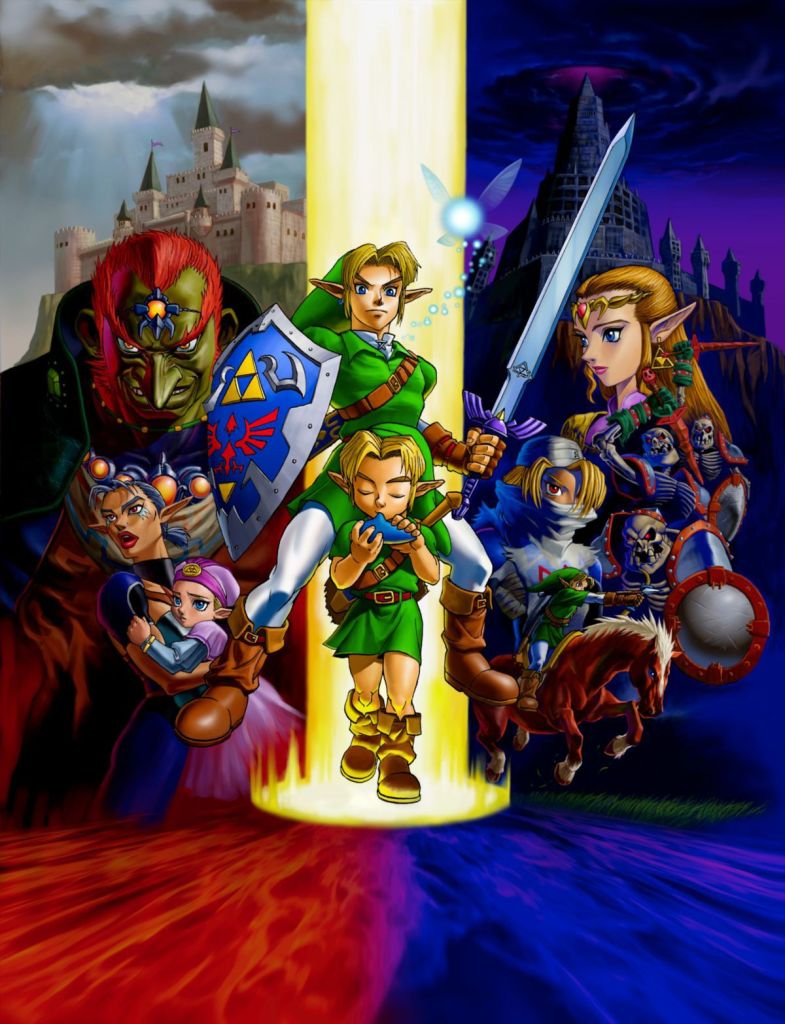
After reaching the heights of The Legend of Zelda on the NES, A Link to the Past on the Super NES and Link’s Awakening on the Game Boy, Nintendo took the Zelda series in a radically different and more cinematic direction with their first three-dimensional third-person entry, The Legend of Zelda: Ocarina of Time for the Nintendo 64. Producer Shigeru Miyamoto had managed to successfully translate Mario into three dimensions a couple of years earlier with Super Mario 64 and now he and his team were planning to do the same with Zelda. This was understandably a huge challenge for the designers and programmers and a lot of the game’s success was riding on how well the tried-and-true Zelda formula could be executed in 3D, but they not only managed to live up to the quality of previous Zelda games. They possibly even managed to surpass them and create the perfect video game in the process.
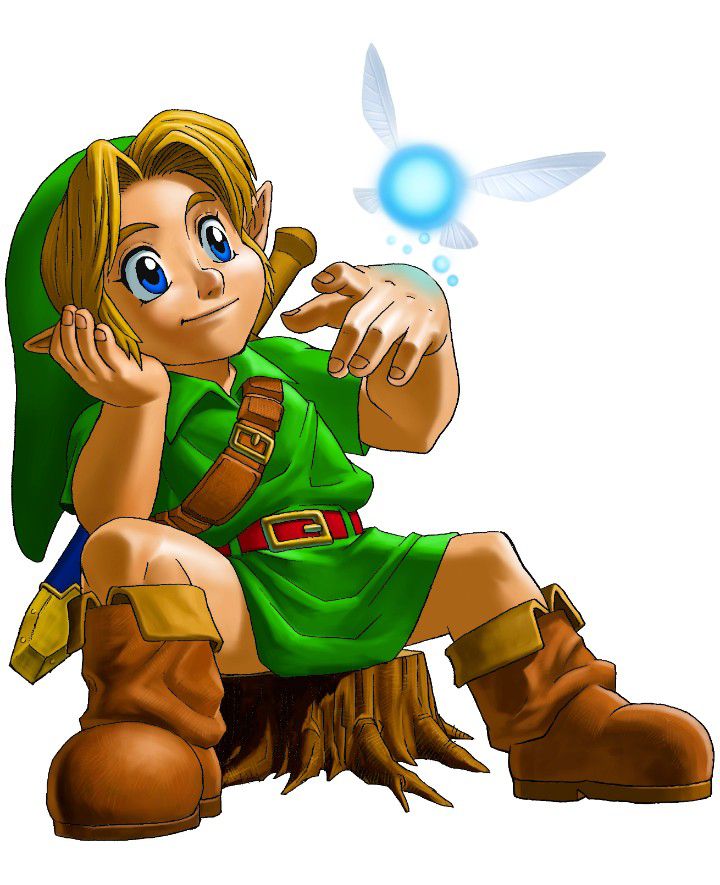
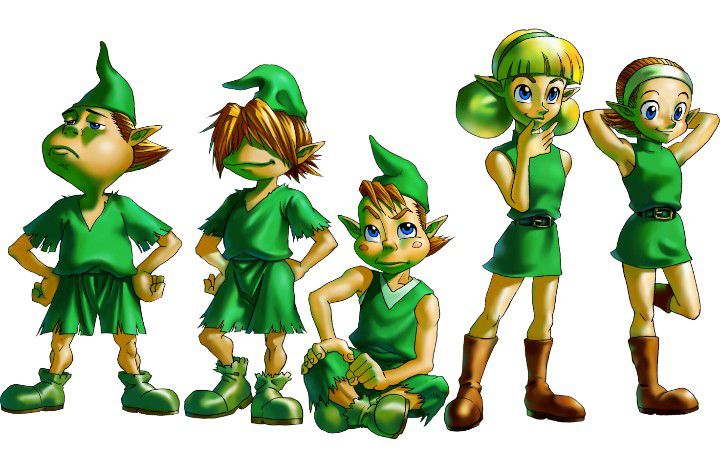
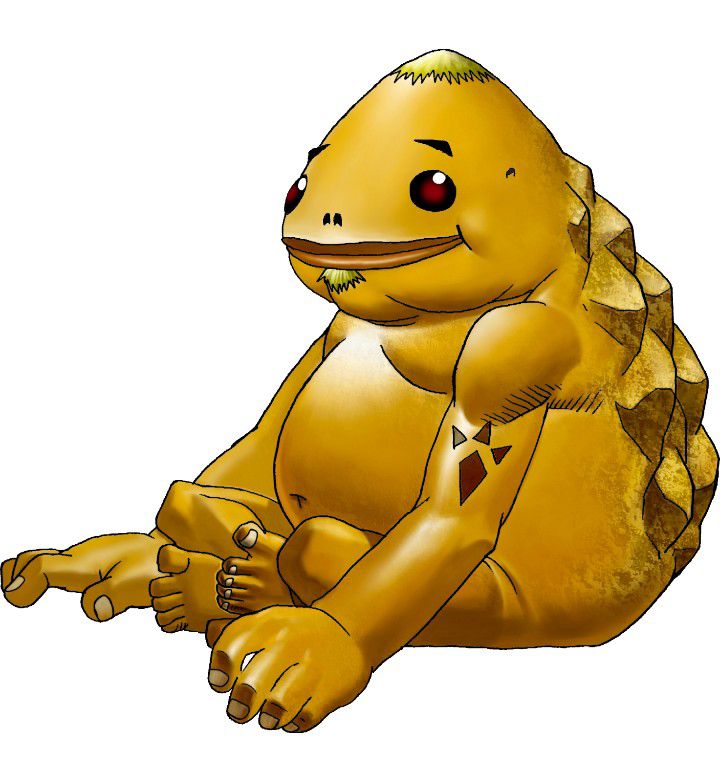
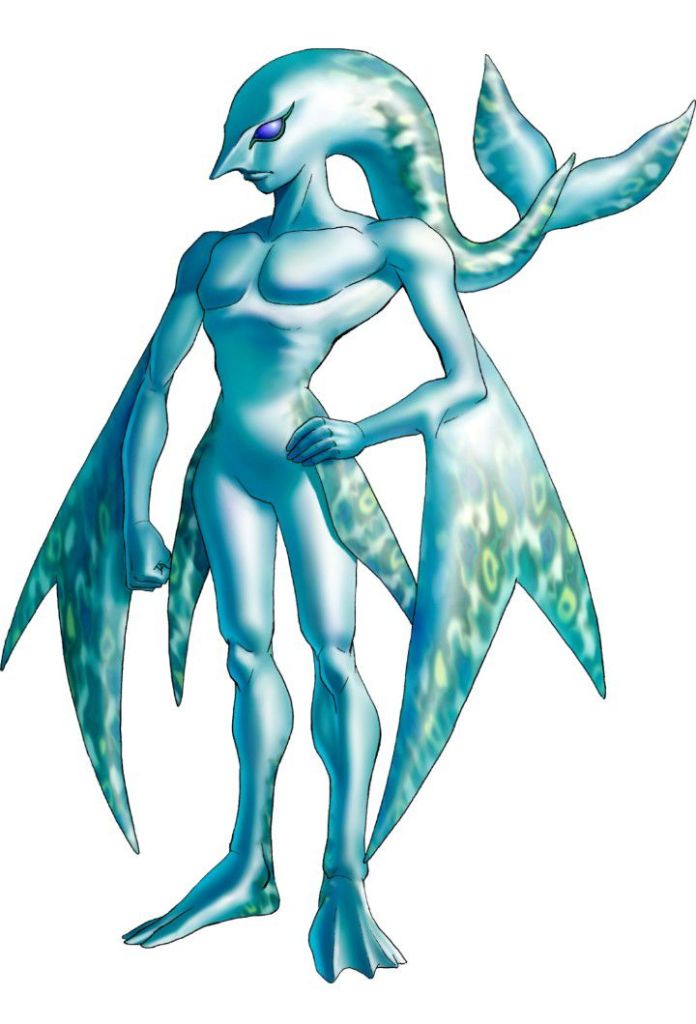
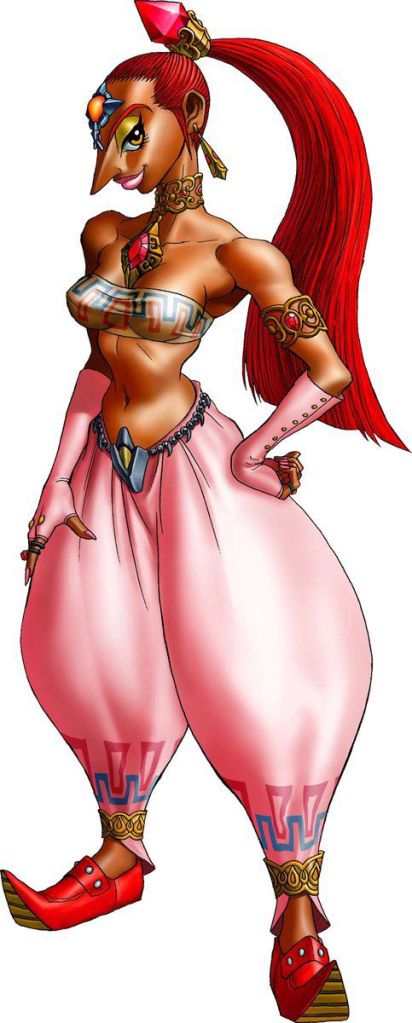
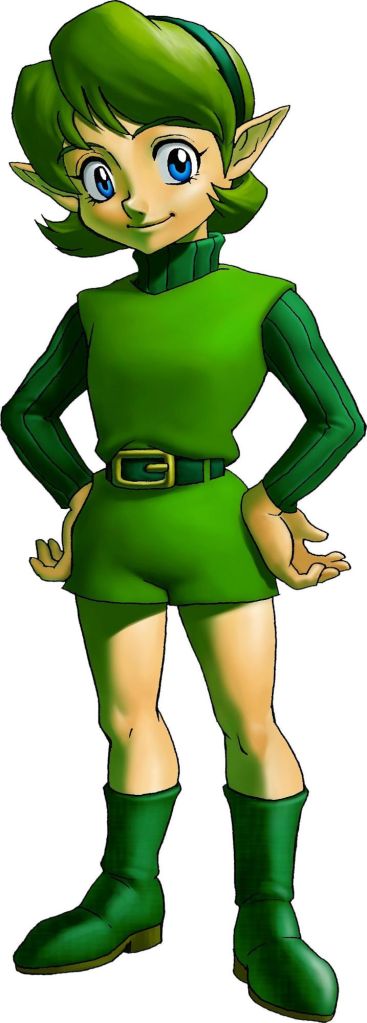
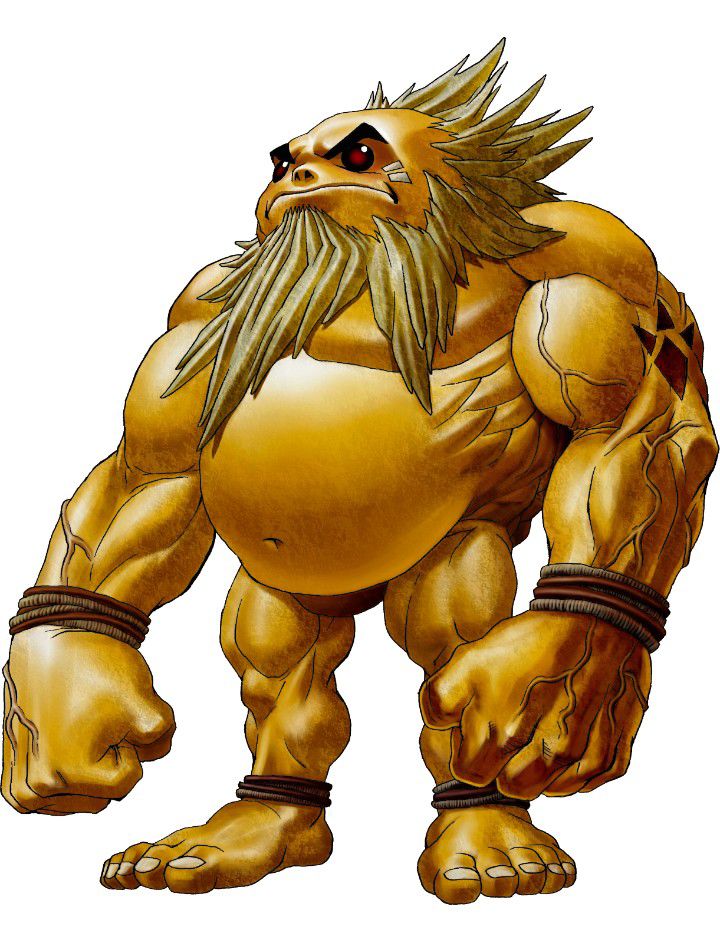
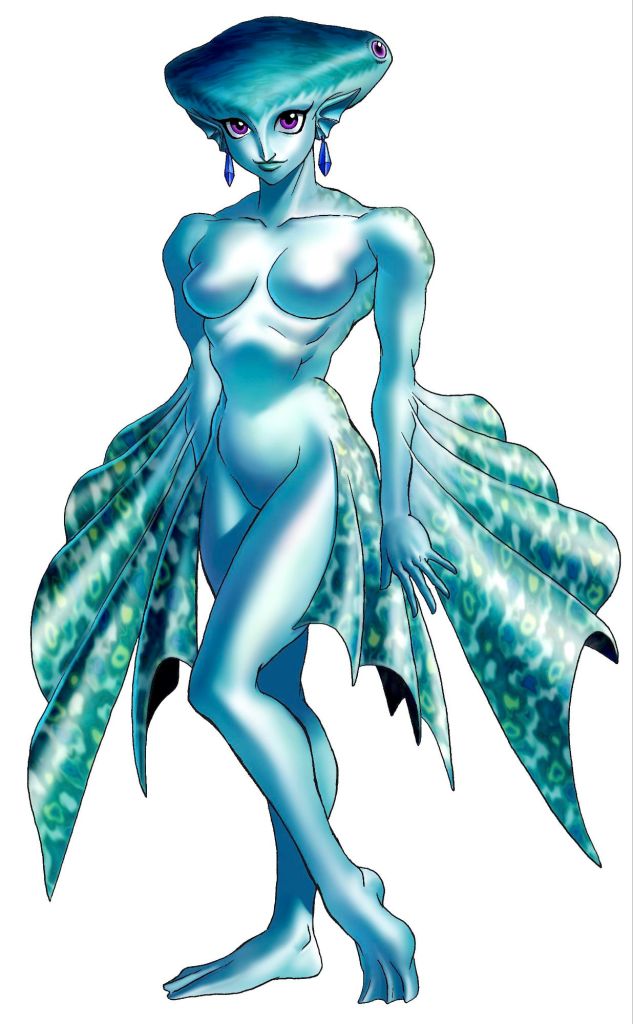
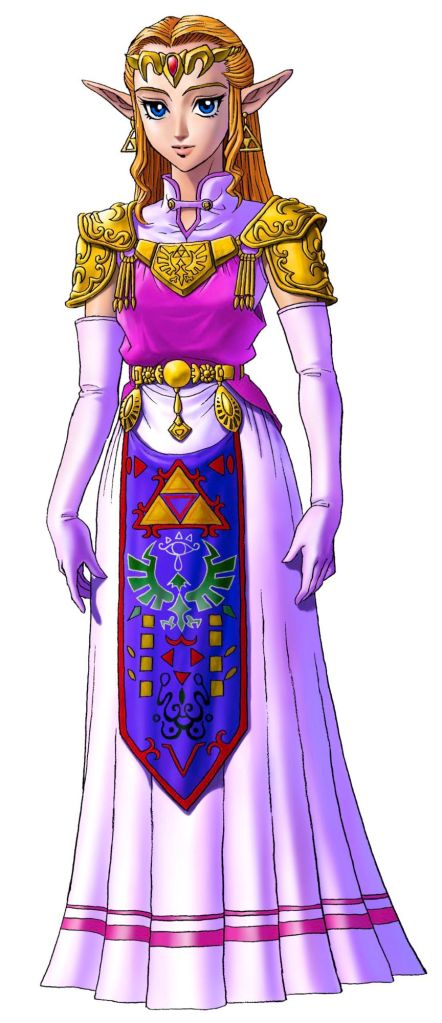
The story of Ocarina of Time takes place centuries before the events of A Link to the Past (which was itself a prequel to the NES Zelda games) and is set in the kingdom of Hyrule, home to a diverse array of species and races, including the forest-dwelling Kokiri who all wear green and remain children forever Neverland-style, the mountain-dwelling rock-eating Gorons, the aquatic fish-like Zora, the Gerudo who consist mainly of women and reside in the desert, and of course the pointy-eared Hylians who serve Princess Zelda and are the most common folks you will meet in the game.
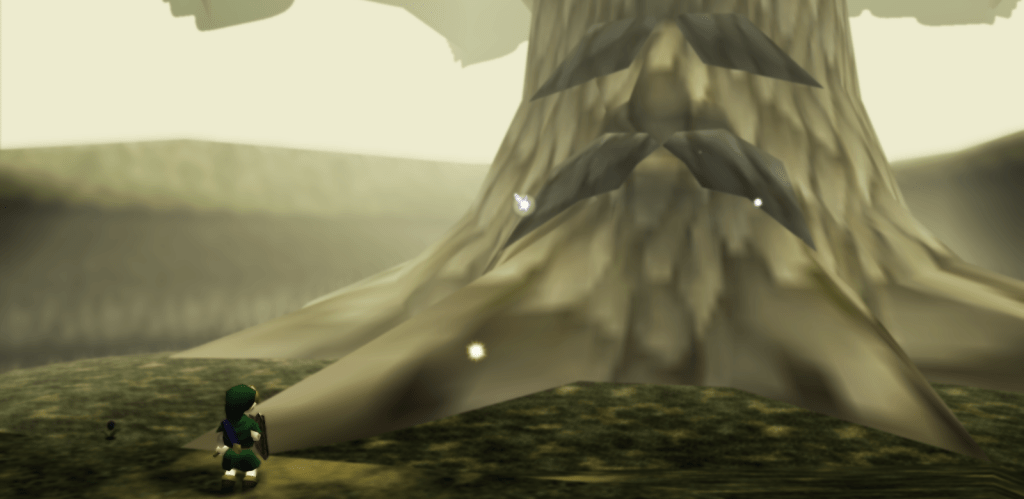
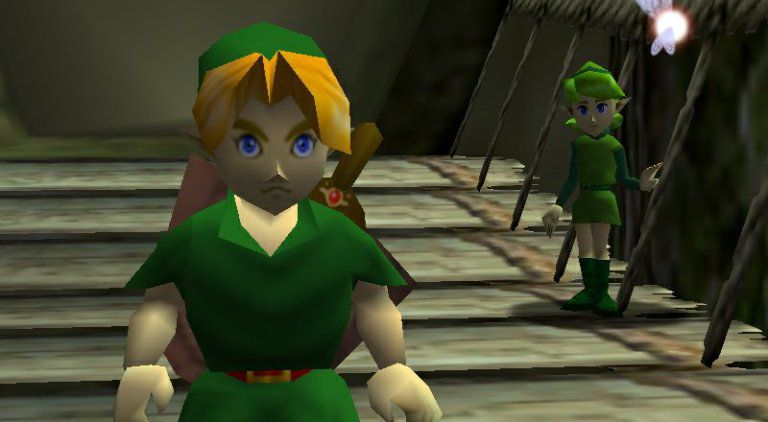
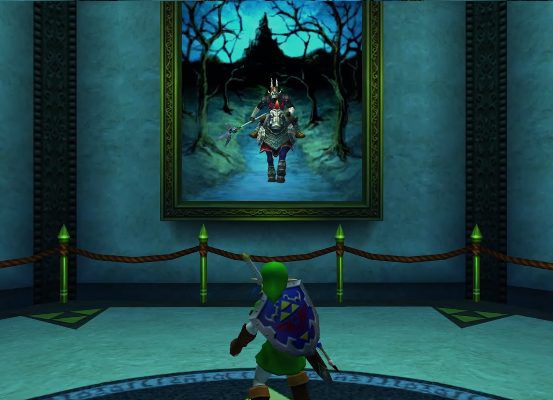
At the beginning of the game, a Hylian boy named Link, who was orphaned and raised in the forest among the Kokiri by a talking tree called the Great Deku Tree, had a vision in his sleep of a man in black armor pursuing a young girl on horseback. Link has no clue what this vision means or who these two are, but things get more strange from there because that morning, the Great Deku Tree sends a fairy named Navi to wake Link up and summon him for a one-on-one meeting, where it is revealed to Link that the Great Deku Tree has been cursed and is about to wilt and die, thanks to a “wicked man of the desert.” Before he dies, the Great Deku Tree tells Link to leave the forest and go to Hyrule Castle to speak with Princess Zelda.
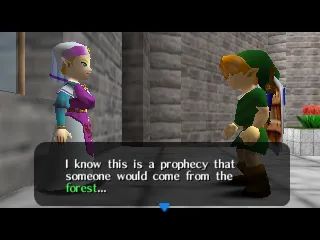
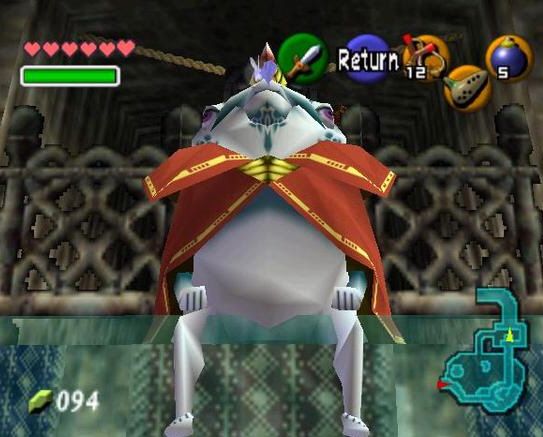
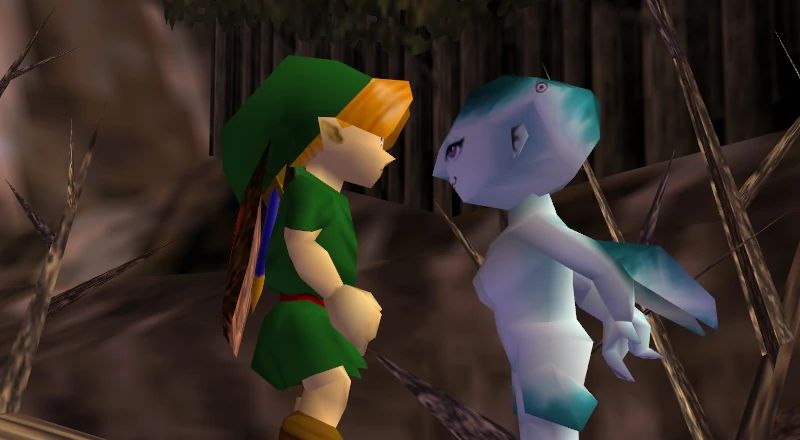
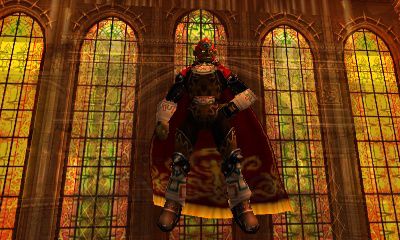
As it turns out, Zelda had a vision of Link the same night Link had a vision of her. Zelda believes an untrustworthy Gerudo man named Ganondorf is seeking the power of the Triforce to use it for his own evil purposes, and she requests that Link seek the three Spiritual Stones scattered and hidden across the kingdom so that he may use them to enter the Sacred Realm where the Triforce resides and protect it from Ganondorf. You already have the first Spiritual Stone, the Kokiri Emerald, because it was given to you by the Great Deku Tree, but the Goron Ruby still resides with the Gorons atop Death Mountain under the protection of their leader Darunia, and the Zora Sapphire resides with the Zora in their hidden domain behind the waterfall under the protection of the Zora princess Ruto.
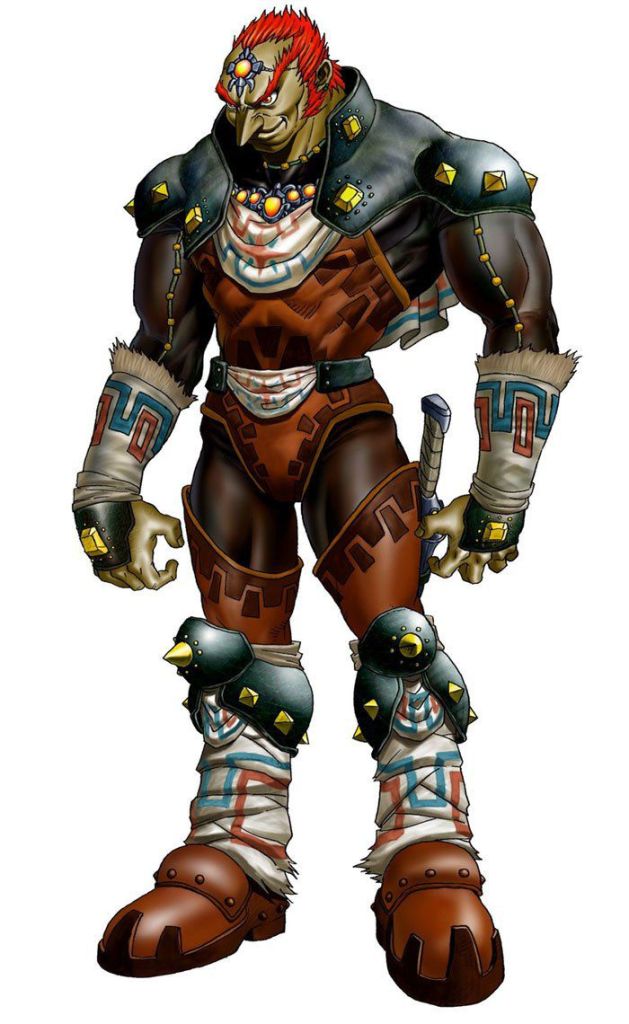
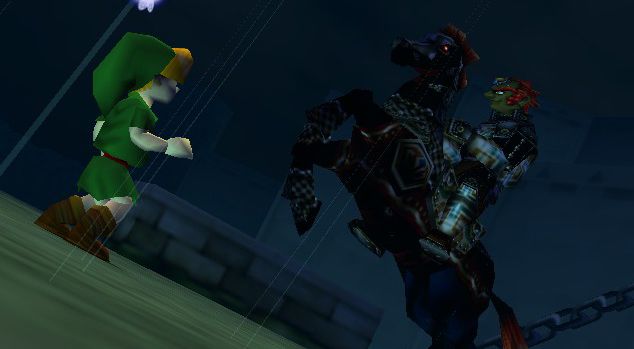
After Link obtains the last two Spiritual Stones, he heads back to Hyrule Castle to see Zelda, but as he arrives, he sees Ganondorf chasing Zelda out of the kingdom on horseback (just like in his dream) and even comes face to face with the man himself, although Link is no match for Ganondorf at this point and he gets easily overpowered by the warlock. However, Zelda sees Link while she is being chased and before she rides away, she tosses something his way: an indigo-colored ocarina. After Zelda gets away from Ganondorf she communicates with Link telepathically to reveal to him that the instrument is called the Ocarina of Time, and she then teaches him the Song of Time, which Link must play in order to gain access to the Temple of Time where the gateway to the Sacred Realm lies (it’s pretty clear why Ganondorf was chasing her now).
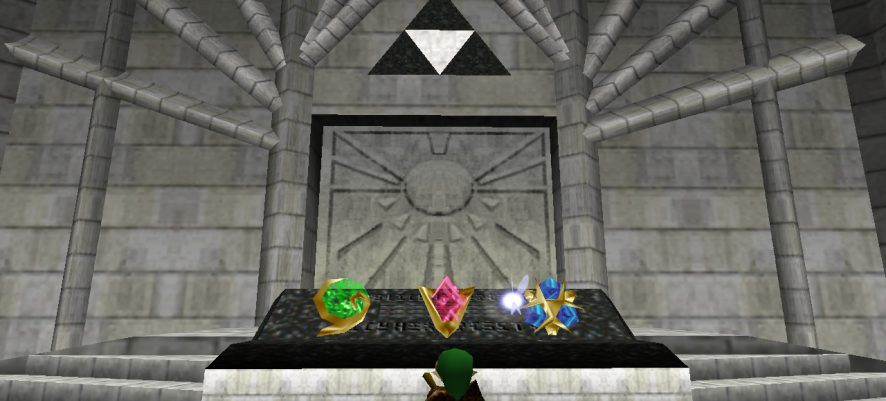
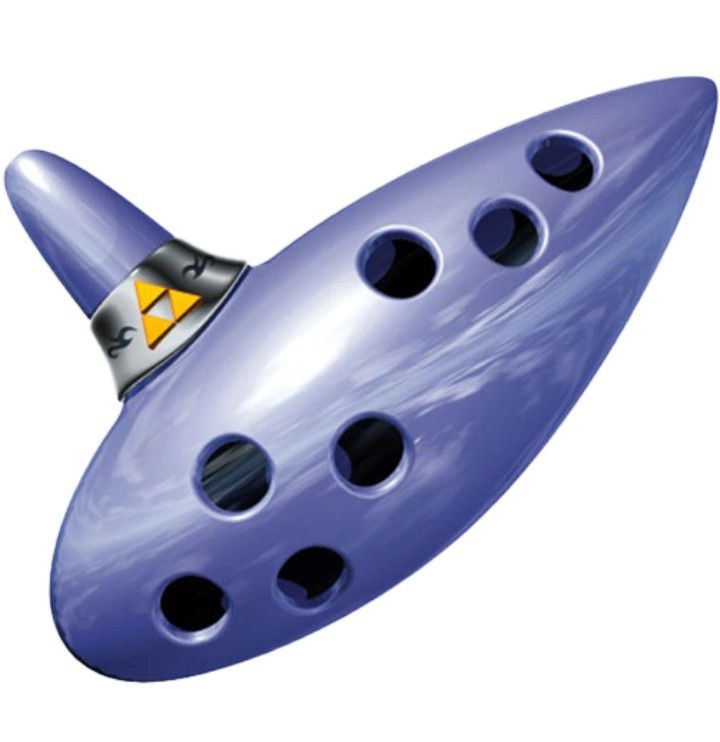
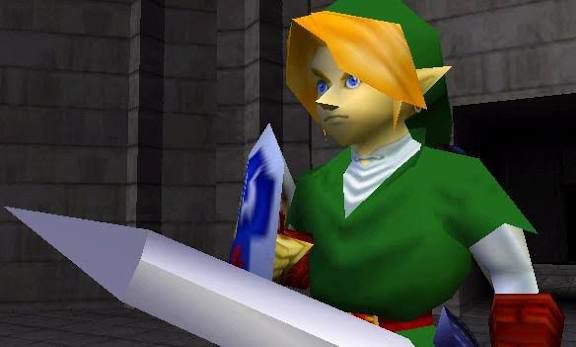
Once Link puts the three Spiritual Stones in place, plays the Song of Time and opens the Door of Time, he sees the Master Sword (the legendary sword that first appeared in A Link to the Past and the only weapon capable of defeating Ganon) resting on a pedestal. The Master Sword is the key separating Hyrule from the Sacred Realm, and only the Hero of Time can wield it. Sure enough, Link is able to pull the Master Sword from its resting place, but as soon as he does so, he becomes suspended in animation … for seven years! On top of that, it turns out you fell into Ganondorf’s trap because he was waiting for you to pull the sword so that he could enter the Sacred Realm himself and take the Triforce, which he does. With no one to stop him and the Hero of Time frozen in place for seven years, Ganondorf takes over Hyrule.
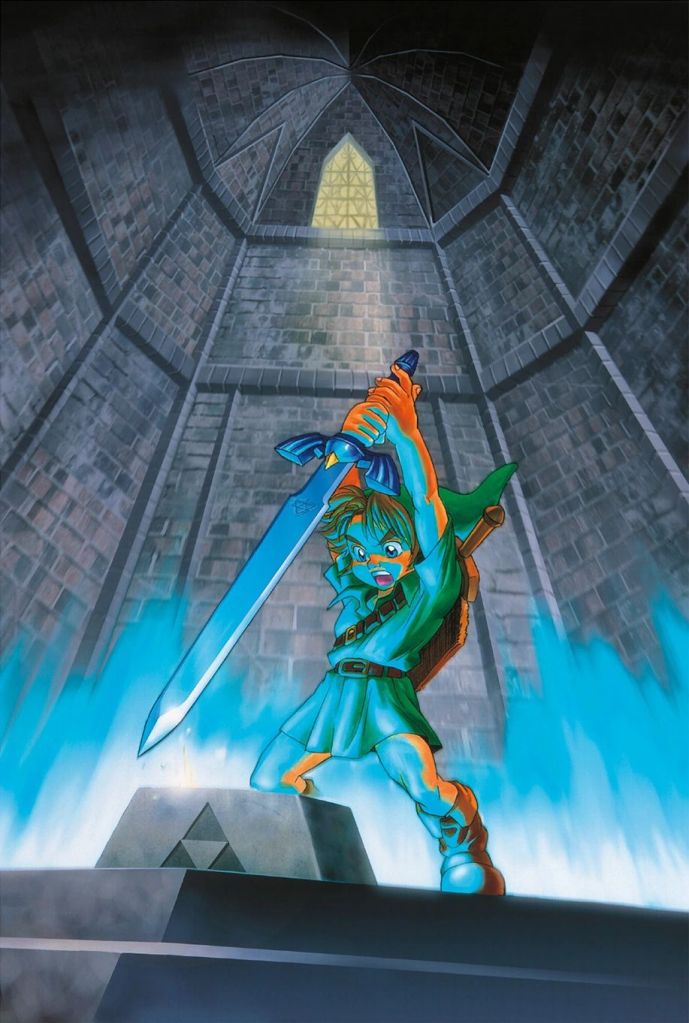
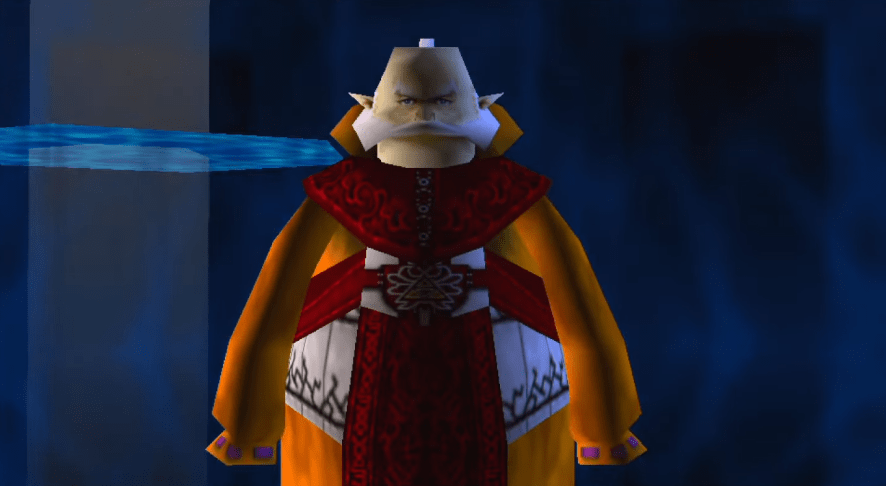
When Link finally wakes up seven years later as an adult, Rauru the Sage of Light (one of the guardians of the Sacred Realm) explains to Link that he was frozen in time because he was not yet old enough to wield the Master Sword. Now that the time has come, Rauru tasks Link with travelling across Hyrule and awakening the other sages, so that the combined might of all the sages may finally imprison Ganondorf once and for all (by the way, those five unawakened sages happen to be people who Link knows from his childhood, so no ice-breakers necessary).
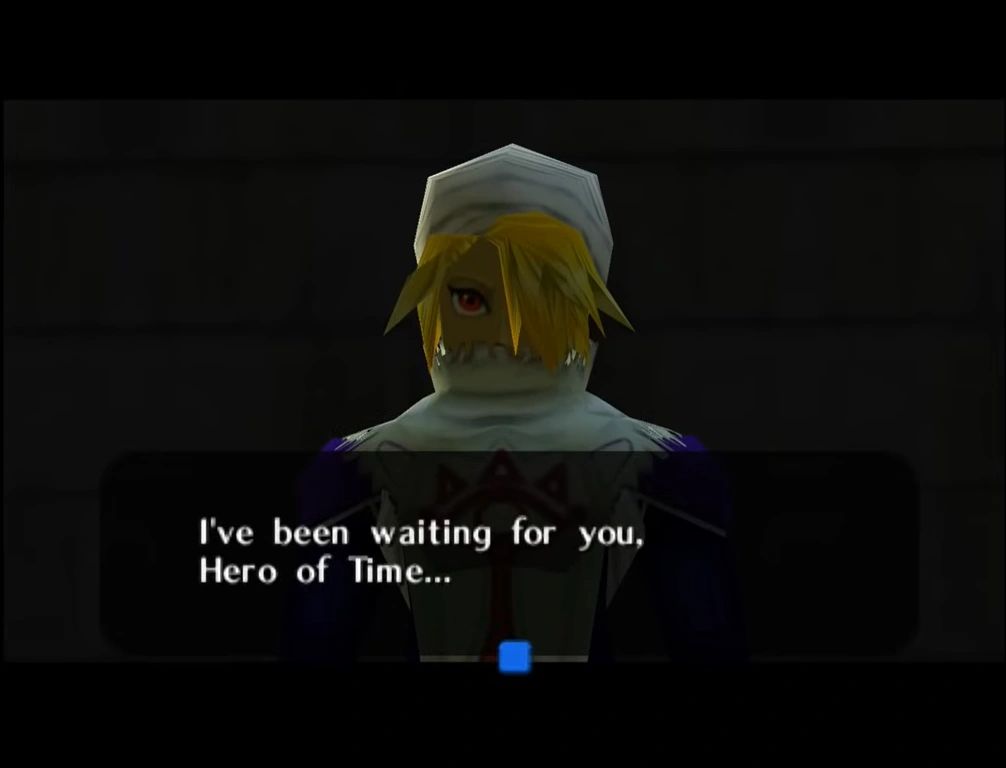
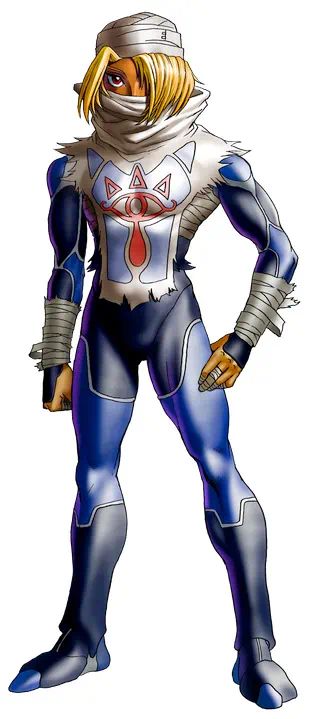
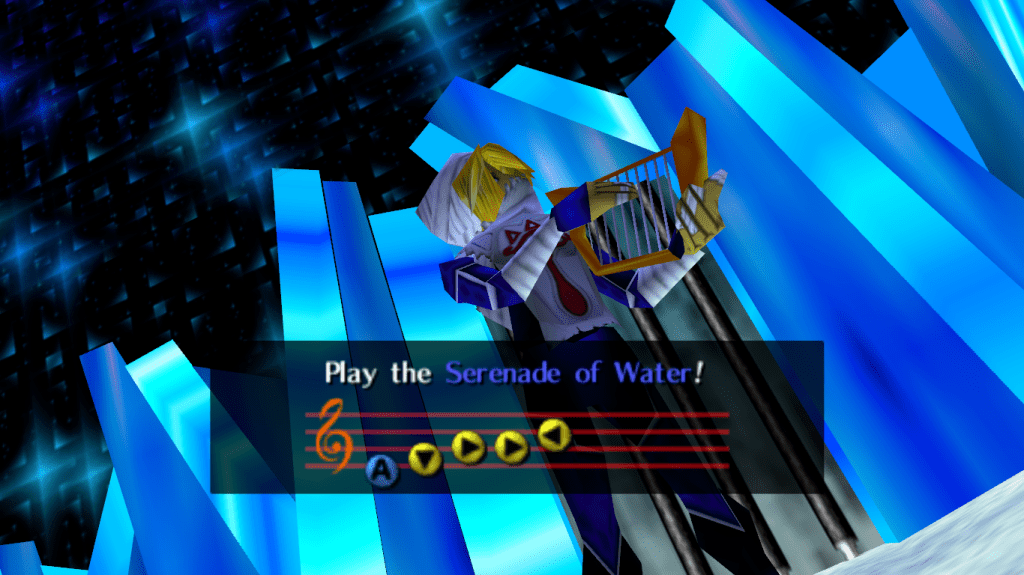
As for the whereabouts of Princess Zelda, they are currently unknown as she remains in hiding, but a mysterious masked man named Sheik who is an ally of Zelda meets you upon your arrival in the future Hyrule and he aids you on your journey to defeat Ganondorf by using his harp to teach Link the five songs that will allow him to reach the five temples where the sages reside (the Forest Temple in the Lost Woods, the Fire Temple in Death Mountain, the Water Temple at the bottom of Lake Hylia, the Spirit Temple in Gerudo Desert and the Shadow Temple under the graveyard of Kakariko Village). Not much is known about Sheik other than he is a member of the Sheikah tribe, who are natives of Kakariko Village and skilled summoners of black magic. But with friends few and far between, Link has no choice but to trust him.
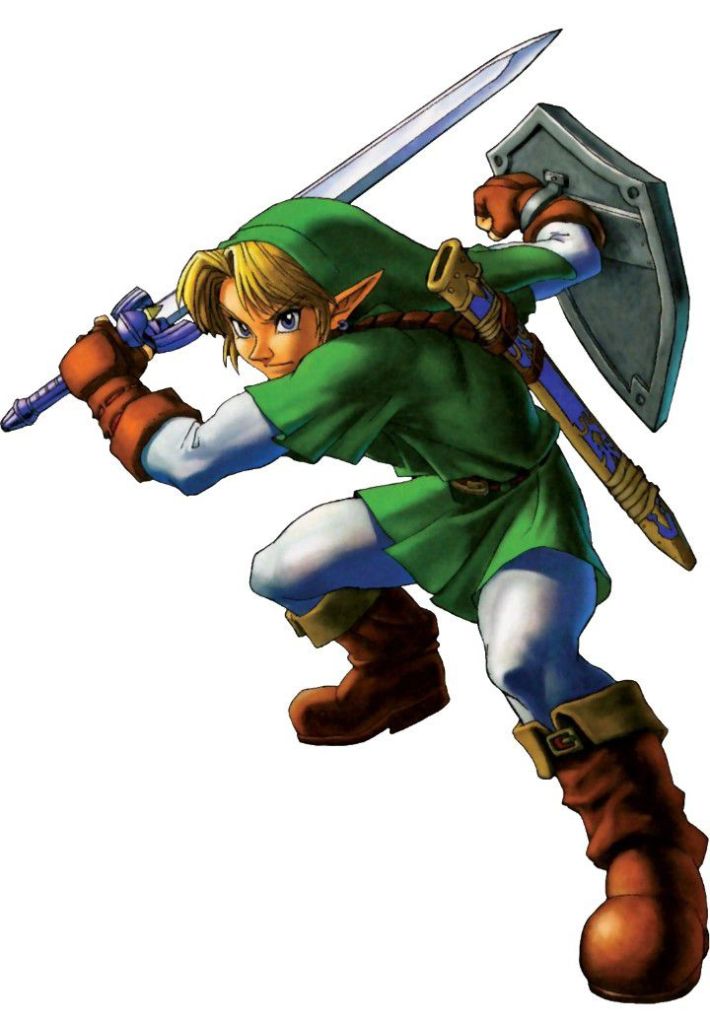
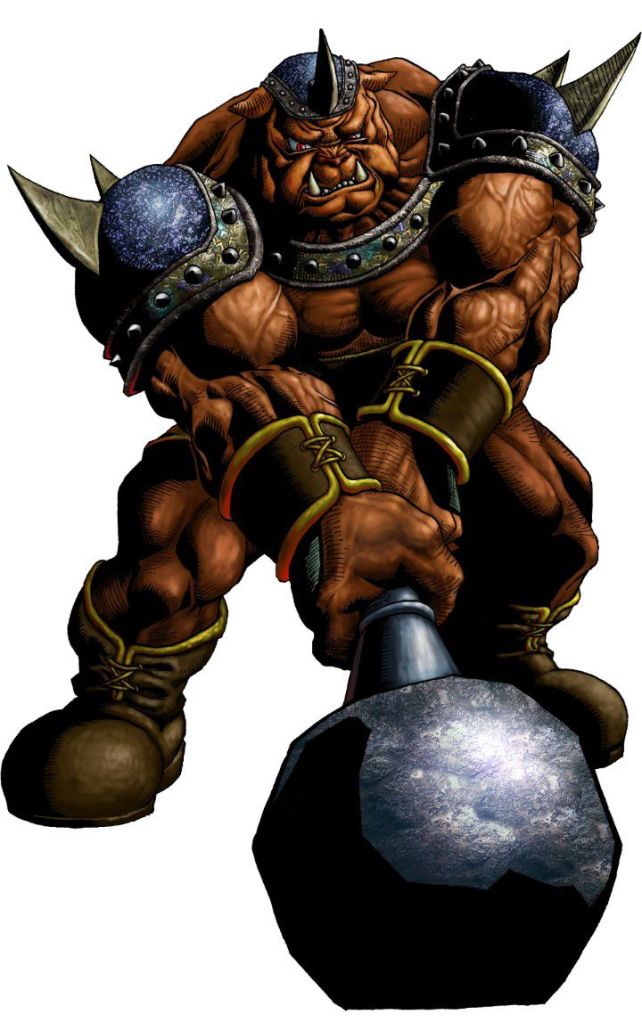
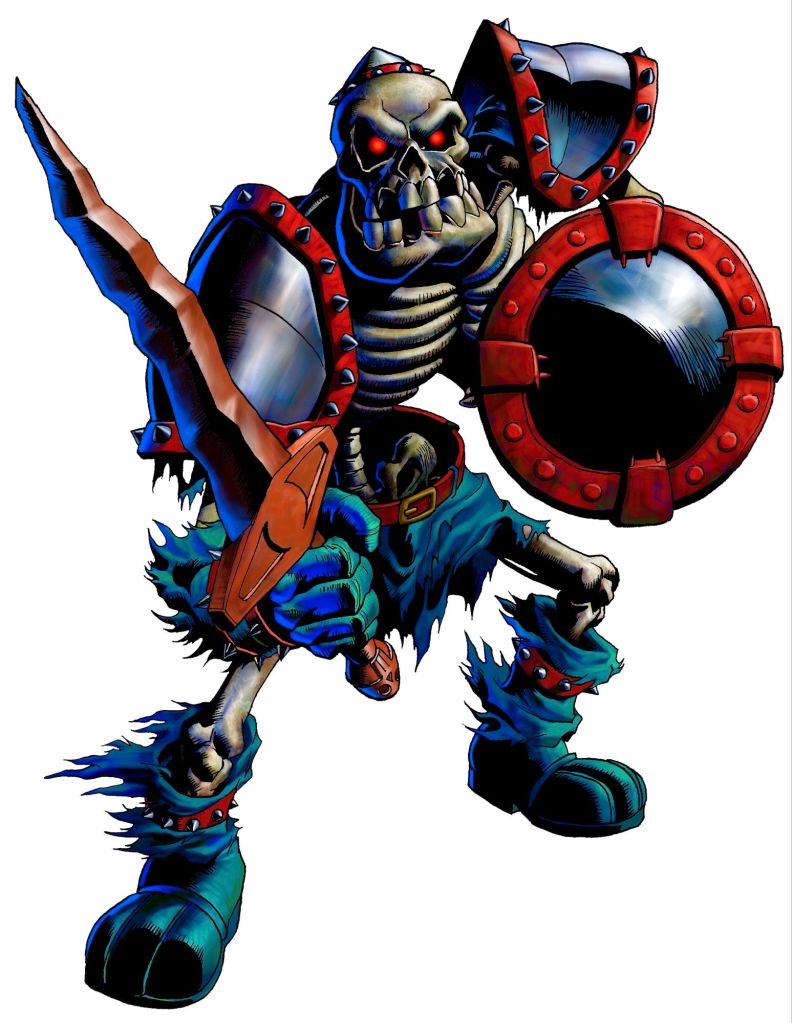
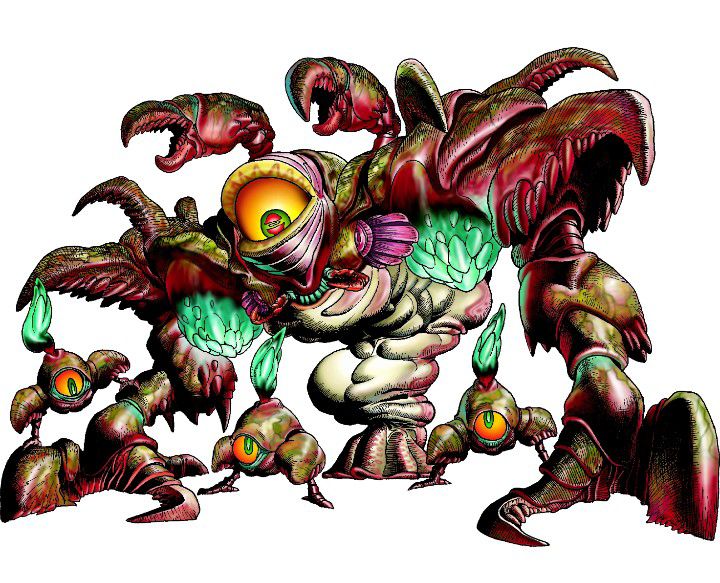
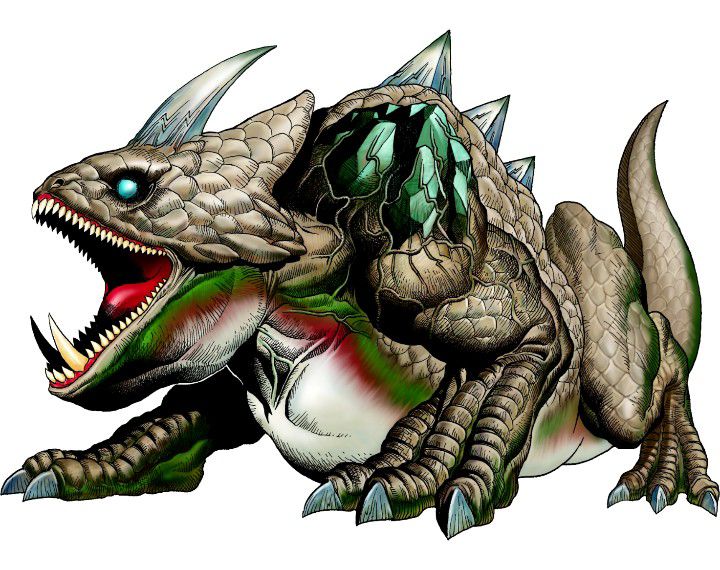
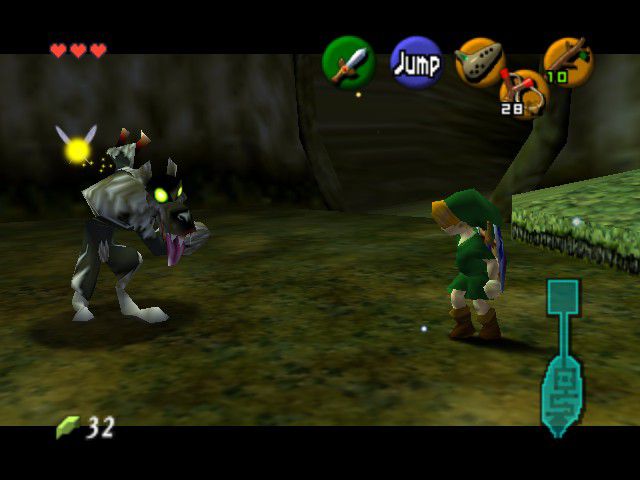
As the first third-person Zelda game, the combat in Ocarina of Time was a bit more sophisticated than before. This game actually introduced the concept of Z-targeting, which allowed you to have a fixed target on enemies during combat (thanks to your fairy companion Navi who hovers right in front of them) by holding down the Z button on your N64 controller, allowing Link to walk around while still facing his target, which made fighting monsters a smooth gameplay experience. Blocking a projectile with your shield while Z-targeting automatically deflects it back at your enemy as well. This mechanic alone made the game revolutionary, setting the standard for practically every 3D combat-focused action game that followed and making for some unique and memorable battles with the many monsters you encountered.
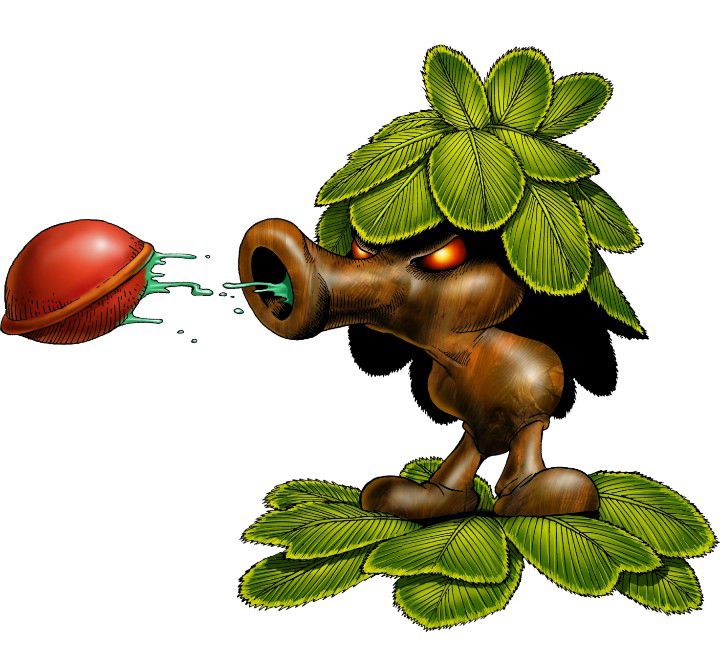
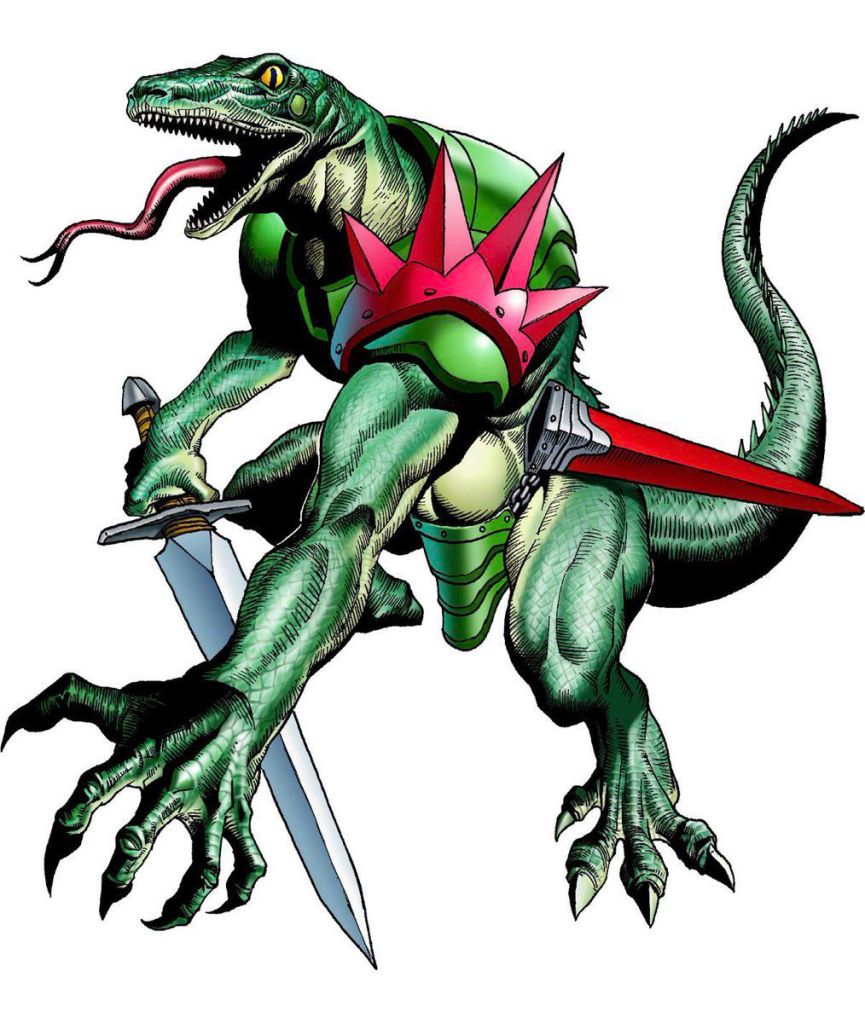
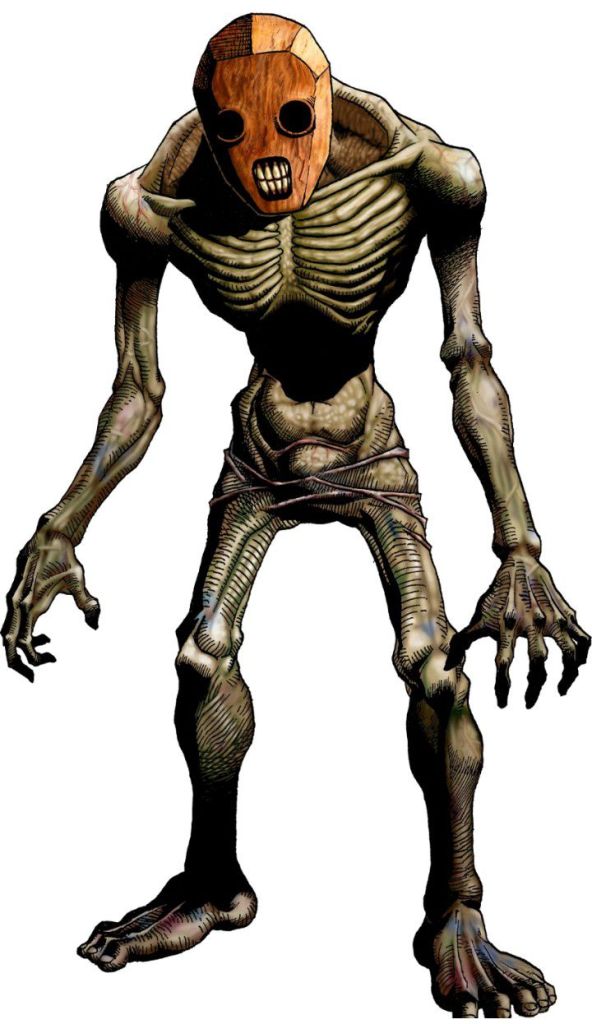
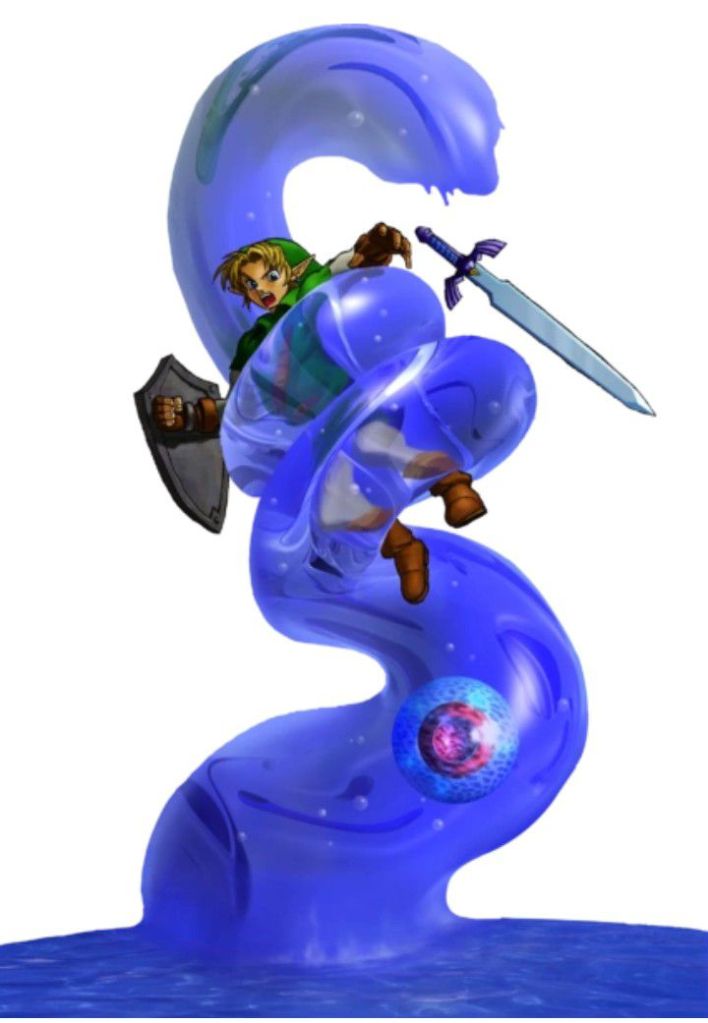
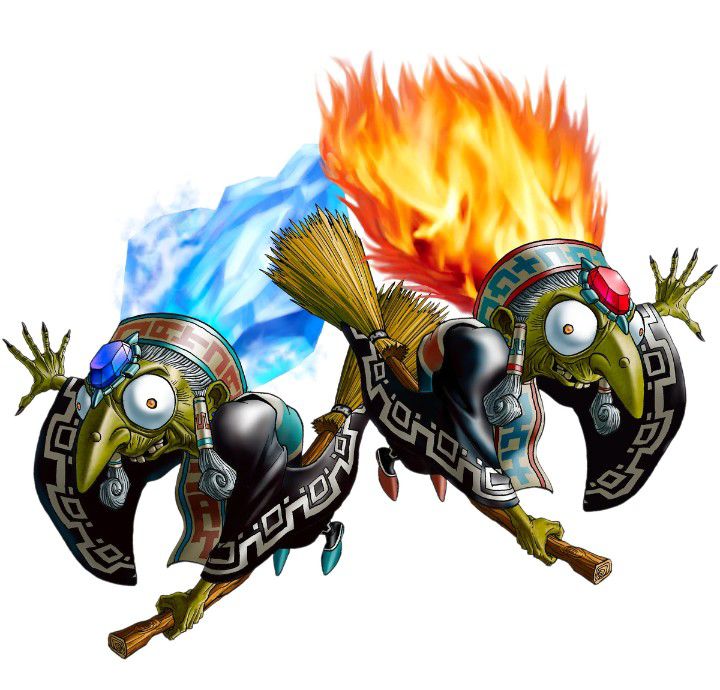
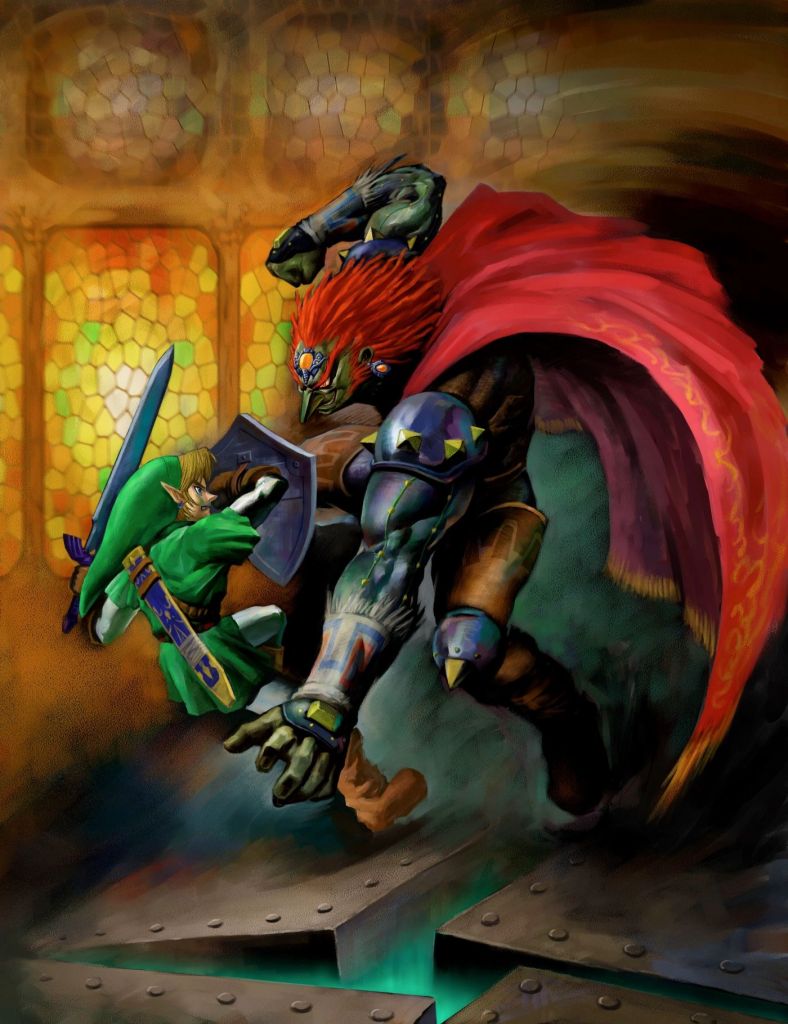
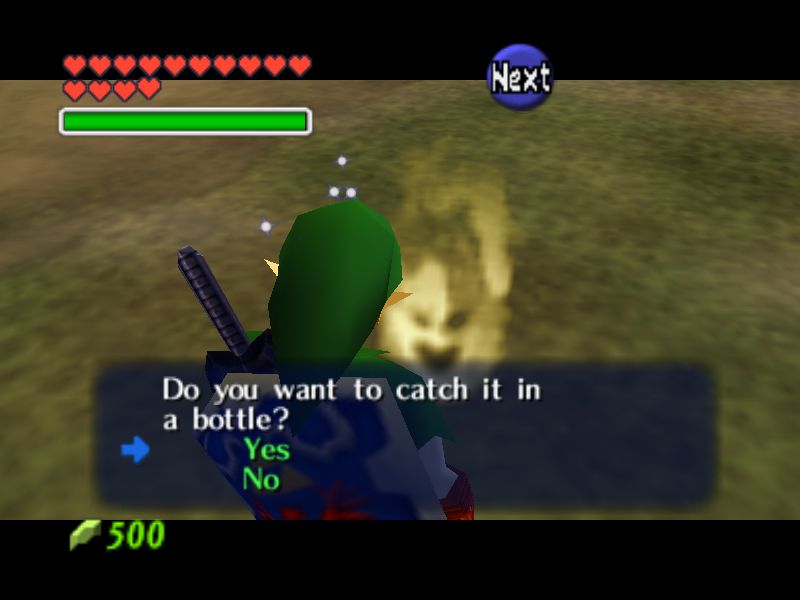
Just like in previous Zelda games, Link gained new abilities and gradually gained more access to the world around him as he obtained more tools, weapons and treasures, which included classic items like the Bombs, the Bow, the Boomerang and the Hookshot as well as new additions like the Megaton Hammer, the Bombchu (an explosive wind-up mouse that can crawl up walls and blow things up in high places) and the Iron Boots which allow Link to walk underwater. There were also some things that Link could only do as a child and some things he could only do as an adult. For example, only young Link can use a slingshot, wear masks and fit through small holes while only adult Link can shoot arrows, lift boulders and ride horses. You could easily travel back and forth through time by pulling the Master Sword from its pedestal as a child and placing the Master Sword back in its pedestal as an adult, and sometimes the game played with that mechanic by hindering your progress as an adult unless you go back in time and change something in the past.
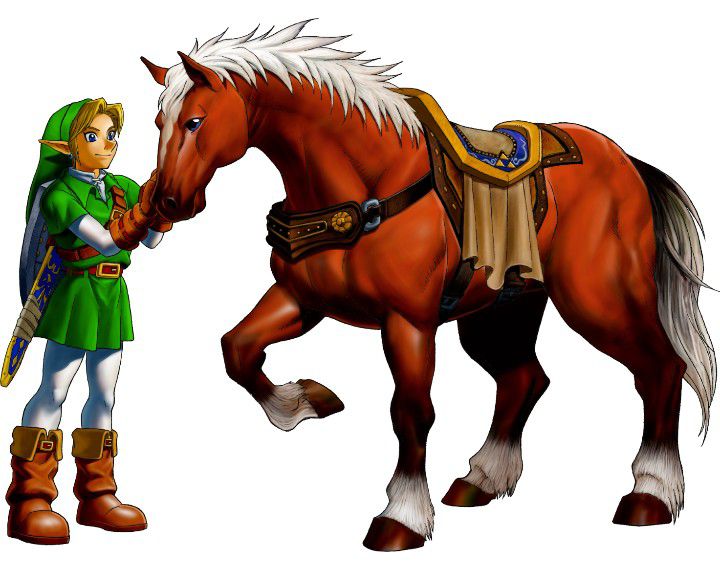
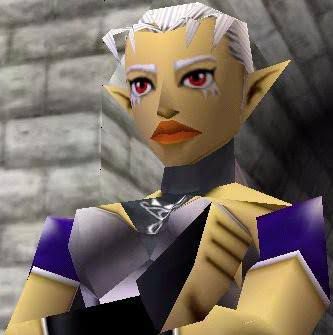
One of the most important items is obviously the game’s namesake the Ocarina of Time, and there are other songs you learn in addition to the Song of Time and the melodies taught to you by Sheik, each played by memorizing a sequence of buttons on your controller and each having different effects, such as the Sun’s Song which changes the day to night and vice-versa, the Song of Storms which can summon the rain, and even a song that appeared previously in A Link to the Past as Zelda’s theme song, which is taught to you early in the game by Zelda’s bodyguard, a Sheikah warrior and former leader of Kakariko Village named Impa, and is revealed to be the lullaby that Impa used to play to Zelda when she was a baby.
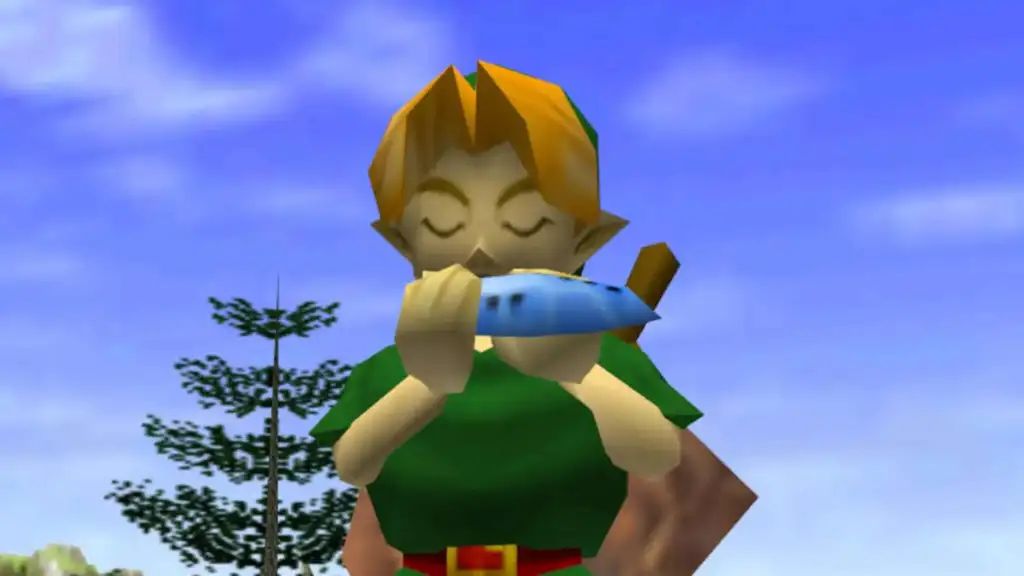
This game was first previewed in a very different form in 1995, a year before the N64 was released back when it was still called The Legend of Zelda 64 and was intended as a release for the 64DD, an N64 disk drive peripheral that was still in development at the time (a switch during the development process to the more technically reliable cartridge format pushed the game’s release date from 1997 to 1998). As with A Link to the Past, Nintendo would go above and beyond for the Zelda series by doubling Ocarina of Time‘s cartridge storage space from an average 16 MB to 32 MB, and once again it was Shigeru Miyamoto’s intention not to repeat himself, in this case by not imitating Super Mario 64, a platforming game which itself introduced a brilliantly realized 3D world. Ocarina of Time was a far more ambitious game though, and Miyamoto would supervise five different co-directors (Toru Osawa, Yoichi Yamada, Eiji Aonuma, Yoshiaki Koizumi and Toshio Iwawaki) to bring it to life.
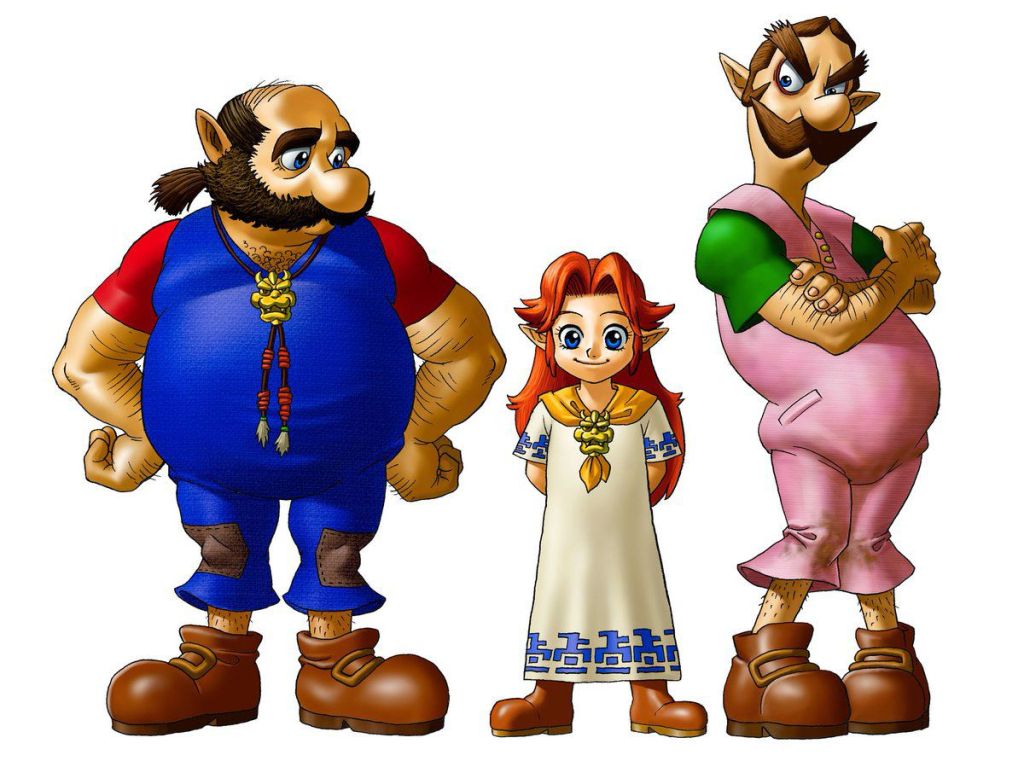
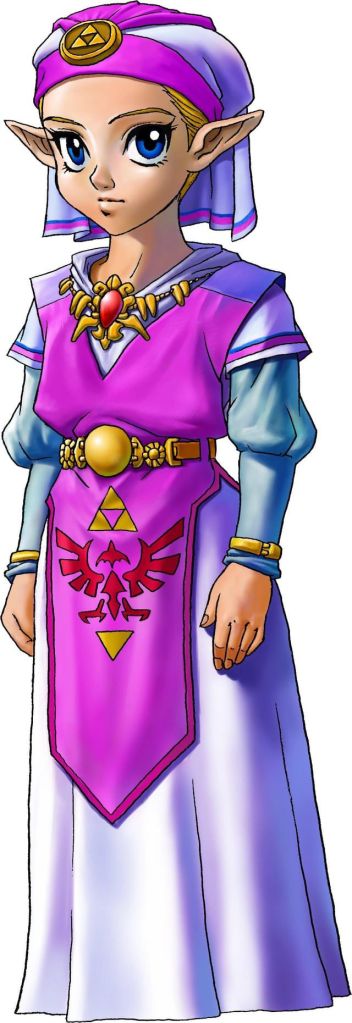
Toru Osawa adapted the game’s story from an idea by Shigeru Miyamoto and Yoshiaki Koizumi with contributions from A Link to the Past and Link’s Awakening writer Kensuke Tanabe. Yusuke Nakano (who illustrated all the hand-drawn character art you’re seeing throughout this article) teamed up with Koizumi to create the game’s look, Kenzo Hayakawa programmed the game and musician Koji Kondo composed perhaps his greatest soundtrack of all time writing the music for the game. He reprised classic songs from his previous Zelda games like the Zelda theme, Ganon theme and Kakariko Village theme and he composed many vibrant new songs that have since become classics in their own right, including Saria’s Song (the Lost Woods theme), Epona’s Song (the Lon Lon Ranch theme) and the Song of Storms (the windmill theme). Kondo also made an inspired choice while composing the background music for the dungeons, which were more ambient, more eerie and more unevenly constructed in their melodies. This was an effective atmospheric contrast from the more tuneful soundtrack of the Hylian outdoors, although they were just as beautifully written. I hadn’t heard such a consistently good soundtrack full of bangers since Danny Elfman’s work on The Nightmare Before Christmas.
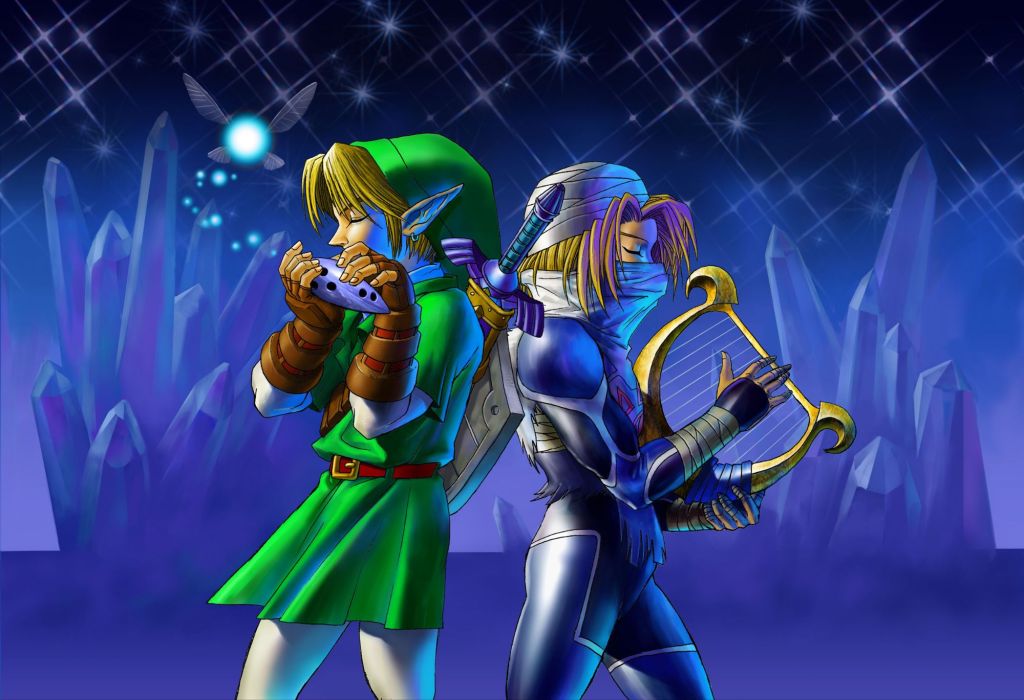
It was also Miyamoto’s intention to make Ocarina of Time even more cinematic than past Zelda games by taking advantage of the three-dimensional setting, while also making sure that the experience of playing the game was distinct from the experience of watching a film and never letting the cutscenes feel disconnected from the gameplay. This was a notable choice given how disc-based games from this period like Square’s Final Fantasy VII (which came out on the PlayStation a year earlier) tended to take advantage of the capabilities of modern technology by opting for prerendered full motion video cutscenes that looked more detailed than the actual gameplay. Miyamoto’s decision to keep the game’s visual style coherent from gameplay to cutscene was not only a smart choice from the perspective of player immersion but also a smart choice on the development side from a time-saving and money-saving perspective.
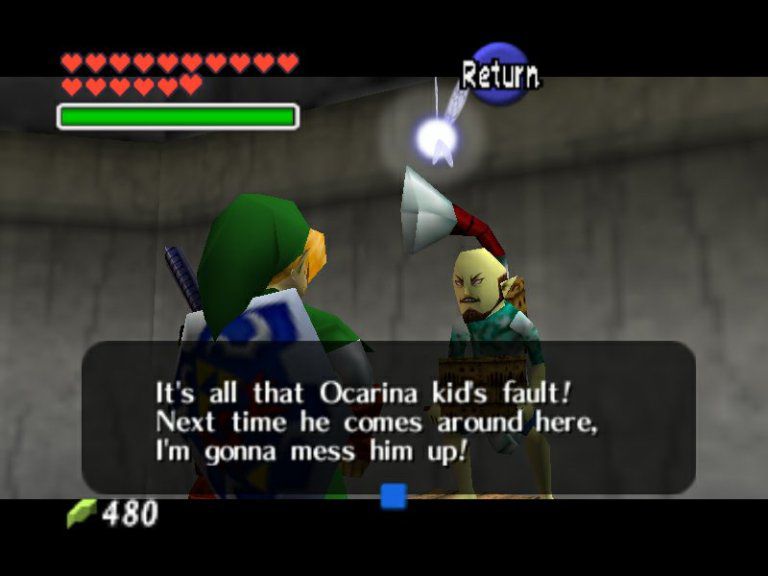
Ocarina of Time was released on the N64 in the fall of 1998 in both Japan and America. Thanks to the popularity of the previous Zelda games its release was highly anticipated by gamers around the world. Of course most Zelda fans knew it was going to be brilliant before it even came out. But the sheer size of the enthusiasm and the vast amount of perfect scores and 10/10 ratings it received still came as a bit of a shock. All across the board, critics and gamers showered the game with praise for its innovative gameplay mechanics, its brilliantly designed dungeons, puzzles and boss battles, its surprisingly deep and well-written epic story, Koji Kondo’s masterpiece of a soundtrack and what was considered stunning graphics for its time.
Overall, people were surprised and delighted by what many in the industry consider to be a flawless and unprecedented interactive experience and one of the best video games ever made if not the best video game of all time, which a lot of people continue to call it to this day. Like most N64 owners, I played the game (and beat the game) and I honestly fully agree. It’s easily my favorite video game I’ve ever played, and that’s not a statement I make lightly. It’s hard to explain why I enjoy it so much but basically every single thing about it just simply works and is executed to perfection, from how smooth the controls are to how challenging and rewarding the puzzles are to the strong sense of exploration and discovery of its huge secret-filled world to the emotional impact of the game’s story, a story which also has plenty of light and funny moments as well as some wild narrative twists that rival Darth Vader revealing he is Luke Skywalker’s father.
I said in my last History of Zelda article that Link’s Awakening, the first video game I ever played, is the game that turned me into a Zelda fan, but Ocarina of Time is the game that made me a Zelda fan for life. It was so good that it was impossible for me not to be excited about every new Zelda game that came out afterward from that point forward, and it has not only influenced many future Zelda games (most directly a remake for the 3DS developed by Grezzo in 2011) but it has also influenced many other video games, including Dark Souls, Ōkami, Grand Theft Auto, Shadows of the Colossus, Soul Reaver and practically every 3D action-adventure game that came out in the next century.