Absurdism is the philosophy that nothing makes sense because life is meaningless. Which is definitely an appealing notion for a heathen like me, but I would actually go further and say that human beings have no business determining whether life has meaning or not, because both faith-based religion and science-based research are filtered through the very limited scope of human comprehension. So while I have a fascination with absurdism as a concept, my point of view is less “nothing makes sense” and more “I don’t need everything to make sense.” This is a slightly awkward segue but go with me on this. I think that point of view might be why I have such broad taste in entertainment. The fact that I have no strict belief system and will listen to all interpretations of what life can mean for different individuals of various backgrounds and cultures not only makes me an open-minded person but also an open-minded art consumer who is able to enjoy a wide variety of genres from musicals to slasher films to superhero action flicks to Werner Herzog documentaries. I call myself an “entertainment junkie” for a reason, you know!
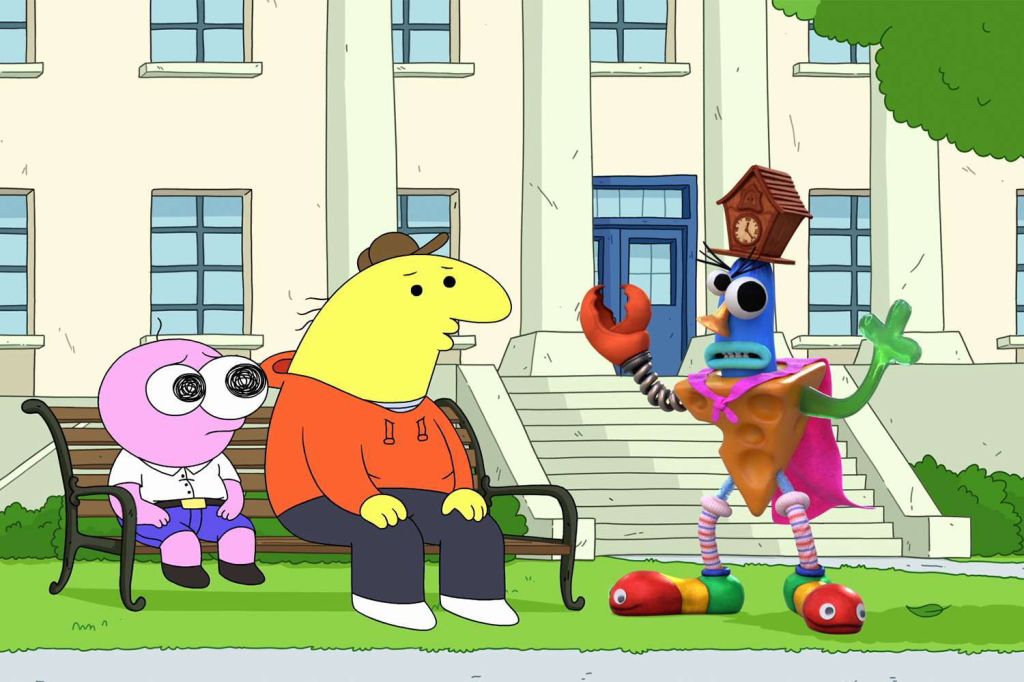
Which brings me to why I love absurd comedy so much. It’s a type of humor found in entertainment that you have likely seen before, and from my observation it rarely gets the respect that I think it deserves from both critics and viewers, because just like more traditional forms of comedy like witty banter and slapstick, absurd humor requires good execution to get right and it’s arguably the hardest one to nail. This type of comedy escapes the boundaries of logic, usually either because logic makes the joke less funny or because nonsense is the punchline. Whether it’s the bizarre wordplay of Lewis Carroll, the surrealistic humor of Gary Larson’s The Far Side, the confusing non sequitors of talk show host David Letterman or the random strangeness of Adult Swim’s Smiling Friends, I have always been attracted to the weird and the meaningless. Especially weird and meaningless comedy, which often gets classified as absurdist humor and sometimes anti-humor.
Absurdity by itself, however, is not funny. If there’s no humor involved, it can often be off-putting or even disturbing to see things that make no sense. With some exceptions. The fact that people in real life don’t break out in musical numbers during conversations technically makes the musical genre “absurd” in a way, but it’s not seen that way by viewers because singing and dancing are the oldest forms of entertainment in show business and everyone who sits in a theater to be part of an audience understands they are there to be entertained. Meanwhile there are things like David Lynch’s Eraserhead, which is a surreal horror film, and the claymation TV series Gumby (another type of “eraser” head), which is a surreal children’s fantasy, but even both of those have some logic to the fabric of their universes, even if that logic is obscured and ultimately not the point. Even out-there concepts like Teenage Mutant Ninja Turtles and Howard the Duck which both focus on talking animals who live in the city and act like human beings have scientific and cosmic explanations for the existence of those characters.
Absurd comedy is something completely different. That’s when, for example, a character in Family Guy will insult someone by calling them a “dumb beaver” and then a talking beaver appears out of nowhere and says “Hey, what did I do?” Admittedly that’s a really dumb example, but you get what I’m saying. It’s basically the comedy genre that takes the search for humor to its most fantastic level. Characters who break the fourth wall, which is something that has been happening on stage and screen for over a century from Groucho Marx to Bugs Bunny to Deadpool to Fleabag, is a type of humor that I would classify as absurdist as well (and also the easiest way to make me laugh – I almost always find it funny when a fictional character unexpectedly breaks the fourth wall).
Some comedians and performers are also known for venturing from the norm with styles that some might call odd or even absurd. I already mentioned David Letterman but there are also stand-up comedians like Steven Wright, Gilbert Gottfried, Paul Reubens, Sam Kinison, Norm MacDonald, Maria Bamford and Sarah Squirm who often think outside the box to get laughs. This is often the kind of thing people refer to when they mention “anti-humor.” Andy Kaufman took this to a whole other level when some people who didn’t comprehend what he was doing couldn’t tell if he was joking or being serious. Nathan Fielder became famous for his Comedy Central docuseries Nathan for You, which often highlighted the humor of the situations he found himself in without any obvious punchlines and often while he played it completely straight. Eric André was a master of absurdist comedy on his Adult Swim talk show The Eric Andre Show. And Tim Robinson elevated cringe comedy to absurd heights on his Netflix sketch comedy show I Think You Should Leave with Tim Robinson as well as the movie Friendship and the TV series The Chair Company. Needless to say, this type of humor can be divisive and it’s not for everybody. But it can also be the reason why certain celebrities and shows become famous in the first place.
Some of my favorite examples of comedies that revel in things like absurdity, surrealism, irony or anti-humor include the movies Duck Soup, Airplane!, George of the Jungle and The Emperor’s New Groove, the TV series Monty Python’s Flying Circus, Freakazoid!, Family Guy and The Sarah Silverman Program, the Looney Tunes and Merrie Melodies series, a whole lot of things that air on Adult Swim, plus the sketch comedy genre in general, which lends itself well to absurd humor. That’s probably why I have liked I Think You Should Leave as well as shows like SNL, SCTV, In Living Color, Mad TV, Chappelle‘s Show, Robot Chicken, Portlandia, Key & Peele, Inside Amy Schumer, Kroll Show and A Black Lady Sketch Show so much. All those sketch comedies have regularly used satire to exploit and exaggerate the absurdities of life.
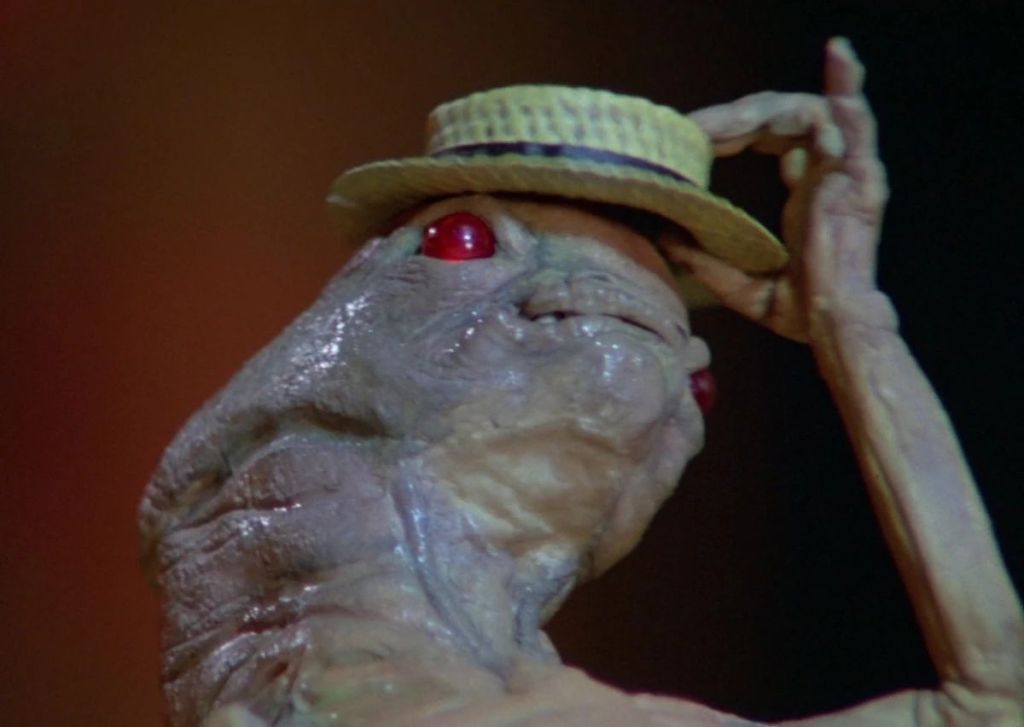
Yes, I do think absurdity’s appeal to me as a comedy sub-genre is connected to my life views, because I don’t assign meaning to anything in my life the way most people do. I simply react to the unexplainable with the attitude of “it is what it is” while I react to the unimaginable with curiosity but never an assumption about its purpose or place in the universe. It’s called going with the flow, and I highly recommend it because you can enjoy a lot more movies and shows when you aren’t being distracted by logic, expectations and thoughts like “How does an alien creature from a galaxy very, very, very, very far away know the lyrics to ‘Hello! Ma Baby’?”