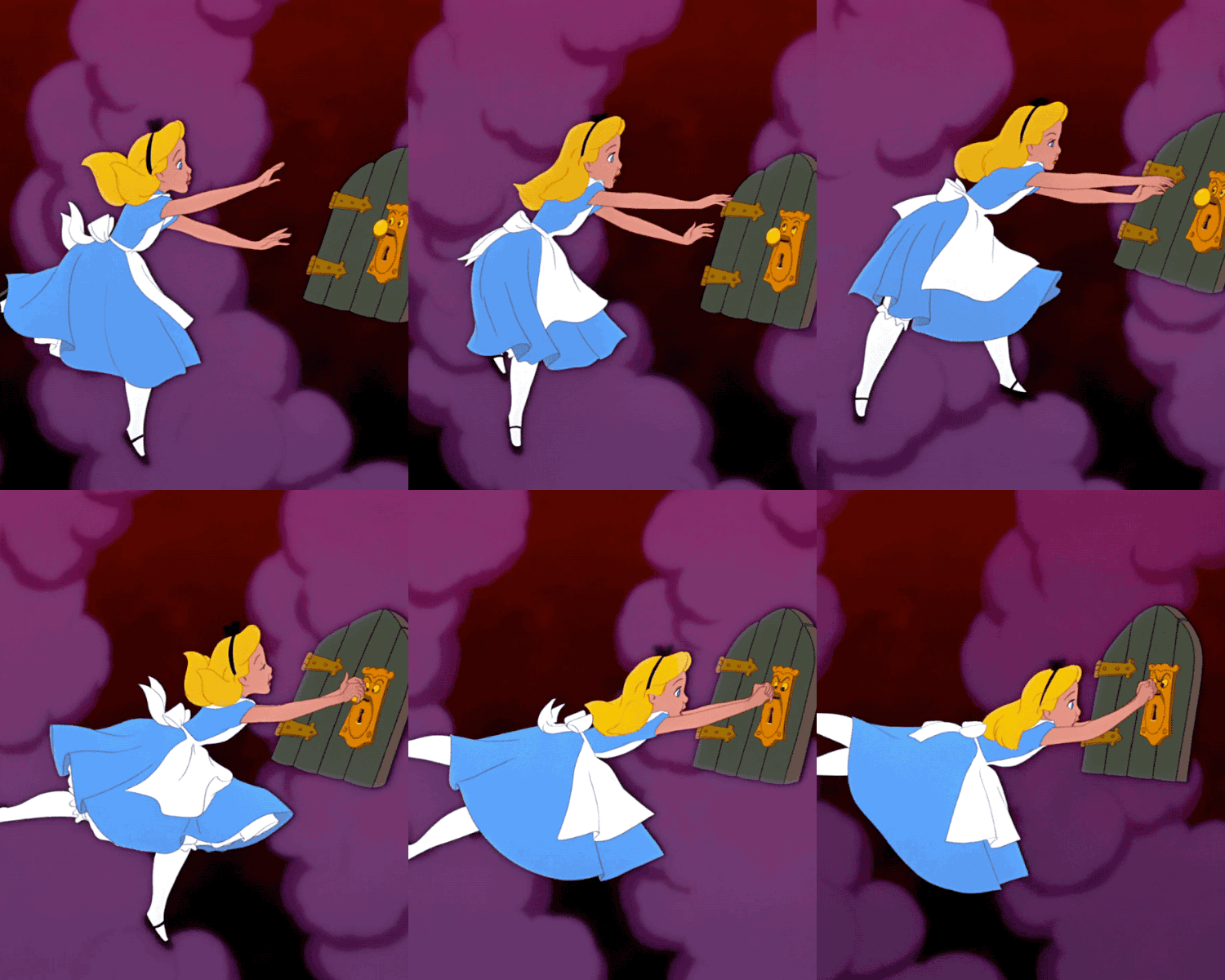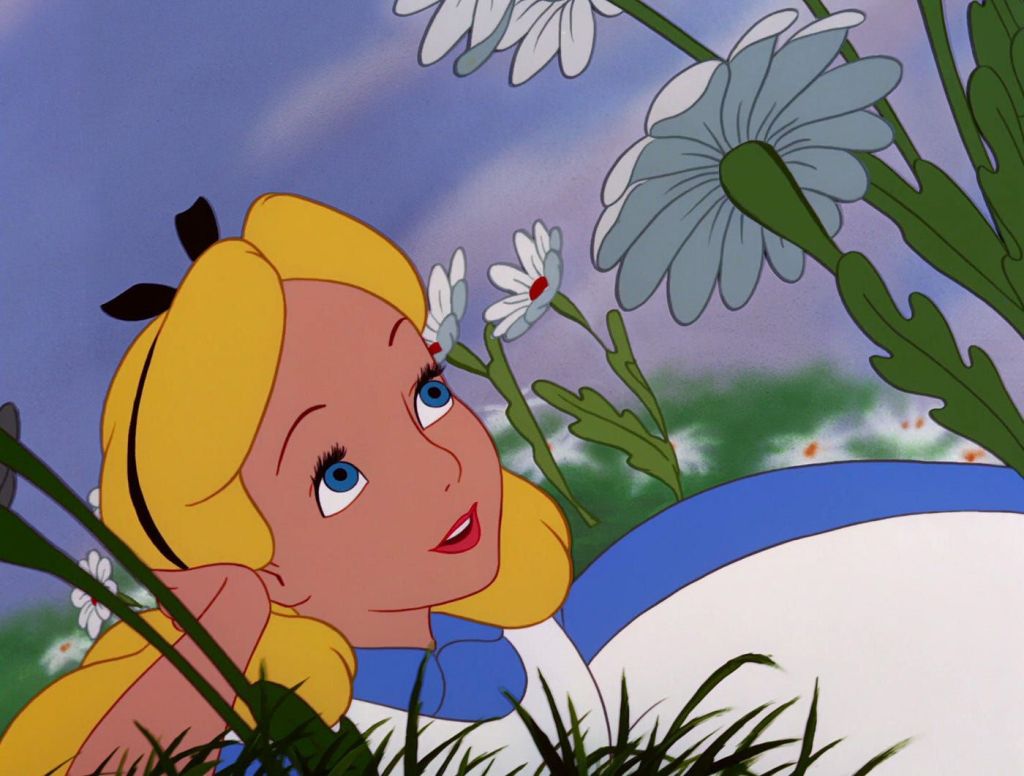
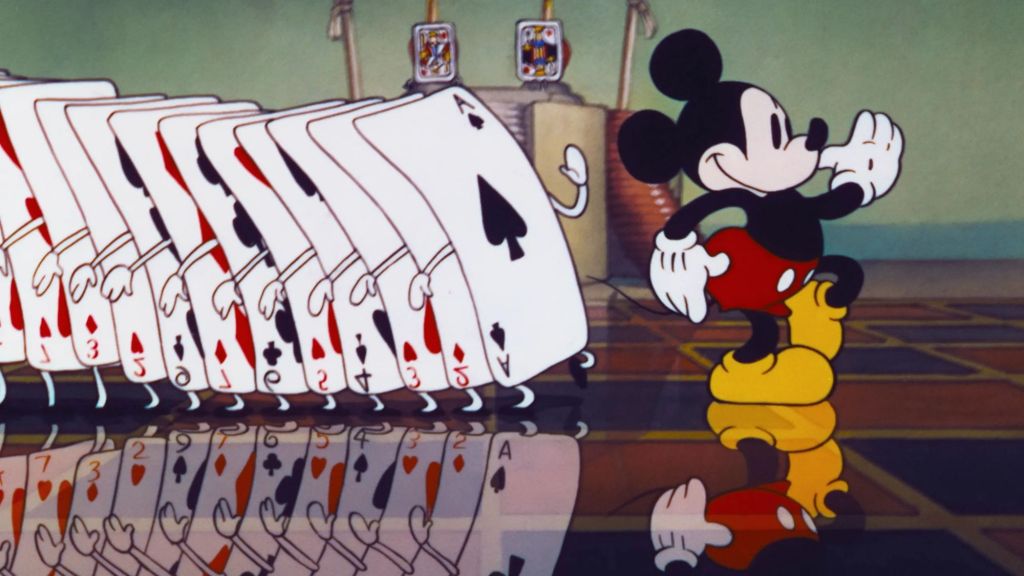
Walt Disney loved Lewis Carroll and you can tell he loved him a lot. When Walt was pursuing animation as a career, he directed a live-action/animated hybrid short called Alice’s Wonderland (1923) which depicted a real girl entering a world of cartoon characters and served as the pilot for the Alice Comedies, which were Walt’s first successful film series. Over a decade later, one of the most entertaining short films in Disney history was introduced: Thru the Mirror (1936) was a Mickey Mouse cartoon that parodied Lewis Carroll’s Through the Looking-Glass and depicted Mickey entering a parallel world of living and breathing furniture. And speaking of alternate realities, a film adaptation of Alice’s Adventures in Wonderland could have been Walt’s first feature film had he taken Mary Pickford up on her pitch to Disney to create a film starring Pickford as a live-action Alice in an animated world. Walt ultimately decided to make Snow White and the Seven Dwarfs instead, but the idea of an Alice film adaptation stayed in the back of Walt’s mind.
The idea to adapt the film was revisited after the commercial success of Snow White, but getting Alice up on the screen was easier said than done. Development started and stopped several times during the 1940s, complicated in part by the studio’s uneven box office success that decade as well as the challenge of adapting the book to film in a way that Walt found satisfying. It was originally going to feature a live-action Alice in an animated world just like Mary Pickford wanted, but it was later decided that a fully animated version would be the only way to do Carroll’s stories justice, and production on that version officially began in 1946.
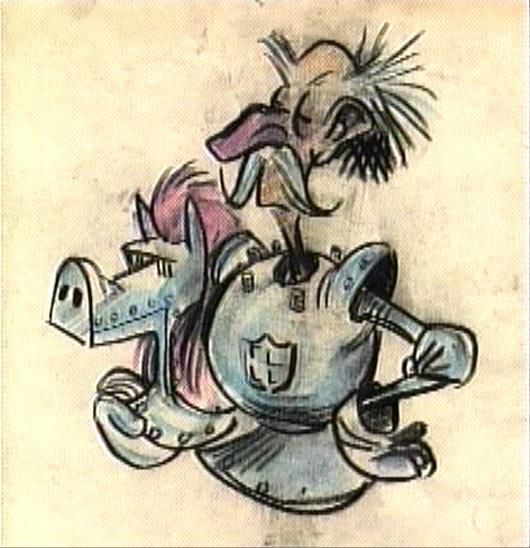
Over the course of the film’s long development from the late 1930s to the early 1950s, many characters from both Alice’s Adventures in Wonderland and Through the Looking-Glass were either altered, moved around or omitted, often because they slowed down the pacing or felt unnecessary, such as the Duchess, the Mock Turtle and the Gryphon, Humpty Dumpty and the Jabberwocky, although references to the Jabberwocky are still made in the final film when the Cheshire Cat sings the Jabberwocky poem. The White Knight was also scrapped when the story team replaced a scene of him giving Alice a rousing speech in Tulgey Wood with the song “Very Good Advice” upon Walt’s suggestion that Alice should teach herself the lesson instead.
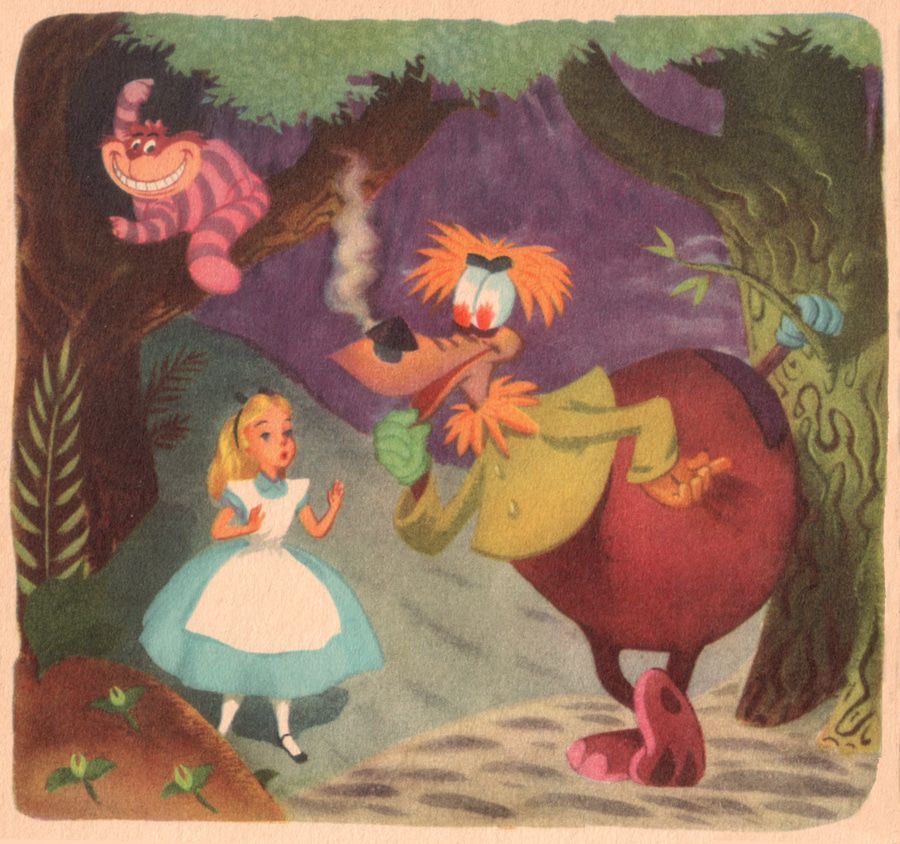
Kathryn Beaumont was chosen as the voice of Alice while the rest of the voice cast featured many radio and comedy greats such as Verna Felton (the Queen of Hearts), Bill Thompson (the White Rabbit), Sterling Holloway (the Cheshire Cat), Ed Wynn (the Mad Hatter), Jerry Colonna (the March Hare), Richard Haydn (the Caterpillar) and J. Pat O’Malley (Tweedle Dee, Tweedle Dum, the Walrus and the Carpenter). As for the film’s story treatment, it was ultimately cultivated by a 13-man team, while all of Walt Disney’s best animators (including all of the Nine Old Men) handled the film’s animation direction. The animation for Alice was mainly handled by Les Clark, Marc Davis, Ollie Johnston, Milt Kahl and Eric Larson while Milt Kahl did most of the work on the White Rabbit, Frank Thomas handled the Doorknob and the Queen of Hearts, and Ward Kimball, who was one of the MVPs of the film, handled the majority of the animation for Tweedle Dee and Tweedle Dum as well as teaming up on the animation for the Cheshire Cat with Eric Larson and John Lounsbery, the March Hare and Mad Hatter with Lounsbery and Woolie Reitherman, and the Walrus and the Carpenter with Norm Ferguson.
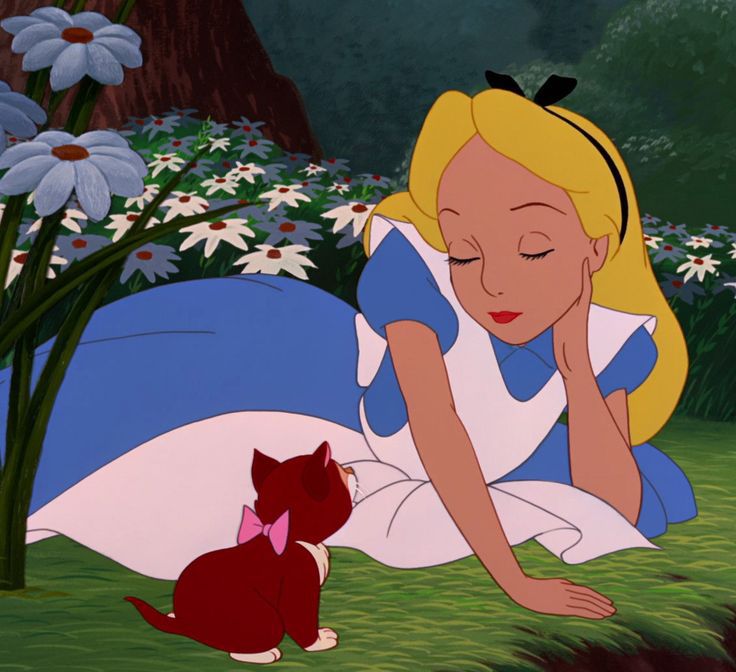
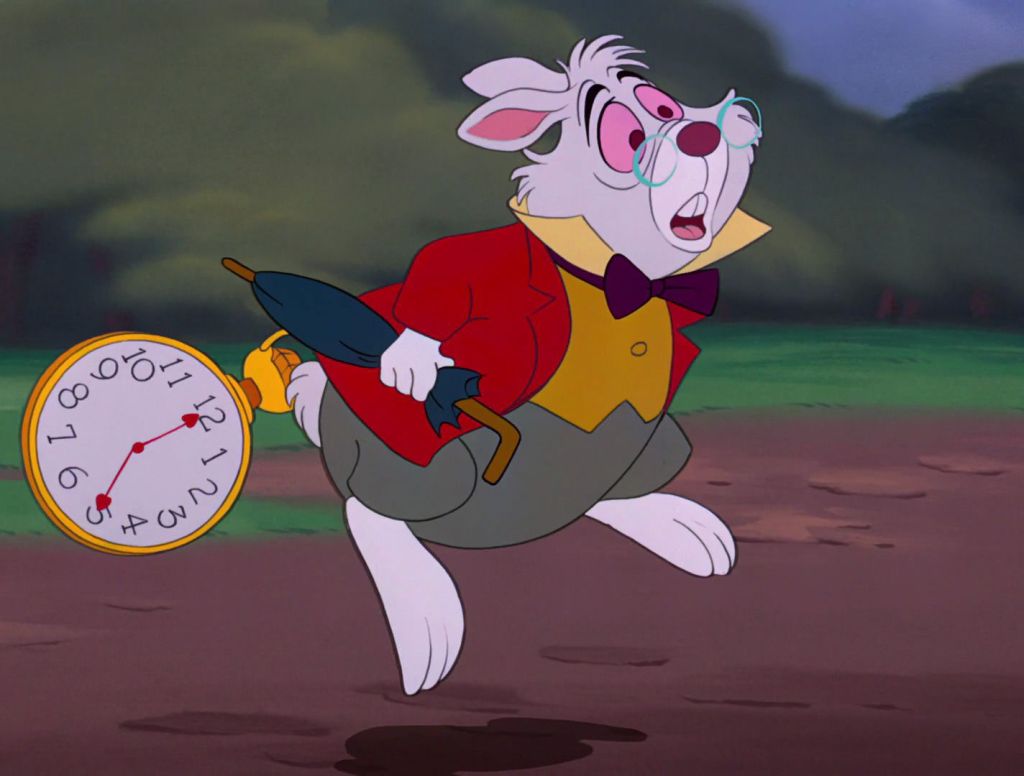
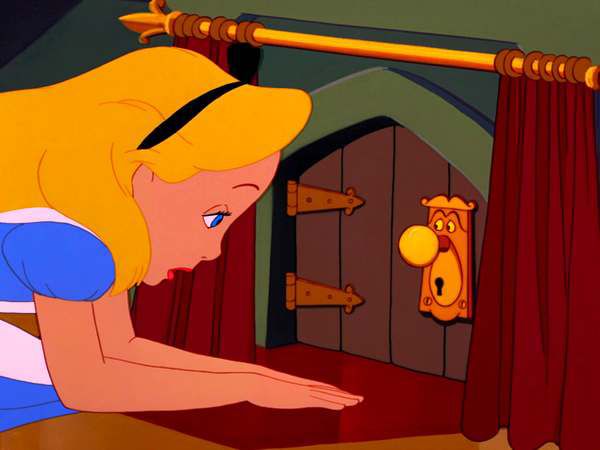
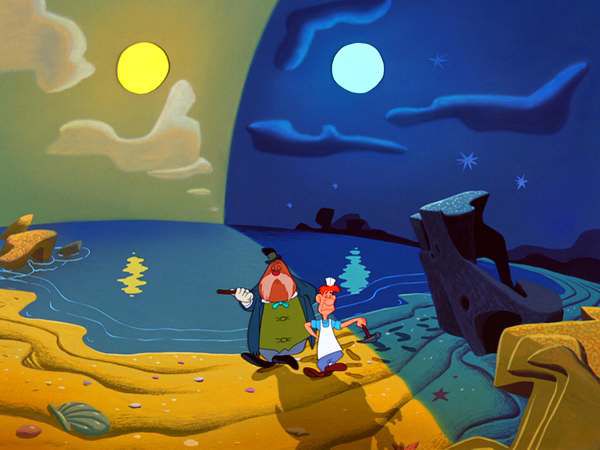
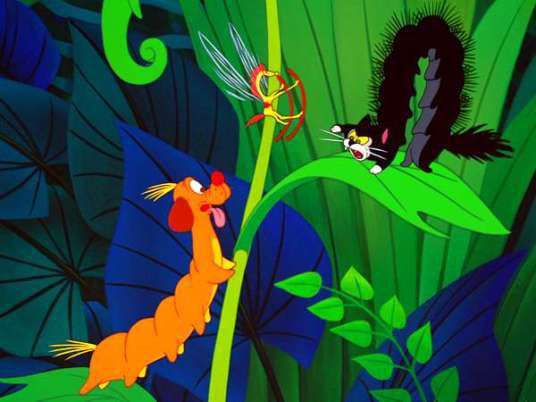
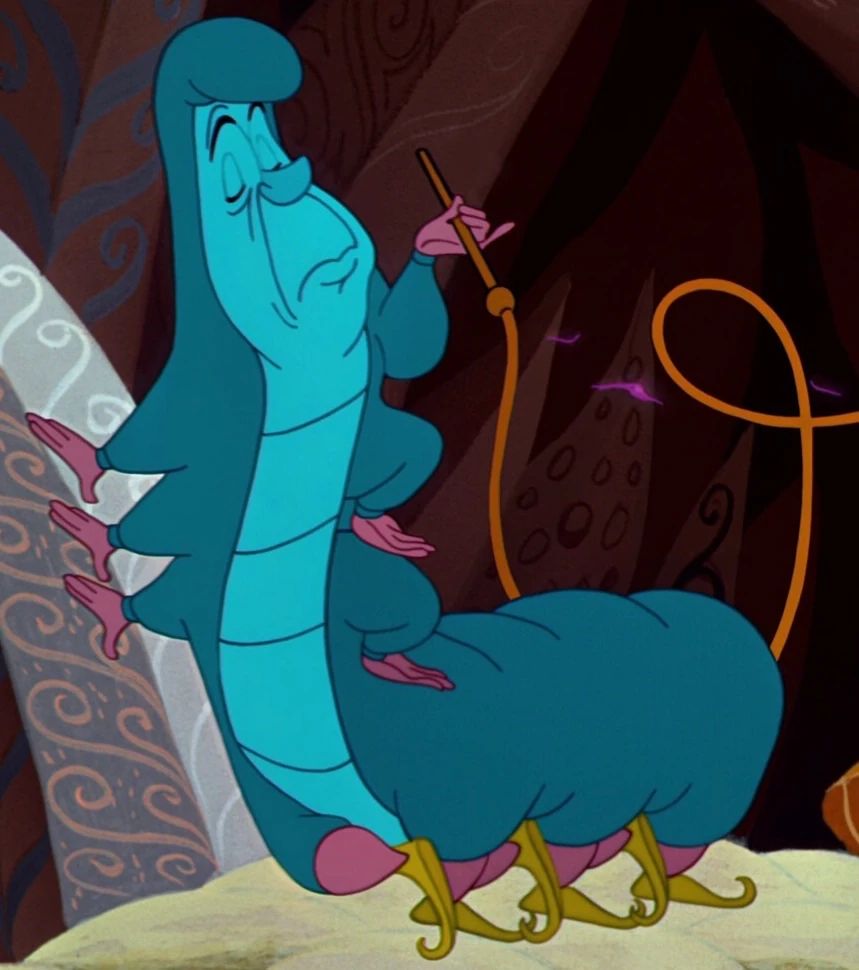
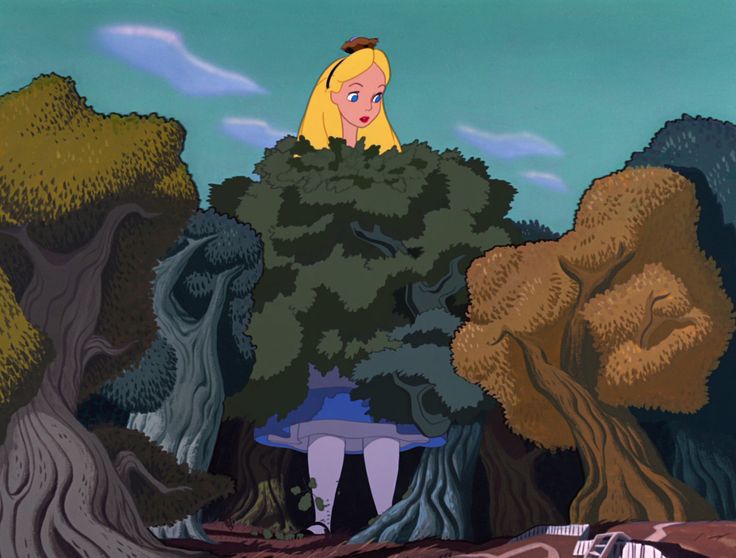
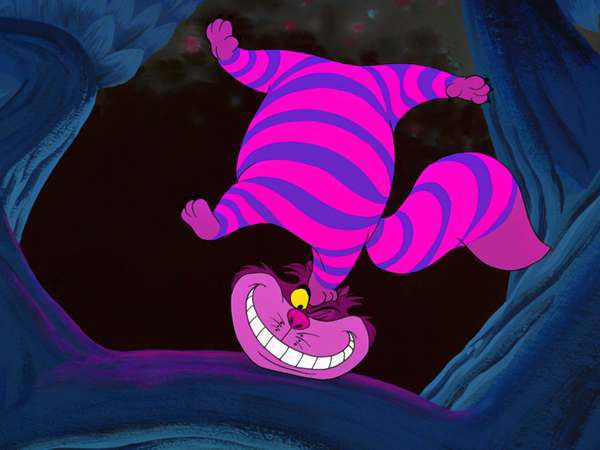
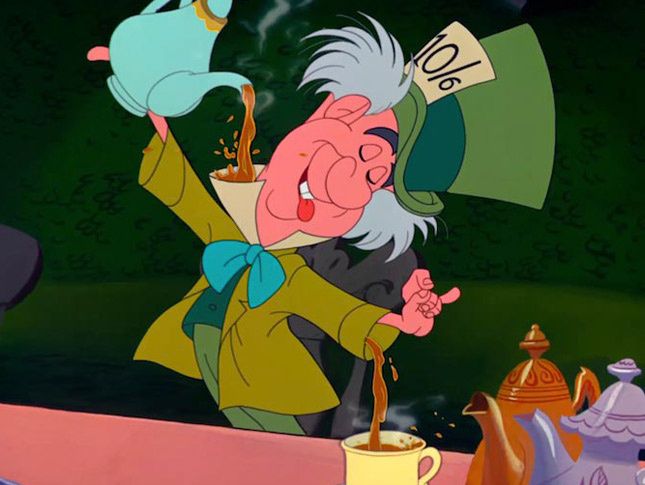
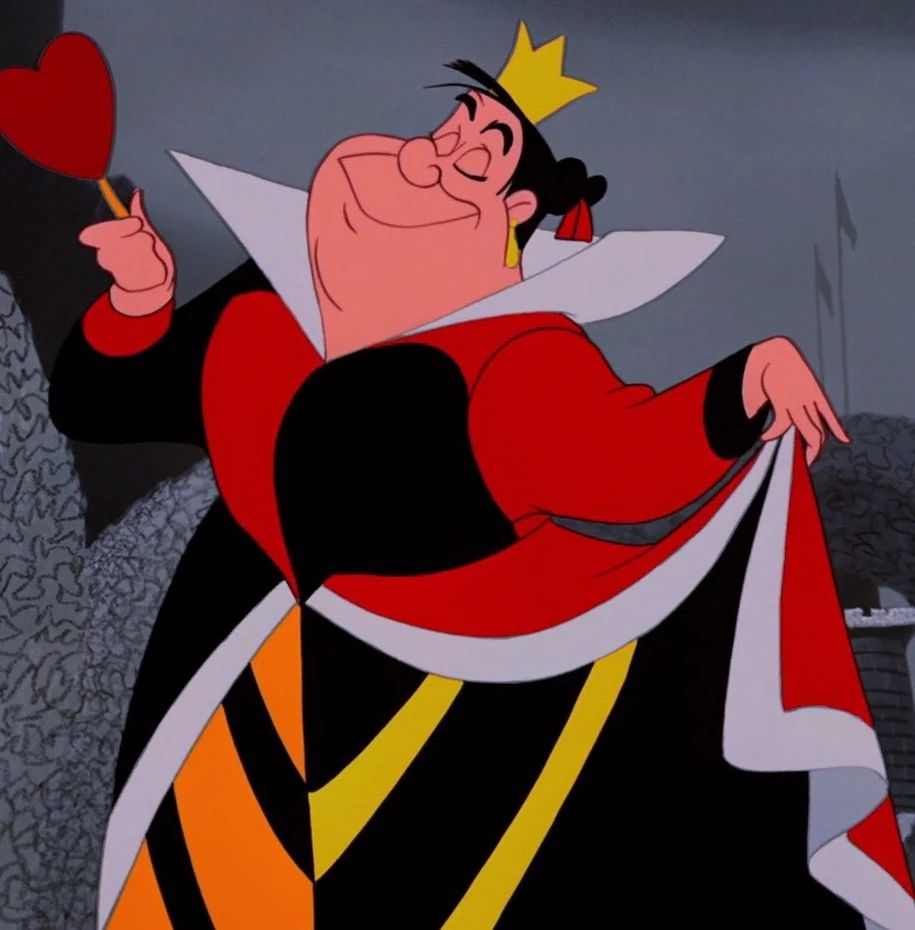
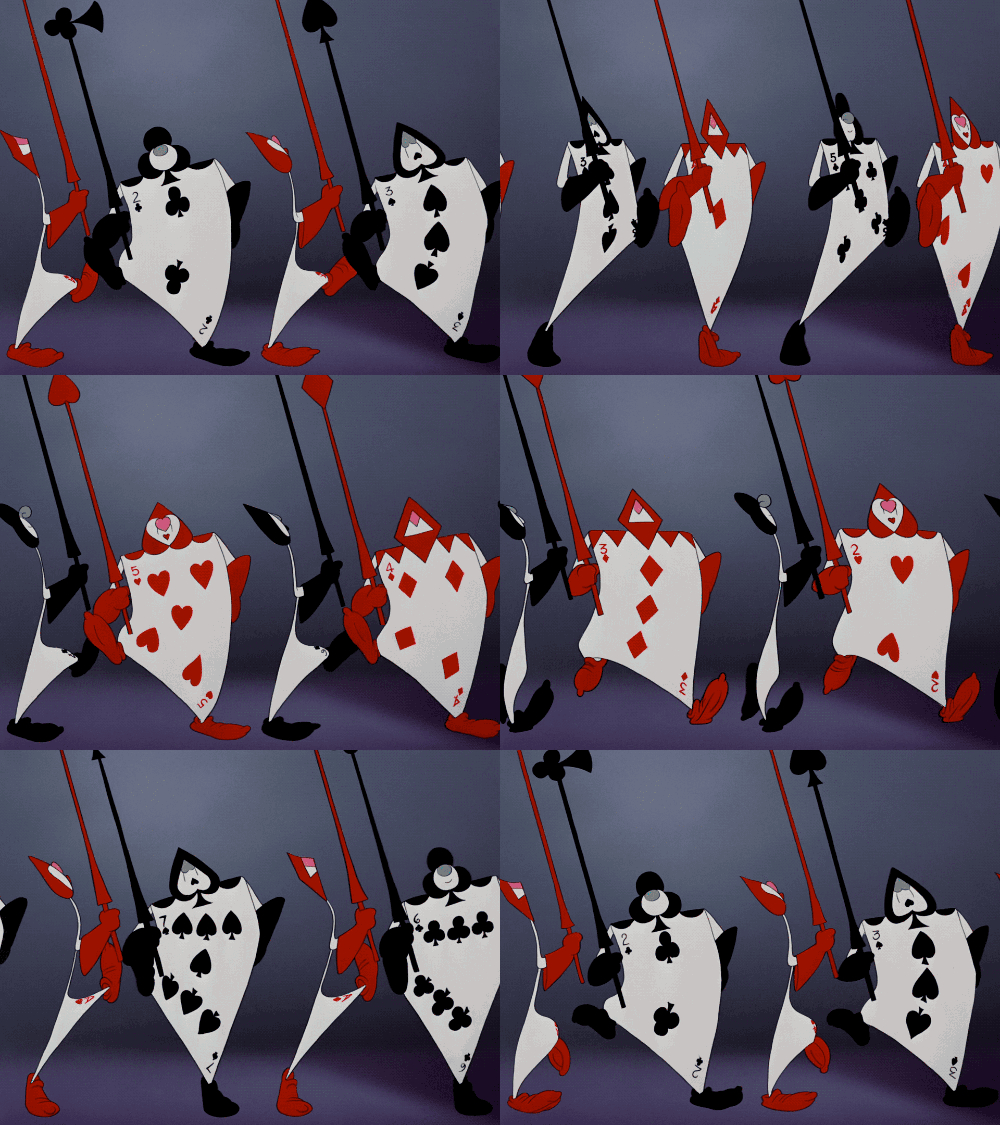
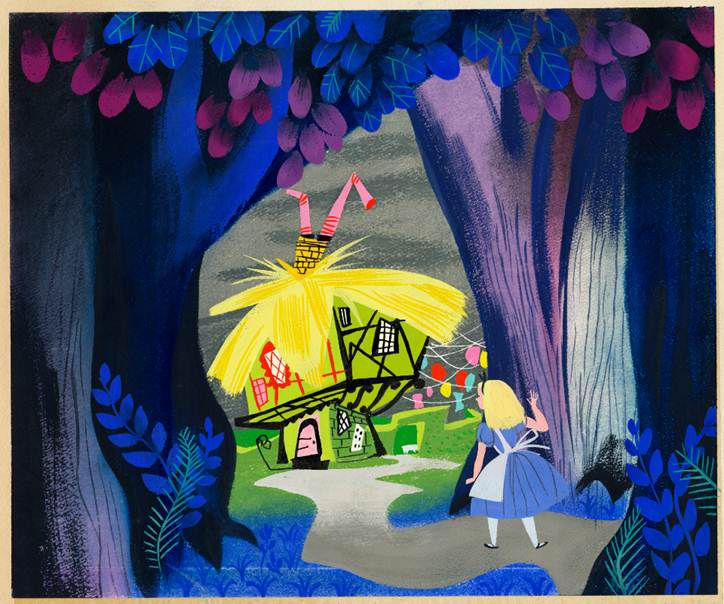
Background and concept artist Mary Blair, who first joined Disney in 1940 and previously worked on such films as The Three Caballeros, Song of the South and The Adventures of Ichabod and Mr. Toad, really inspired Walt’s vision for the film and he urged his team of artists to push the movie’s visuals more towards Blair’s whimsical modernist take and less towards the look of Alice book illustrator John Tenniel.
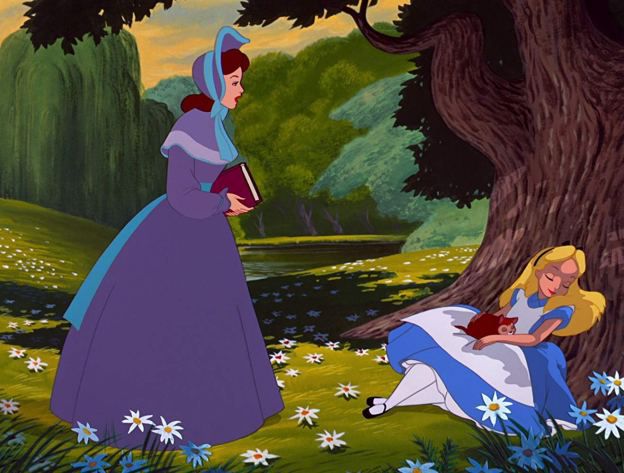
Disney’s Alice in Wonderland finally came out in 1951 and it is by far one of my favorite Disney films as well as one of their most hilarious, surreal and beloved films of all time. It really stands out as an unconventional oddball among the feature films of Walt Disney Animation Studios in regard to how the episodic narrative unfolds and how much it takes you on a psychological journey rather than an emotional one. And its path to classic status was also unconventional. The way this film’s popularity grew is not quite the same as box office hits like Snow White or Cinderella. In fact this was one of Disney’s biggest oddballs in ways that go beyond just the film itself. Here are four other big ways that make this movie stand out among the films in the Disney Canon.
Kathryn Beaumont
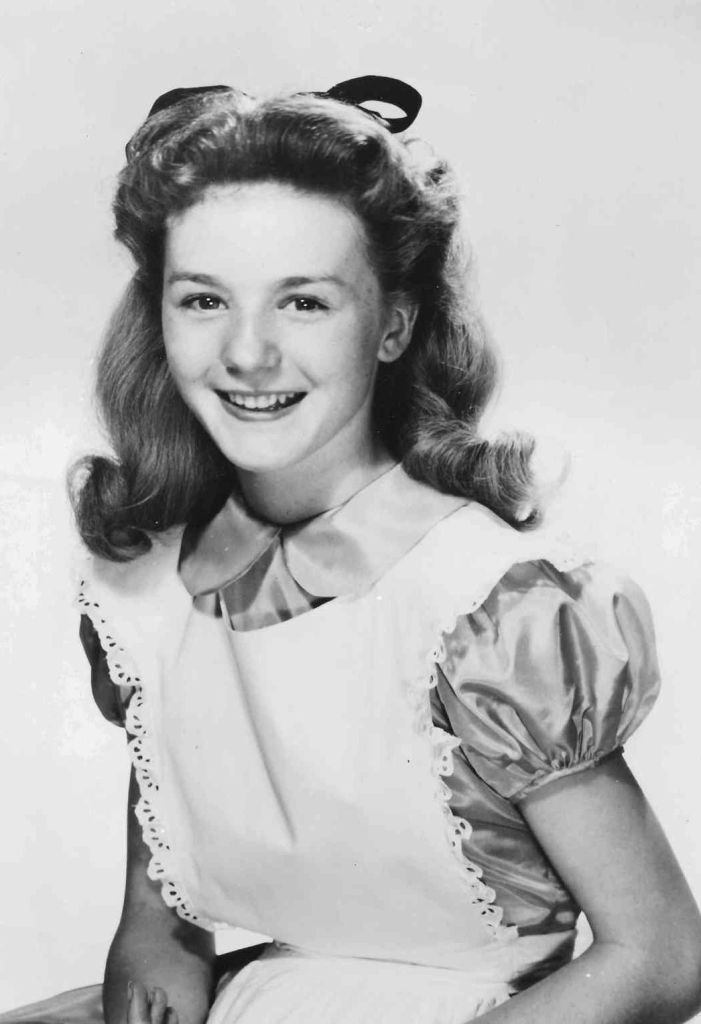
Girls Walt considered for the role of Alice included Margaret O’Brien from Meet Me in St. Louis, English child actress Lisa Davis and Luana Patten, a Disney regular who previously appeared in Song of the South, Fun and Fancy Free, Melody Time and So Dear to My Heart. Walt ultimately chose Kathryn Beaumont, a British actress whose 1948 American film On an Island with You (in which she memorably did a Jimmy Durante impression in front of Jimmy Durante) was probably her best known work at the time. Beaumont would work for Disney again frequently after Alice in Wonderland, voicing Wendy in Peter Pan and often reprising the role of Alice in things like House of Mouse and Kingdom Hearts. In fact she’s still working today, which makes her one of the rare actors who voiced a Disney character during Walt Disney’s lifetime and is still voicing that very same Disney character in the 21st century.
The Soundtrack
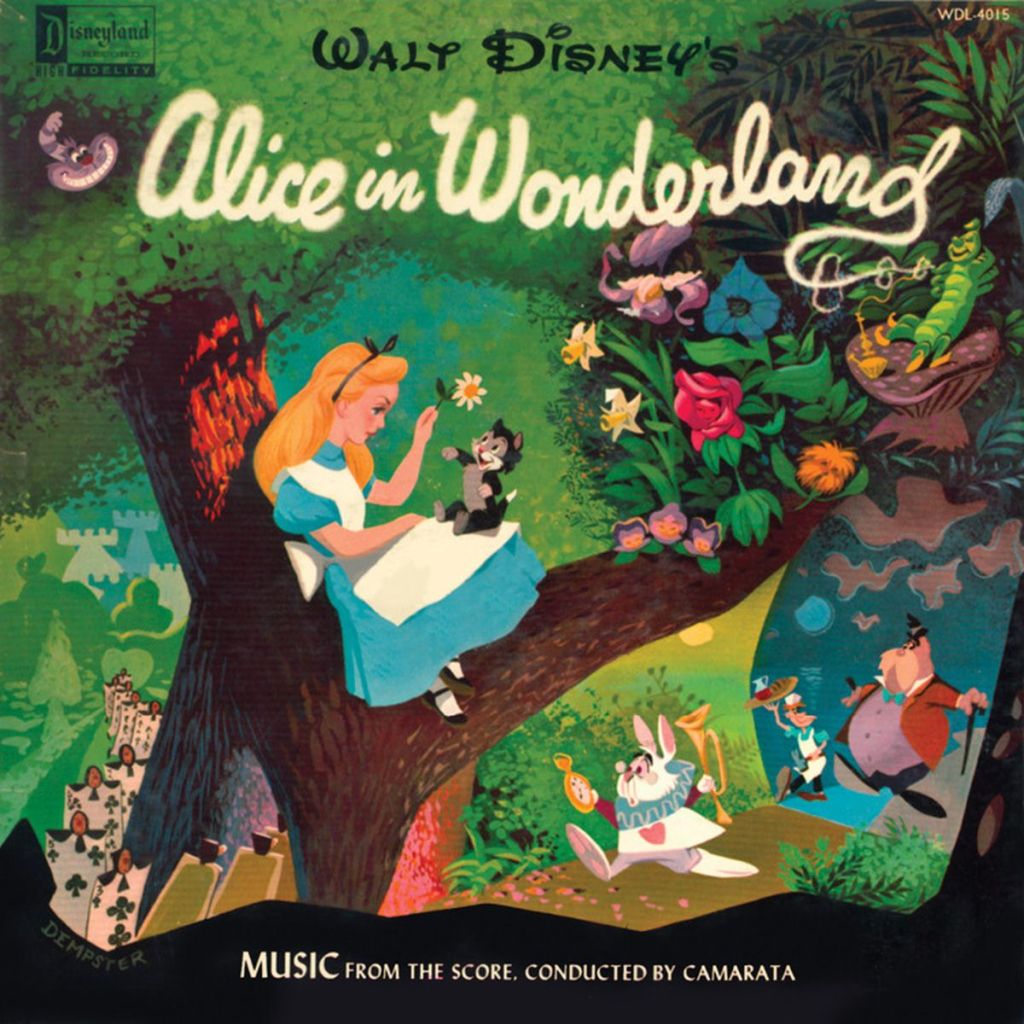
Over 30 songs were written for this film, and while many did not make the cut, the final film still holds the distinction of being the Disney film with the highest song count. The film went through several composers, including Frank Churchill who had written earlier for Snow White, Dumbo and Bambi, and the songwriting trio behind Cinderella, whose one contribution that made it into the final film was “The Unbirthday Song.” A lot of other brilliant stuff got left on the cutting room floor, although Disney repurposed some of them for other movies, including two melodies that later showed up in Peter Pan with different lyrics: Sammy Fain’s “Beyond the Laughing Sky” which became “The Second Star to the Right,” and Frank Churchill’s “Lobster Quadrille” which became “Never Smile at a Crocodile” (although that song ended up only appearing in the film instrumentally during the scenes involving Captain Hook’s encounters with the Crocodile). Sammy Fain and lyricist Bob Hilliard would end up composing most of the film’s songs, including the film’s title song “Alice in Wonderland,” “In a World of My Own,” “I’m Late,” “All in the Golden Afternoon” and “Painting the Roses Red.” All these songs would end up becoming some of Disney’s most popular, despite the fact that the film did not release a tie-in soundtrack at the time of its theatrical debut. That would happen years later after Disney founded its first record label Disneyland Records in 1956 and composer and music producer Tutti Camarata arranged an orchestral version of the soundtrack (with vocals from Mouseketeer Darlene Gillespie), which was highly acclaimed and well-received by the public. It was in fact so popular that it got reissued several times during the 1950s and 1960s until 1968, and several of the album’s arrangements can still be heard at the Disney parks, including during your time waiting in line at the queue for the Alice dark ride.
The Launch of Disney’s TV Empire
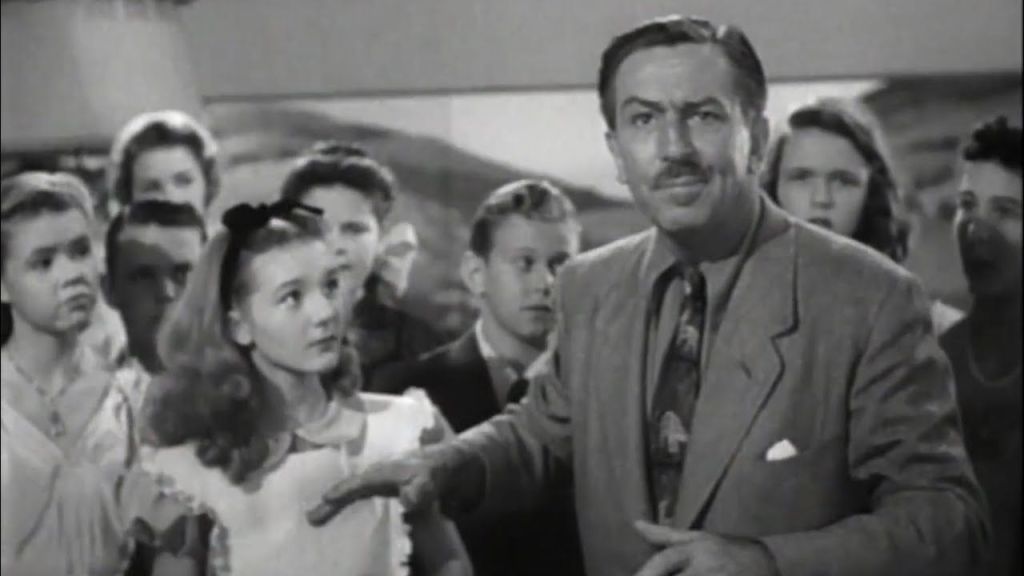
One interesting thing Walt Disney did to promote Alice in Wonderland was make his very first television production. A special called One Hour in Wonderland aired on NBC in 1950 and it very much felt like a prototype for his future anthology series. Using television to promote Alice ended up being a great promotion for Disney itself because that special was a huge success and it led to ABC offering Walt a weekly show, which Walt agreed to in exchange for ABC’s help financing the construction of Disneyland (a place that would end up incorporating the film into many of its attractions, most famously the Mad Tea Party ride which features the spinning tea cups). So while Alice in Wonderland may not have been the commercial success that Cinderella or Peter Pan was that decade, it played a big role in helping launch Disney’s TV empire (and his theme park empire), which has continued through the years with things like The Wonderful World of Disney, The Mickey Mouse Club, the Disney Channel, the Disney Afternoon and the streaming service Disney+, where Alice in Wonderland continues to be available to subscribers ever since the service launched in 2019. The film was also one of the first to be released on home video when Disney entered that market in the 1970s, and it has always been a big seller.
The Psychedelic Renaissance
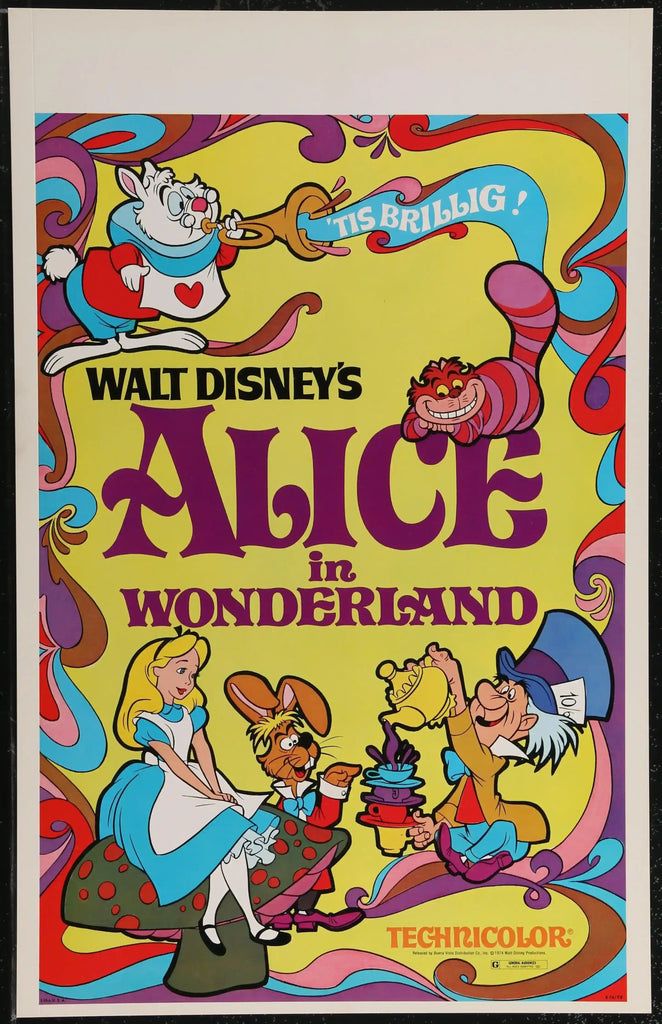
The film’s lukewarm success in 1951 caused Disney to treat it like a second-class citizen among its filmography throughout most of the fifties and sixties, but the studio decided to re-release it theatrically for the first time in 1974 to capitalize on the psychedelic craze, with trippy poster art and Jefferson Airplane’s “White Rabbit” playing during the advertisements to further emphasize their intentions. This campaign turned out to be hugely successful and the film experienced a new life and a newfound respect among the younger generations and the college crowd, with those of the drug-taking variety in particular appreciating certain aspects of it (to the surprise of no one). It was one of Disney’s smartest business moves that decade and thanks to this positive reputation as well as its second life on home video, the film is a popular and highly regarded cult classic to this day.