

Claymation filmmaker Will Vinton was born in McMinville, Oregon in 1947. When he moved to California to study architecture at UC Berkeley, he made documentaries and other short films on the side about things like the California counter-culture movement and student protests, before discovering a love for animation upon meeting clay animator Bob Gardiner in the early seventies. Vinton and Gardiner teamed up on some class film projects and upon graduation moved to Portland in Vinton’s home state of Oregon to create stop-motion animated films in Vinton’s basement, beginning with films that lasted as short as a minute until eventually making longer films while Gardiner refined his sculpting and animating techniques.
Their first film to receive major attention in Hollywood was an eight-minute short called Closed Mondays (1974) about a drunk stumbling into a museum and hallucinating that the art is coming to life. That film won an Academy Award in 1975. It turned out Gardiner’s animation and comedy skills and Vinton’s directing and camera-operating skills were a good match.
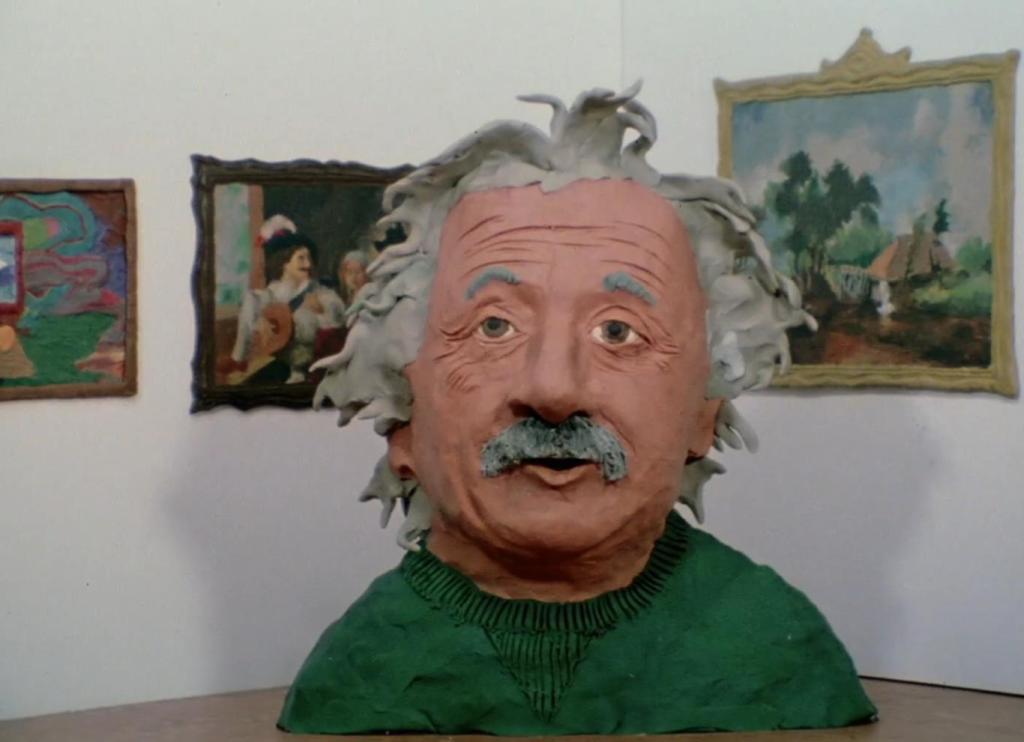
After the success of Closed Mondays, Gardiner parted ways with Vinton to broaden his artistry beyond claymation while Vinton stayed in the world of claymation and fully embraced it as his primary career from that point forward for many years, founding Will Vinton Studios in Portland the same year he won an Oscar and expanding the studio’s operations by hiring new animators and directing and producing new short films. Among those short films are Mountain Music (1976), Martin the Cobbler (1977), the Oscar-nominated Rip Van Winkle (1978), The Little Prince (1979), Legacy (1979), Dinosaur (1980), A Christmas Gift (1980), the Oscar-nominated The Creation (1981), the Oscar-nominated The Great Cognito (1982) and many other short films from the 1990s to the 2000s. Vinton also produced an insightful 1978 documentary short called Claymation.


Will Vinton Studios created one feature film called The Adventures of Mark Twain (1985) which was not a commercial hit but did receive positive reactions from most critics and was called Vinton’s most mature work by animation historian and author Charles Solomon. Vinton also produced a compilation film called Festival of Claymation (1987) featuring his best shorts as well as two dinosaurs parodying Siskel and Ebert. But more successful and perhaps most popular of all of Vinton’s projects were his TV specials, the first of which was a 1987 holiday special on CBS called A Claymation Christmas Celebration, which won a Prime Time Emmy. This was followed a few years later by two other Emmy-winning TV specials: Claymation Comedy of Horrors (1991) and Claymation Easter (1992).
The 1987 Christmas special was not only one of the top-rated programs the week that it aired but it was also notable for bringing commercial mascots the California Raisins from Sun-Maid commercials to music stardom during a segment where they sang “Rudolph the Red-Nosed Reindeer.” The California Raisin Advisory Board actually commissioned Vinton to animate the ads featuring those characters a year earlier before he decided to add them to the Christmas special. The California Raisins were so popular that they had actual record deals with labels like Warner Bros. Records and Atlantic Records (they had four albums in all between 1987 and 1988) before they appeared in two other Emmy-nominated Will Vinton TV specials on CBS called Meet the Raisins (1988) and The Raisins: Sold Out! (1990) as well as a hand-drawn animated TV series called The California Raisins Show in 1989.

Will Vinton Studios also provided animation for several other commercials, creating villainous Domino’s Pizza mascot The Noid in 1986 (“Avoid the Noid!”) and the famous M&M’s characters when the studio moved into computer animation in the 1990s, but they were also hired to animate for several music videos and films, including the live-action documentary Gone for a Better Deal (1974), Bette Midler’s 1980 concert film Divine Madness, Disney’s 1985 fantasy film Return to Oz, Susan Shadburne’s 1986 horror film Shadow Play (Shadburne previously wrote the screenplay for The Adventures of Mark Twain), the “Speed Demon” music video that appeared in the 1988 Michael Jackson anthology film Moonwalker, and the intro and outro for Dennis Dugan’s 1992 comedy Brain Donors, as well as providing animation for TV series like Sesame Street, Moonlighting, Adventures in Wonderland, Eddie Murphy’s Emmy-winning animated sitcom The PJs (which aired for two seasons from 1999 to 2000 on FOX and a third season from 2000 to 2001 on The WB), and the Emmy-nominated animated sitcom Gary & Mike (which had a short 13-episode run on UPN in 2001). Although those two sitcoms marked a shift from clay models to foam rubber models, which was easier to operate. So the era of “claymation” was over by that point.

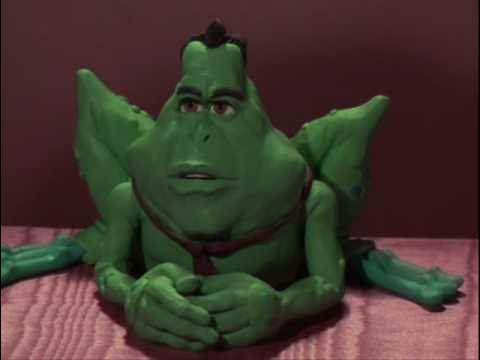


The 1980s was when Will Vinton Studios reached peak popularity, but they struggled to have much commercial success in the following decade. But Vinton wanted to make more feature films, so in an attempt to increase the studio’s finances, he allowed the studio to have outside investors for the first time, one of whom was Nike co-founder Phil Knight (Phil Knight’s son Travis Knight was an animator at Will Vinton Studios). Unfortunately by 2002, Phil Knight took over the stop-motion studio after becoming the majority shareholder, and when Will Vinton failed to raise enough funds for feature films, Vinton was fired from his own studio. Phil Knight and his son Travis Knight eventually changed the name of the studio to Laika and decided to produce their own feature films, many of which are excellent and regularly receive Oscar nominations, although the studio’s financial troubles have not completely gone away.
Vinton later founded another studio called Free Will Entertainment and his 2005 live-action/CG short The Morning After would be its first release. He also had a variety of projects in a variety of mediums, including writing a graphic novel for Dark Horse Comics called Jack Hightower, executive producing the computer-animated film The Wild at C.O.R.E. Feature Animation (a film that was released in 2006 by Disney and failed to impress) and directing a musical Frog Prince adaptation called The Kiss for the stage which finally premiered in 2014, but he retired in 2008 two years after being diagnosed with the plasma cell cancer multiple myeloma, and after a decade-long battle with that disease, he died in 2018, leaving behind a legacy of impressive and highly creative entertainment.

 Entertainment Junkie Blog