

Filmmaker James Gunn was born in St. Louis, Missouri in 1966 and from a young age was heavily entranced and influenced by horror films like Night of the Living Dead as well as magazines like Fangoria (in other words, he was a proper and respectable nerd). He has technically been a film director since he was 12, because that was when he began making his own amateur zombie films.


He studied at Saint Louis University, moved to L.A. to study at Loyola Marymount and then moved to New York to study at the Columbia University School of the Arts, eventually receiving a Master of Fine Arts degree in 1995. A year later he found professional work at the independent film studio Troma Entertainment, where he co-wrote the Shakespeare satire Tromeo and Juliet (1996) with director and Troma co-founder Lloyd Kaufman. The title of the movie being a play on Troma Entertainment’s reputation in the film industry, the transgressively over-the-top and very un-Hollywood farce revelled in violence, sex and crassness, but a lot of people liked it and it was good enough to screen at the Cannes Film Festival and earn some positive attention on the film festival scene before it expanded to arthouse theaters and select locations in the United States. It’s available to watch on a bunch of streaming sites and it’s even free in some places so if you like subversive comedy and you aren’t easily grossed out, it is readily available to watch.

Lloyd Kaufman became James Gunn’s mentor, and it was from Kaufman that Gunn learned how to write screenplays, work with actors, produce films, distribute films and eventually direct films.
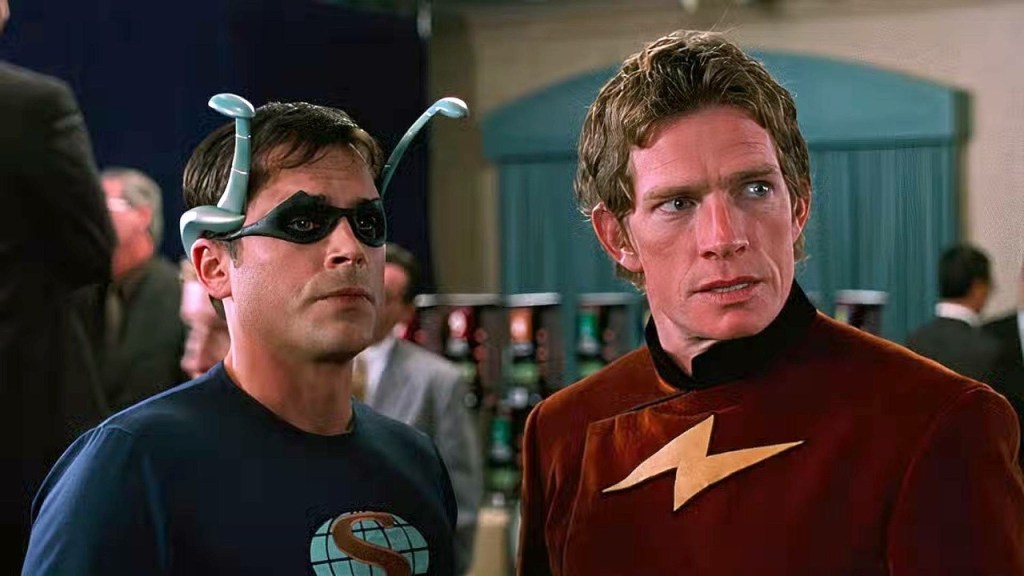
The second film Gunn wrote was future The Last of Us showrunner Craig Mazin’s superhero comedy The Specials (2000) which had the clever (and what would now be considered novel) idea of focusing on a group of superheroes on their day off, while featuring almost no action scenes or special effects throughout the entire movie. The reception was mixed, but the concept was definitely original.
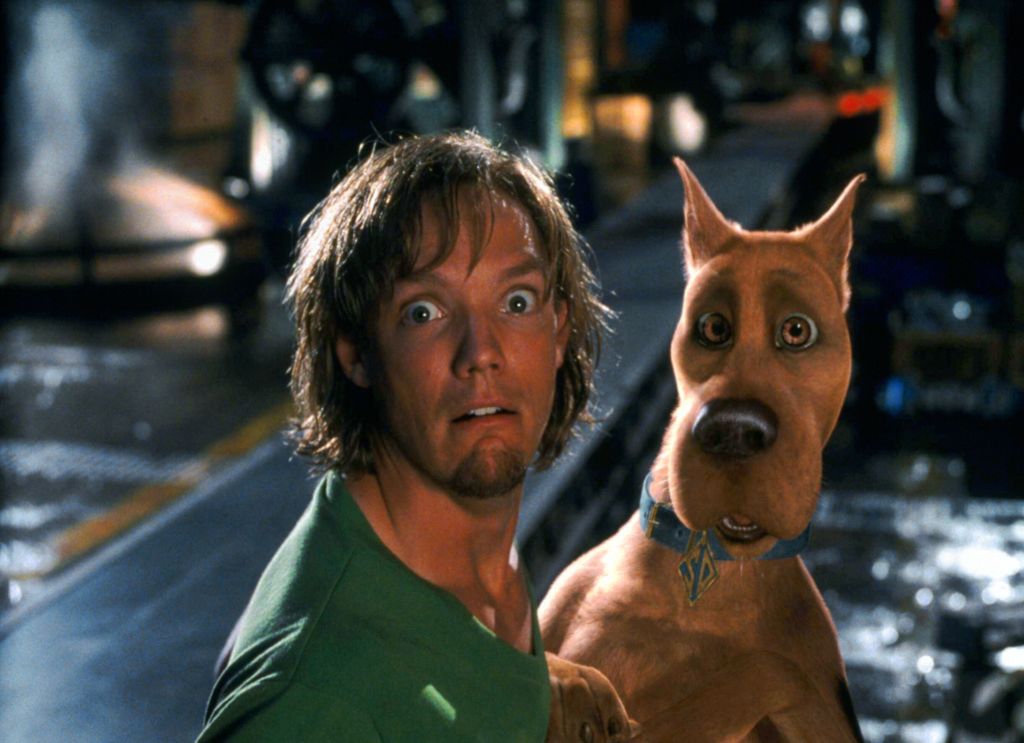
The first mainstream Hollywood film and first commercial success James Gunn was involved with was the 2002 horror comedy Scooby-Doo, which Gunn wrote the screenplay for and which received an unsurprising amount of negative reviews from critics, along with its 2004 sequel Scooby-Doo 2: Monsters Unleashed, which Gunn also wrote and additionally co-produced. Although both films grew a cult fan base and Gunn even planned on directing a third Scooby-Doo film himself, but that plan became impossible after the second film made less money than the first film, which is usually a death knell for film franchises.
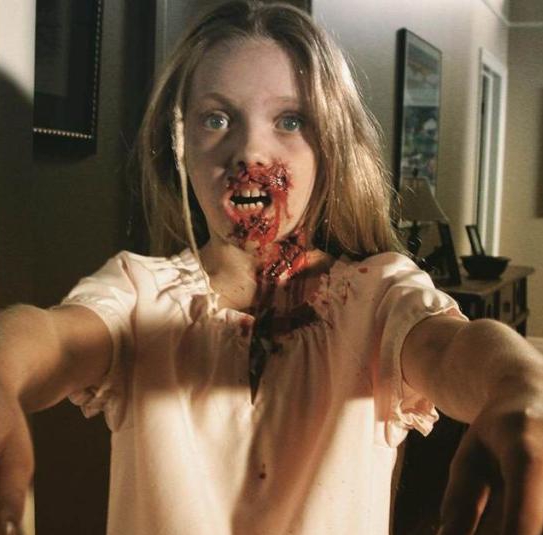
Gunn had another horror-themed success when he wrote the screenplay for Zack Snyder’s Dawn of the Dead (2004), a remake of the 1978 George A. Romero film that is critically considered one of Snyder’s best, as well as the biggest highlight of Gunn’s pre-directing career.
James Gunn then made his directorial debut with the horror comedy Slither (2006) starring Michael Rooker as a South Carolina man whose appearance becomes monstrous and grotesque after being infected by an extraterrestrial parasite originating from a meteorite. It also starred Elizabeth Banks as his wife and Nathan Fillion as the town’s chief of police. Even with a budget of $15 million it managed to flop at the box office, but moviegoers missed out because it was an entertaining and effectively creepy homage to B movies of the past. Although, again, that may only be true if you don’t get easily grossed out. Which may have been the problem.

After that, Gunn returned to the world of superheroes with another subversive comedy, this one called Super (2011). It starred Rainn Wilson as an ordinary short-order cook who gets it in his head to become a violent masked vigilante called the Crimson Bolt in order to save his recovering drug addict wife (Liv Tyler) from a ruthless drug dealer (Kevin Bacon) with the help of Crimson Bolt’s sidekick, an unhinged comic book store clerk played by Elliot Page who goes by the superhero name Boltie. The reception for this film was all over the place. It has an interesting story and some funny moments, but most critics felt it wasn’t refined enough and that it was tonally jumbled. And if you thought Slither bombing on a budget of $15 million was impressive, this film’s budget was a sixth of the budget of Slither and yet it still bombed at a theatrical gross of less than $1 million. As someone who watched it, I’m not really surprised by this, because it is an oddball film. Although poor timing may have also hurt it because the film Kick-Ass came out the same year and that had a similar story. And despite Kick-Ass having its own oddball nature and off-putting elements, it was a lot more lighthearted and accessible when compared to Super.

The most significant turn in James Gunn’s career came when Kevin Feige asked him to direct Marvel’s Guardians of the Galaxy (2014), a sci-fi underdog tale starring Chris Pratt (Star-Lord), Zoe Saldaña (Gamora), Dave Bautista (Drax the Destroyer), Bradley Cooper (voice of Rocket Raccoon) and Vin Diesel (voice of Groot) as a group of intergalactic criminals who go on the run after stealing a powerful stone (later revealed to be one of the Infinity Stones being hunted by Thanos). This movie has become one of the most beloved fan favorites of the Marvel Cinematic Universe and one of the most critically and commercially successful films of 2014 in general, instantly putting co-writer and director James Gunn on the map in Hollywood. Gunn would return to write and direct the sequel Guardians of the Galaxy Vol. 2 (2017), The Guardians of the Galaxy Holiday Special (2022) on Disney+ and the third and final film in the trilogy Guardians of the Galaxy Vol. 3 (2023), all of which were well-received (and who could forget that funky soundtrack?)

Of course the way James Gunn went from directing Guardians of the Galaxy for Marvel to directing Superman for DC and becoming the co-CEO of DC Studios for Warner Bros. is perhaps the most insane thing that has ever happened to him, and possibly the most insane thing that has ever happened to any film director.
That all started in 2018 when Gunn publicly criticized President Donald Trump, which prompted right-wing personality and conspiracy grifter Mike Cernovich to get back at him by drawing attention to some tasteless and controversial joke tweets from Gunn’s past Twitter feed (which I will not share). Those tweets made headline news and as a result, Disney severed ties with James Gunn while he was in the middle of directing Guardians of the Galaxy Vol. 3. Gunn, to his credit, admitted that his tweets were in bad taste and that he regretted posting them, and he totally accepted Disney’s decision to fire him. However, the outcry and the anger over Disney’s decision to fire Gunn was far greater than the outcry over his tweets, not only from Marvel fans but from a lot of entertainers (including many who have worked with Gunn) who defended James Gunn’s character, and journalists who rightly called out Disney for giving in to a bad faith pressure campaign.
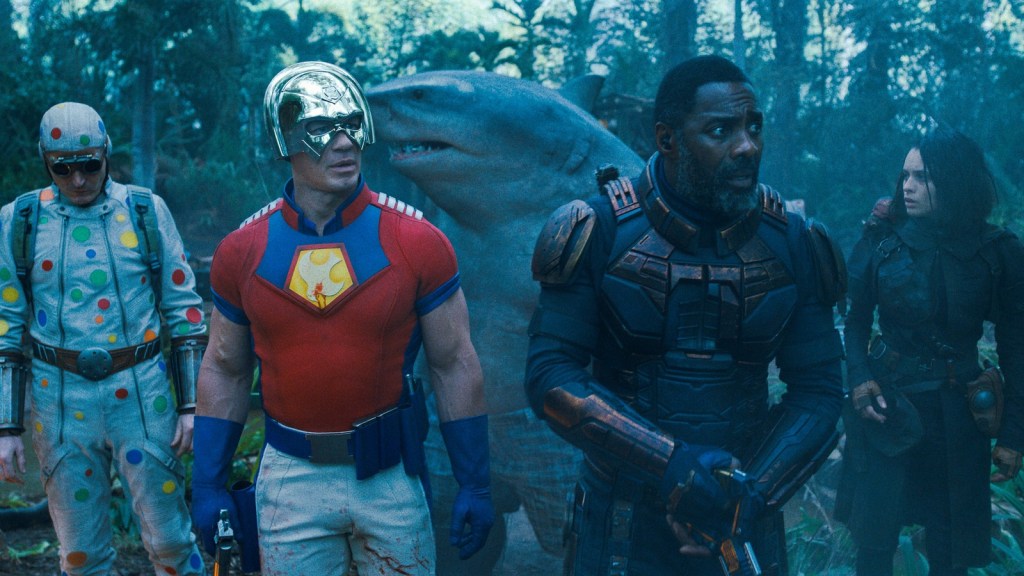
But Disney really looked like a sucker after Warner Bros. swooped in on Gunn following his departure from Marvel and immediately hired him to direct movies for DC, the first of which would be The Suicide Squad (2021) which was kind of like an R-rated version of Guardians of the Galaxy as it told a story about a team of supervillains with Gunn’s dark sense of humor and disarming emotion intact. That film would be DC’s second live-action Suicide Squad film following David Ayer’s 2016 film, but while the first film was a commercial hit despite a poor critical reception, James Gunn’s film was the exact opposite: a commercial flop that received positive reviews across the board. Although Gunn’s Suicide Squad became the most popular DC Extended Universe film on HBO Max, so it was a streaming hit.
While Gunn would remain at Warner Bros. and DC, Disney would reinstate Gunn at Marvel two years before The Suicide Squad was released so that he could finish directing Guardians of the Galaxy Vol. 3. But something tells me Gunn enjoys working at WB a lot more because a lot of the stuff he’s creating at DC feels a lot edgier and a lot more creatively free.
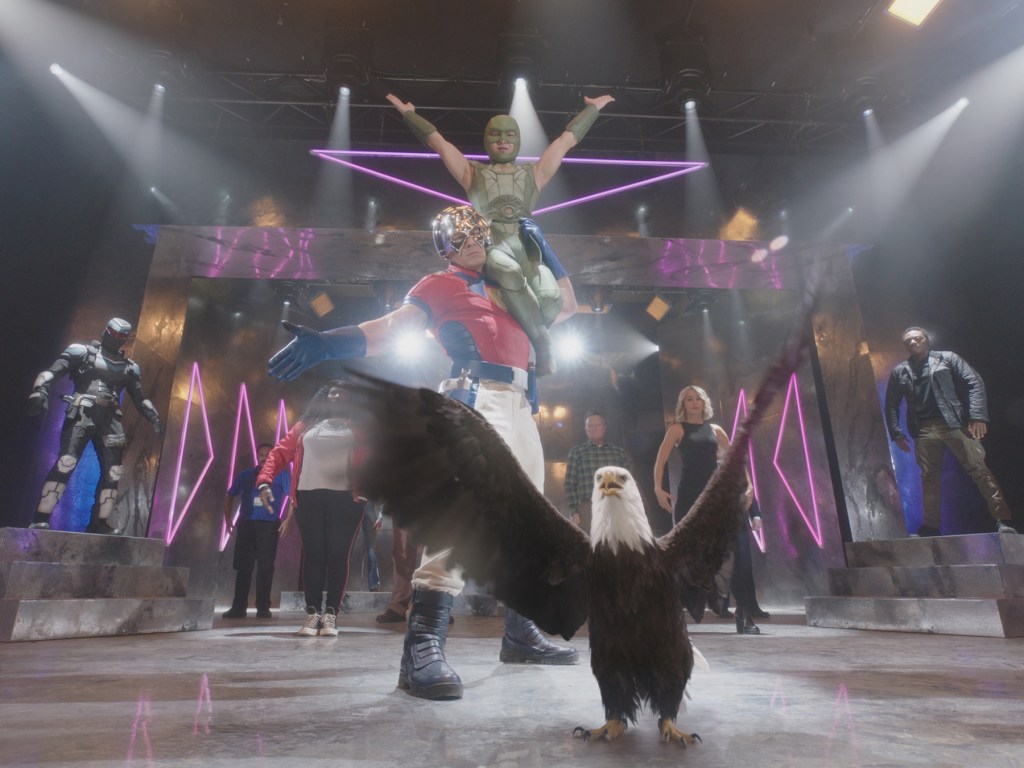
A year after The Suicide Squad came out, Gunn created a spin-off TV series for HBO Max called Peacemaker, which features John Cena reprising his Suicide Squad role as a peace-seeking mercenary. The first season came out in 2022 but it is still in active development at DC Studios with a second season on the way, despite it starting out as a part of the DC Extended Universe.
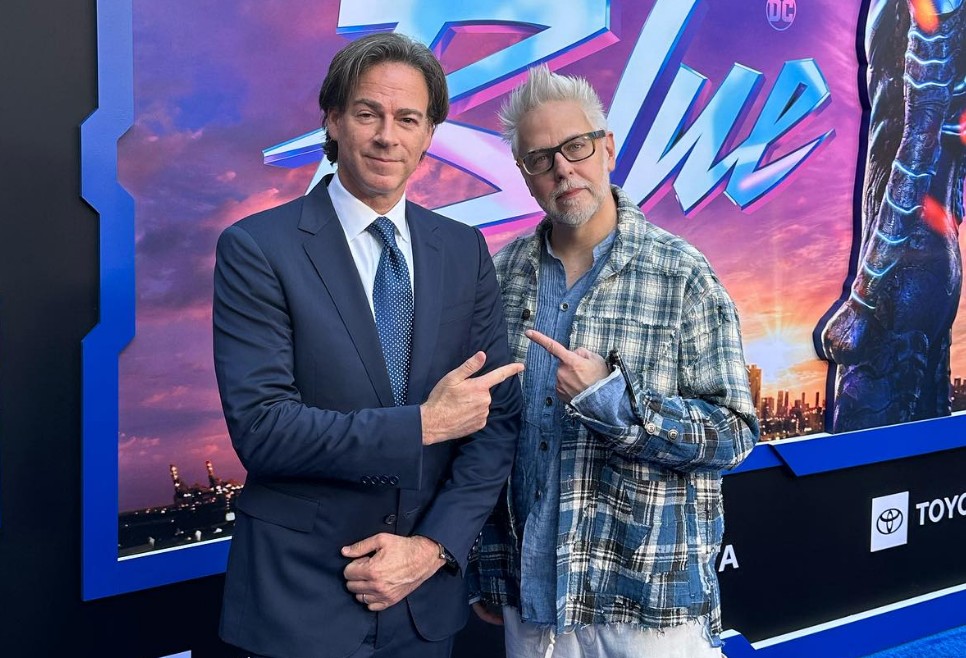
The year Peacekeeper made its debut was the same year that Gunn and his frequent producing partner Peter Safran met with Warner Bros. Discovery CEO David Zaslav to advise him during his search for a new CEO to run DC, which led to Zaslav hiring Gunn and Safran to head the studio, which was newly dubbed DC Studios.

Aside from his prior commitments with Marvel, Gunn would work exclusively with WB on the creative side of DC Studios, with the first release being the 2024 Max animated series Creature Commandos about a black ops team of monsters recruited by Amanda Waller (voiced by Viola Davis who reprises her role from the two live-action Suicide Squad films) and led by General Rick Flagg Sr. (voiced by Frank Grillo). The series, which was violent, funny and told a surprisingly heartfelt misfit story, was very much in Gunn’s wheelhouse and he wrote every episode of the first season receiving positive reviews in the process.

As for DC Studios’ film slate (which conveniently underwent a soft reboot in 2023 following the events of The Flash) the first of those would be Superman (2025), which Gunn both wrote and directed and, from the reactions I’m currently seeing online, is a perfect start for DC Studios that is being lauded for the way it has reenergized the superhero genre. Superman officially kicks off the first chapter of DC Studios. A chapter which Gunn revealed was titled, “Gods and Monsters,” with more chapters to follow in the future, similar to how Marvel uses phases, although differentiating itself from Disney’s approach to making Marvel films in some key ways, including Gunn’s desire to prioritize quality over quantity and never be beholden to release dates until he is satisfied with the screenplay (a problem Gunn revealed was way too common not only at Marvel but at every Hollywood studio). That means Gunn will not be against delaying release dates or outright cancelling films if they do not meet his standard for quality. Gunn also says he will be less focused on an overlapping saga that connects each movie, like Marvel was doing with Thanos and the Infinity Stones. Although he does still plan on eventually building up to a Justice League film.

So far the post-Superman films Gunn and Safran are producing at DC Studios for their “Gods and Monsters” chapter include Supergirl, Clayface, The Authority, The Brave and the Bold and Swamp Thing, while the TV shows include the second season of Peacemaker, the Amanda Waller spin-off Waller, Paradise Lost which will be set on Wonder Woman’s home island Themyscira, and Booster Gold. Although given Gunn’s flexibility about release dates, some of these plans could change. Meanwhile, DC productions that do not fit into Gunn’s DC Universe such as Matt Reeves’ The Batman Part II will be labeled as being a part of “DC Elseworlds,” which will allow for filmmakers to have creative freedom outside the main DC continuity, similar to how DC was already handling its straight-to-video animated films.
All this, plus Gunn’s filmmaking skills and passion for DC and comic books in general, gives me confidence that he is the perfect person to run this studio. If everything he’s saying is true, this could possibly be the best time to be a DC fan. I will be following the rest of James Gunn’s career and the films of the DC Universe closely and eagerly.

 Entertainment Junkie Blog