

As I said in my previous article, Lupin the 3rd made the jump from manga page to TV screens in 1971 via Tokyo Movie Shinsha in the series that marked Hayao Miyazaki’s first effort as a director. That show became so popular that it has not only continued airing up until the year 2022, but it has also led to many film adaptations, the first of which was Lupin the 3rd: The Mystery of Mamo (1978) which was directed by Sōji Yoshikawa (future director of the Kirby anime) and was financially successful upon its release. That led to a sequel, and Tokyo Movie Shinsha approached Miyazaki to direct it.

Though in the manga by Monkey Punch and in the TV series adaptation the character of Lupin is by every definition a thief and a scoundrel, Miyazaki softened the character up a bit and made him more of a heroic and charming scoundrel in The Castle of Cagliostro (1979), but only the most die-hard Monkey Punch fans really had a problem with that. To Monkey Punch’s credit, he acknowledged the difference in his style and Miyazaki’s style, but he still recognized the film’s excellence, as did most everyone who watched it. The film has garnered praise from critics, film historians and animation fans, many of whom call it a masterpiece. It has also influenced animators and filmmakers alike (even Disney films like The Great Mouse Detective were directly inspired by it).


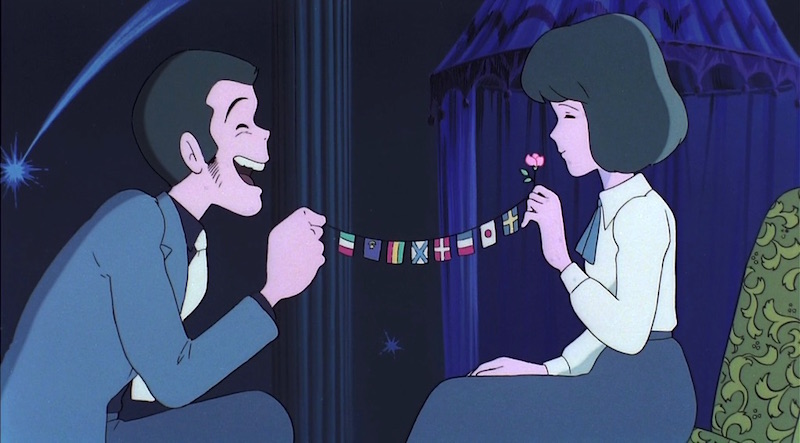
Miyazaki’s love for Europe and a particular influence from French animated film The King and the Mockingbird (which also inspired Miyazaki while he was directing Future Boy Conan) can be felt in Cagliostro, which honestly feels kind of like the first Studio Ghibli film despite that studio not existing yet. Though Cagliostro was less commercially successful than Mystery of Mamo and it only really gained a cult following after Miyazaki became more well-known and people started recognizing his genius.
Nausicaä of the Valley of the Wind (1984) however would be the real game changer in Miyazaki’s career, because that was the first feature film Miyazaki ever directed that was not only both financially and critically successful but also pop culturally significant.
Nausicaä is a post-apocalyptic fantasy about a teenage princess named Nausicaä (voiced by Sumi Shimamoto who had previously voiced Clarisse in The Castle of Cagliostro) who gets entangled in a militaristic empirical plot to eradicate a jungle of giant mutant insects and seeks a way for the creatures to coexist with humans. It was beautifully animated, beautifully designed and a smartly written sci-fi tale. And it was also the first film to be written and directed solely by Miyazaki and stem almost completely from his own imagination.

Nausicaä wasn’t Miyazaki’s first choice as a follow-up to Cagliostro, but none of the anime studios were receptive to his film pitches (one pitch being an adaptation of the Richard Corbin comic Rowlf). Although one fateful day, entertainment magazine Animage approached Miyazaki to create some manga for them (Animage publisher Takuma Shoten was a fan of The Castle of Cagliostro) and that was when Miyazaki came up with the story of Nausicaä, which made its manga debut in the pages of Animage in 1982 and was serialized until 1994.
The editors at Animage thought Miyazaki’s manga had potential as a film adaptation, but Tokuma Shoten was reluctant to fund animation production due to how expensive it is. But the Nausicaä manga was growing in popularity and it quickly became the most popular feature in the entire magazine. While Miyazaki was initially reluctant to adapt Nausicaä to animation, he too had begun seeing its potential as an animated film. But he would only agree to an adaptation if he was the one directing it.
Miyazaki recruited his longtime collaborator Isao Takahata to produce the film and searched for a studio to animate it. Eventually Miyazaki and Takahata landed on Topcraft, an animation studio founded in 1972 by a group of former Toei animators and who were known for their collaborations with Rankin/Bass on films like The Hobbit and The Last Unicorn. Meanwhile Takahata was the one responsible for enlisting minimalist composer Joe Hisaishi to score the film’s music. Miyazaki would end up liking Hisaishi’s work on Nausicaä so much that Hisaishi would work with Miyazaki on all of his films at Studio Ghibli.

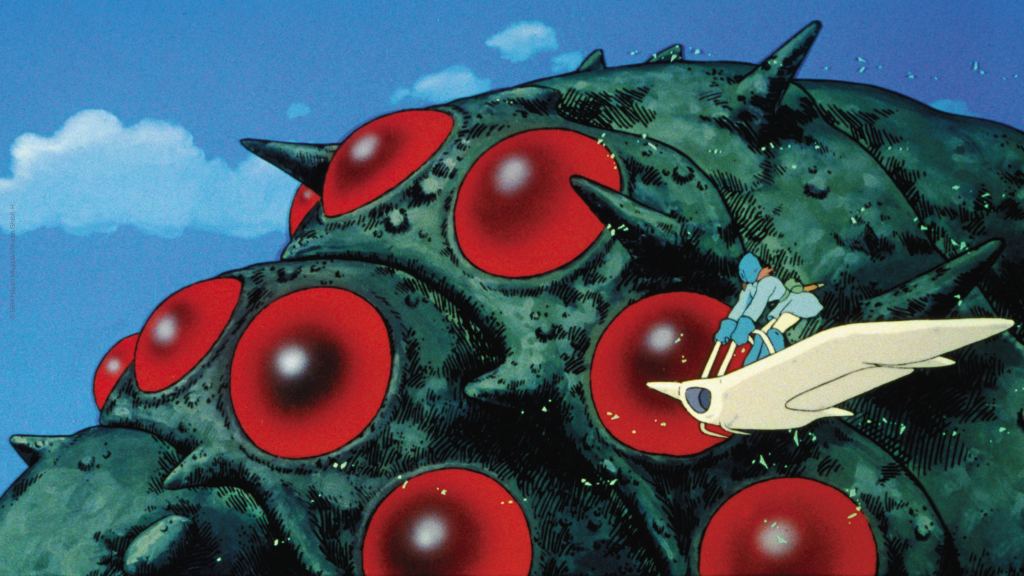
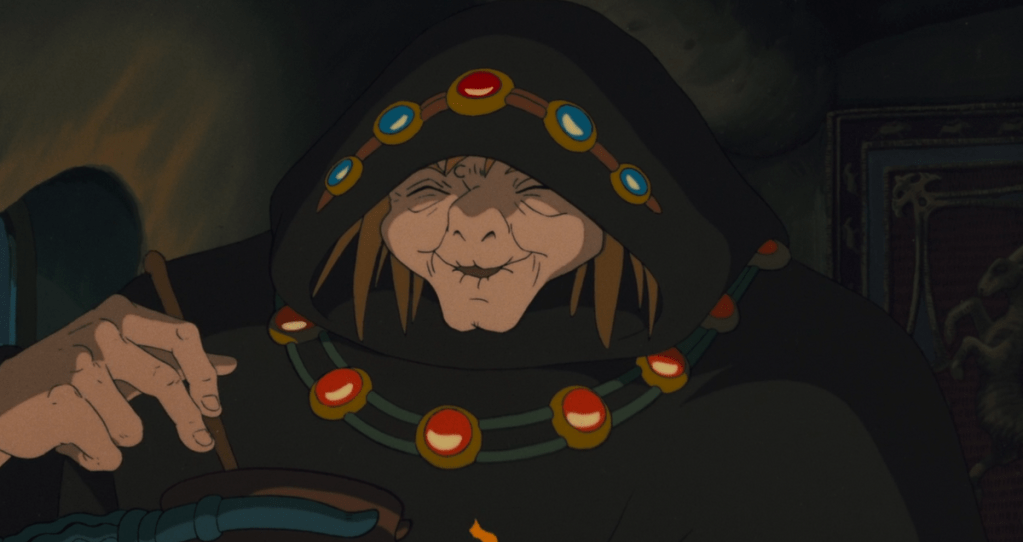
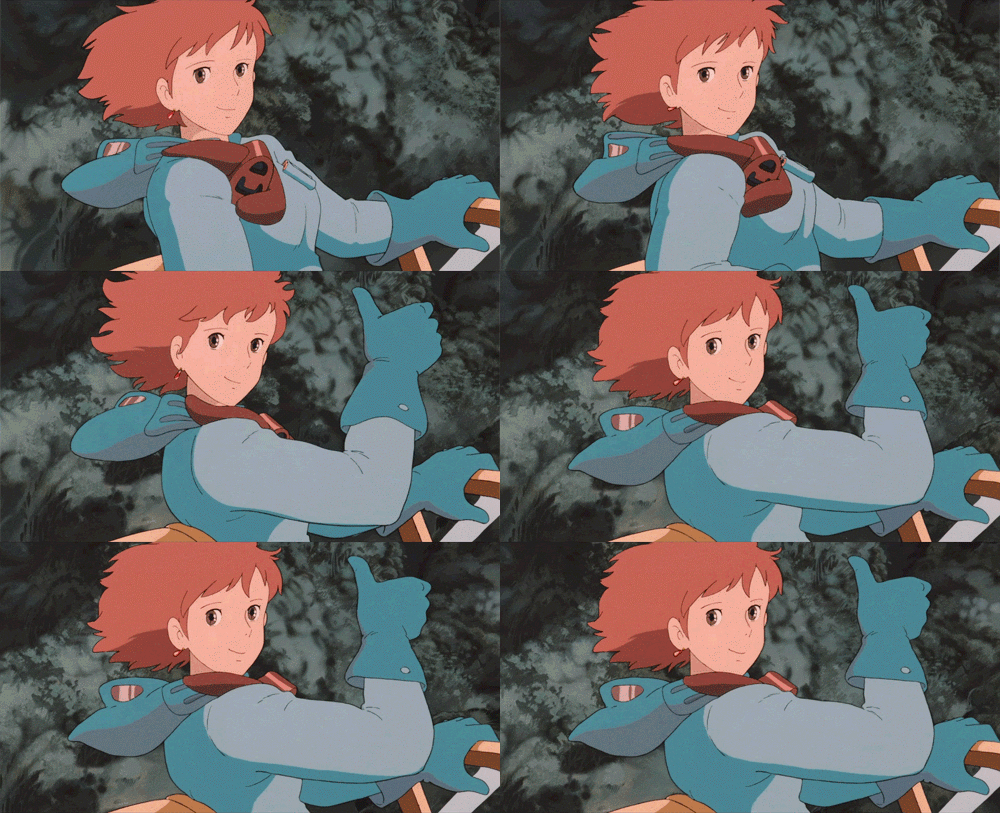
Just like Miyazaki and Takahata’s previous film collaborations, Nausicaä received critical acclaim when it was released, but as I said, this was also their first big commercial hit (the film’s budget was the equivalent of $1 million and its box office profit in 1984 was the equivalent of $6 million). Critics often rank it among the best animated films ever made and it has since gone on to be one of the most influential anime films, especially since the film’s success led to the founding of Miyazaki’s own animation studio the following year. That animation studio would of course be Studio Ghibli, which would go on to produce some of Miyazaki’s best work and some of the best animated films ever made in general.
 Entertainment Junkie Blog