

While the late eighties saw renewed praise for Saturday Night Live thanks to comedians like Dana Carvey, Jon Lovitz, Phil Hartman and Mike Myers (in addition to the show basically going back to the drawing board on what made it work so well in the seventies), the nineties was when critics and audiences began seeing a radical shift in SNL‘s comedic style. It began leaning more into outrageous, sophomoric and lowbrow material (even more so than usual). Although a lot of viewers tuned in and made this one of the show’s most successful periods. Five people who joined the cast in the early nineties became the poster children for this frat boy-style comedic shift and they have come to be nicknamed the “Bad Boys of SNL.” Those people are Chris Farley, Chris Rock, Adam Sandler, Rob Schneider and David Spade. All five would gain fame on SNL and all five would have successful post-SNL comedy careers. In this article I’m going to focus on each of them individually.
Chris Farley (1990-95)

One of the funniest cast members in SNL history and still a fan favorite to this day. It didn’t even seem like he was trying to be funny. That’s how comedically gifted he was. His most popular character was motivational speaker Matt Foley but he was also known for sketches like Bill Swerski’s Superfans, Gap Girls, Lunch Lady Land and The Chris Farley Show and for impersonating celebrities like Meat Loaf, Jerry Garcia, Newt Gingrich and Rush Limbaugh.
Before SNL
Chris Farley was seemingly on a typical path based on his early life in Madison, Wisconsin. Irish-American boy who went to mass, went to camp in the summer and went to college to play sports. But it was his major in theater that led him away from working for his oil CEO dad and down the path of comedy, learning the art of improvisation at Madison’s Ark Improv Theatre and afterwards travelling to Chicago to perform at iO and Second City. He was so good at thinking on his feet and being funny that he was eventually promoted to the Second City main stage, which led to his discovery by SNL creator Lorne Michaels.
After SNL
Farley appeared in other popular shows like Roseanne, The Larry Sanders Show and the Nickelodeon sketch comedy series All That, plus he would return to host SNL in 1997, but he also appeared in the films Wayne’s World (1992), Coneheads (1993), Wayne’s World 2 (1993), Airheads (1994), Billy Madison (1994) and, during his final year on SNL, the cult-hit comedy Tommy Boy (1995) alongside David Spade. Farley would re-team with Spade a year later in the comedy Black Sheep (1996) and he would make his debut as a leading man in the martial arts slapstick comedy Beverly Hills Ninja (1997).
Farley was a huge star with a lot of fans and a promising career on the horizon, but his career and his life were cut short in the December of 1997 when he overdosed on heroin and cocaine in Chicago. Farley always had drug addiction problems even before he became rich and famous but the money and the fame definitely exacerbated it. As a result, many future projects went unproduced and some were altered. Including the 2001 film Shrek for which Farley recorded 85% of the title character’s dialogue before he died and Mike Myers came in to re-record the whole thing from scratch. Shrek would have been a very different film had the ogre talked and behaved in the same manner as Farley like the producers originally intended. A documentary about Farley’s life called I Am Chris Farley was released in 2015, Adam Sandler paid tribute to Farley musically in his 2018 Netflix special 100% Fresh, and a Chris Farley biopic set to be produced by Lorne Michaels is currently in the works at Warner Bros.
Chris Rock (1990-93)

During Chris Rock’s time on SNL, he would be known for playing Onski opposite Chris Farley’s B-Fats in the hip-hop-themed sketch I’m Chillin’, as well as playing the militant afro-wearing Nat X who had little trust in “The Man,” (Chris Rock incorporated many of his own comedy bits into that character), appearing on Weekend Update as the elderly Buster Jenkins and impersonating Arsenio Hall, Jaleel White, MC Hammer and Michael Jackson.
Before SNL
The Brooklyn-raised Chris Rock was passionate about comedy from a young age and was naturally funny even as a child, with Eddie Murphy inspiring him to pursue that dream and an open mic at a New York comedy club opening the door and allowing him to build a reputation as a funny comedian. He starred in films like Beverly Hills Cop II (1987) with Eddie Murphy and I’m Gonna Git You Sucka (1988) with the Wayans Brothers, but it was his appearance on Arsenio Hall’s talk show that brought him to the attention of Lorne Michaels.
After SNL
Rock found his time on SNL disappointing because his voice wasn’t being properly utilized (he basically said it all when he made a joke years later that SNL is a show for White people). Rock had more fun when he left SNL and joined the cast of In Living Color (although that was during In Living Color‘s final season). HBO was the most generous to Rock, giving the comedian his own talk show in 1997 and granting him a ton of exposure with his stand-up comedy specials which became his biggest claims to fame and often showcased Rock at his funniest, most shocking and most honest.
He also wrote, directed and produced his own films, the most positively received ones being the documentary Good Hair (2009) and the romantic comedy Top Five (2014) for which he starred opposite Rosario Dawson, and he would regularly go back to voicing Marty the zebra in the Madagascar series for DreamWorks Animation, but my favorite thing he ever did was create and narrate the sitcom Everybody Hates Chris. That series, which ran for four seasons from 2005 to 2009 on UPN and The CW, portrays the life of a young Chris Rock living in Bed-Stuy and it is consistently hilarious and highly underrated. And that goes for the animated sequel series Everybody Still Hates Chris which premiered on Comedy Central in 2024 and is just as funny.
Adam Sandler (1990-95)
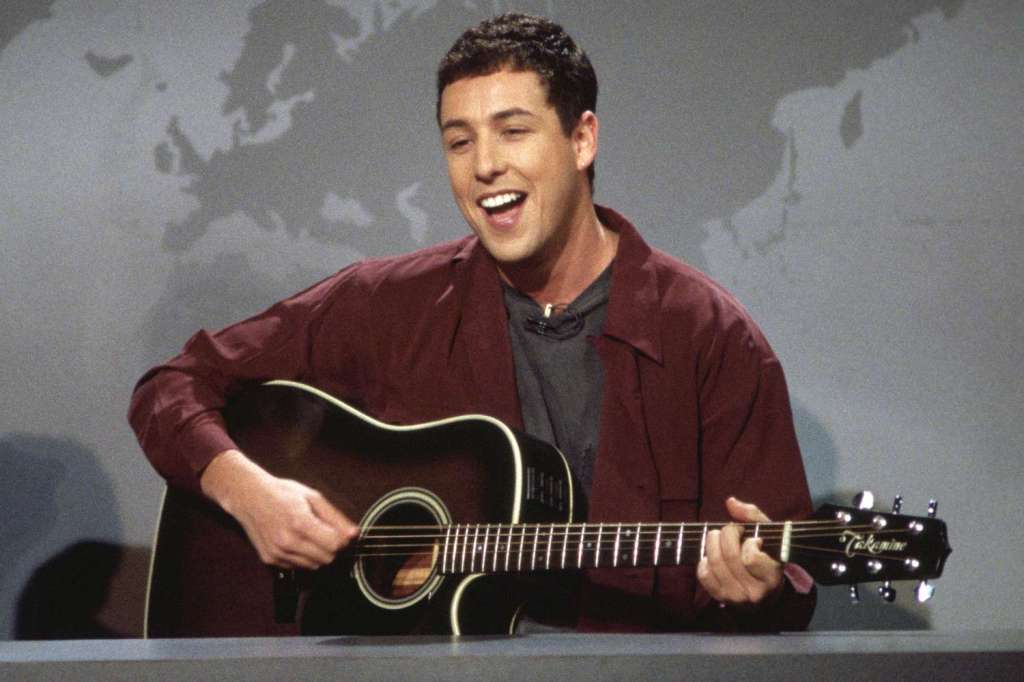
The young Adam Sandler was not much of an impressions guy on SNL but he had a few funny characters and bits, including Cajun Man who often responded to Weekend Update anchor Kevin Nealon with only one or two words (traces of The Waterboy go back here), plus Sandler’s song-based comedy would be incorporated into the character Opera Man and The Chanukah Song.
Before SNL
Brooklyn-born Sandler graduated from New York University’s Tisch School of the Arts in 1988 with a Bachelor’s Degree in Acting, although before that he played Theo Huxtible’s friend Smitty on The Cosby Show and he began performing stand-up comedy before he even turned 18. Sandler was discovered by SNL cast member Dennis Miller when Miller caught his act in L.A., and after Miller recommended Sandler to Lorne Michaels, Sandler was hired as a writer on SNL in 1990 before officially joining the cast in 1991.
After SNL
Sandler not only has the most successful post-SNL career of all the Bad Boys but he may also have the most successful post-SNL career of all time. He struck commercial gold when he co-wrote and starred in Billy Madison (1995) and Happy Gilmore (1996), later producing his own films beginning with The Waterboy (1998). Sandler regularly produced and starred in crowd pleasing comedies with a similarly lowbrow sense of humor, some of the most popular being Big Daddy (1999), Mr. Deeds (2002), Anger Management (2003), The Longest Yard (2005), Click (2006), I Now Pronounce You Chuck & Larry (2007), You Don’t Mess with the Zohan (2008), Bedtime Stories (2008), Grown Ups (2010), Just Go with It (2011), Jack and Jill (2011), Hotel Transylvania (2012) and Pixels (2015). Sandler and his production company Happy Madison continue making films for Netflix and just like his theatrical films, they amass a large audience and are often the scorn of film critics (although some like You Are So Not Invited to My Bat Mitzvah and the animated film Leo are well-written).
Sandler also acted in Paul Thomas Anderson’s Punch-Drunk Love (2002), James L. Brooks’ Spanglish (2004), Judd Apatow’s Funny People (2009) and Josh and Benny Safdie’s Uncut Gems (2019) and he produced but did not star in Joe Dirt (2001), The Master of Disguise (2002), The House Bunny (2008), Paul Blart: Mall Cop (2009) and the Netflix comedies The Wrong Missy (2020), Home Team (2022), The Out-Laws (2023) and the Amy Schumer comedy Kinda Pregnant (2025). Sandler is practically a rock star in the world of comedy and he is the first and currently the only Bad Boy to be awarded the Mark Twain Prize for American Humor.
Rob Schneider (1990-94)

During Rob Schneider’s time on SNL he was known for his obnoxious office worker character the Richmeister, the Sensitive Naked Man who would listen to people’s problems (while failing to realize that their problem was usually him) and Orgasm Guy (which is exactly what it sounds like and yes, it was a very dumb sketch).
Before SNL
Rob Schneider was born in San Francisco, California where he first began performing stand-up comedy, making his TV debut in 1987 on HBO’s Young Comedians Special (hosted by Dennis Miller) and being hired as a writer on SNL a year later before officially joining the cast in 1990.
After SNL
Schneider played supporting roles in films like Home Alone 2: Lost in New York (1992) and The Beverly Hillbillies (1993) during his time on SNL and this continued after SNL with the Sylvester Stallone sci-fi film Judge Dredd (1995), The Waterboy (1998), Big Daddy (1999) and Muppets from Space (1999). He first co-wrote his own film beginning with Deuce Bigelow: Male Gigolo (1999) which told the story of a fishtank cleaner who attempts to make money by becoming a male prostitute. It was the first film produced by Adam Sandler’s production company Happy Madison and it would not be the last of Schneider’s collaborations with that company. Schneider continued to write his own scripts for The Animal (2001) in which an injured Schneider is brought back to life with animal body parts and begins acting like an animal, The Hot Chick (2002) in which Schneider switches bodies with a cheerleader played by Rachel McAdams, and the sequel Deuce Bigelow: European Gigolo (2005). But overall Schneider’s film career consists mostly of small roles in Happy Madison films and voice roles in a lot of animated B movies like Top Cat: The Movie and Norm of the North.
Schneider did slightly better with his TV career. He was the lead for two seasons of the NBC sitcom Men Behaving Badly (1996-97), eight episodes of the CBS sitcom Rob (2012) and two seasons of the Netflix sitcom Real Rob (2015-17) and he guest starred in Seinfeld, Ally McBeal, The Andy Milonakis Show, Inside Amy Schumer and Hot in Cleveland while making regular appearances on The Tonight Show with Jay Leno. Although these days he seems to be more famous for his controversies than his actual work, including a stand-up comedy gig gone wrong in 2024 that was supposed to last thirty minutes but was cancelled after ten minutes because Schneider’s material was deemed too offensive. Although it’s not like Schneider has never told racist and sexist jokes and hasn’t shown himself to be a complete and total jackass in the past so it was kind of on the organizers for hiring him in the first place. I personally think Schneider should leave show business and go jump into the ocean, but that’s just me.
David Spade (1990-96)
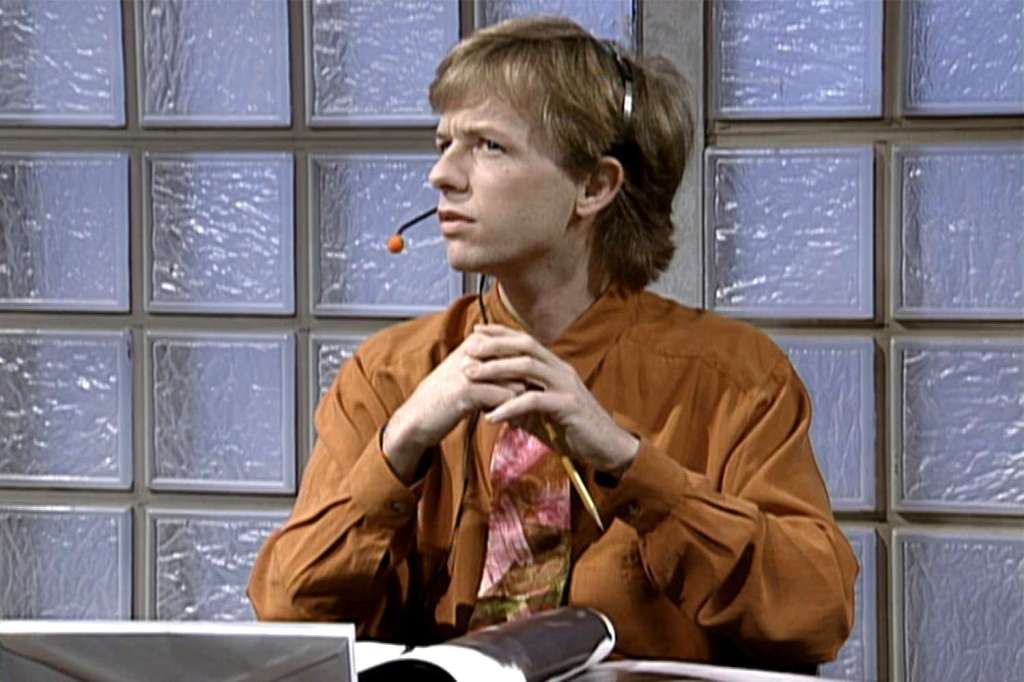
David Spade shined as a cast member on SNL, becoming popular for his oftentimes sarcastic persona and sharp-tongued one-liners as well as sketches like Hollywood Minute, Spade in America, Gap Girls and Total Bastard Airlines. He was also known for impersonating celebrities like Brad Pitt, Michael J. Fox, Kurt Cobain and Martha Stewart.
Before SNL
Spade dropped out of Arizona State University to pursue stand-up comedy, even performing at the university itself as well as local spots like Greasy Tony’s Pizza in Tempe. He was spotted by a talent agent at The Improv in L.A. and was cast in the film Police Academy 4 (1987). In 1990 he began writing on SNL with a push from Dennis Miller (Miller is really starting to seem like the Bad Boy whisperer) and moved his way up to the cast that same year.
After SNL
After SNL, Spade made two buddy comedies with Chris Farley, Tommy Boy (1995) and Black Sheep (1996) and they planned to make a third, but Farley died of a drug overdose in 1997 before it could go anywhere. Spade did however make a few successful films in the next century, including the negatively reviewed but modestly successful adventure comedy Joe Dirt (2001) and many Happy Madison films like The Benchwarmers (2006), I Now Pronounce You Chuck & Larry (2007), Grown Ups (2010), Jack & Jill (2011), The Ridiculous 6 (2015), The Do-Over (2016), Sandy Wexler (2017), Father of the Year (2018) and The Wrong Missy (2020). Spade also found success in the world of animation voicing the entitled and arrogant Emperor Kuzco in Disney’s subversive comedy The Emperor’s New Groove (2000) and voicing the Invisible Man in all four Hotel Transylvania films for Sony Pictures Animation.
After leaving the cast of SNL, Spade migrated to another TV ensemble when he joined the cast of the NBC sitcom Just Shoot Me! as the self-centered executive assistant Dennis Finch who is obsessed with “getting laid.” The show ran for seven successful seasons from 1997 to 2003, and Spade also had successful runs playing C.J. in the ABC sitcom 8 Simple Rules from 2004 to 2005 and playing the narcissistic lady-pursuing single friend Russell Dunbar in the Happy Madison-produced CBS sitcom Rules of Engagement (2007-13), which makes David Spade one of the few actors to have a main role in a successful sitcom on all three of the major broadcast networks. Spade would also guest star on The Larry Sanders Show, Curb Your Enthusiasm, Entourage, The Goldbergs, Inside Amy Schumer and have a recurring guest role on Judd Apatow’s Netflix series Love. Plus Spade still performs stand-up (he made four different specials for HBO, Comedy Central, Netflix and Prime Video) and every once in a while you will see him land a random hosting gig. These days I hear his voice most often on the podcast he first began co-hosting with Dana Carvey in 2022 called Fly on the Wall, in which the two former SNL stars often interview people involved with the show, including cast members both past and present.

 Entertainment Junkie Blog