
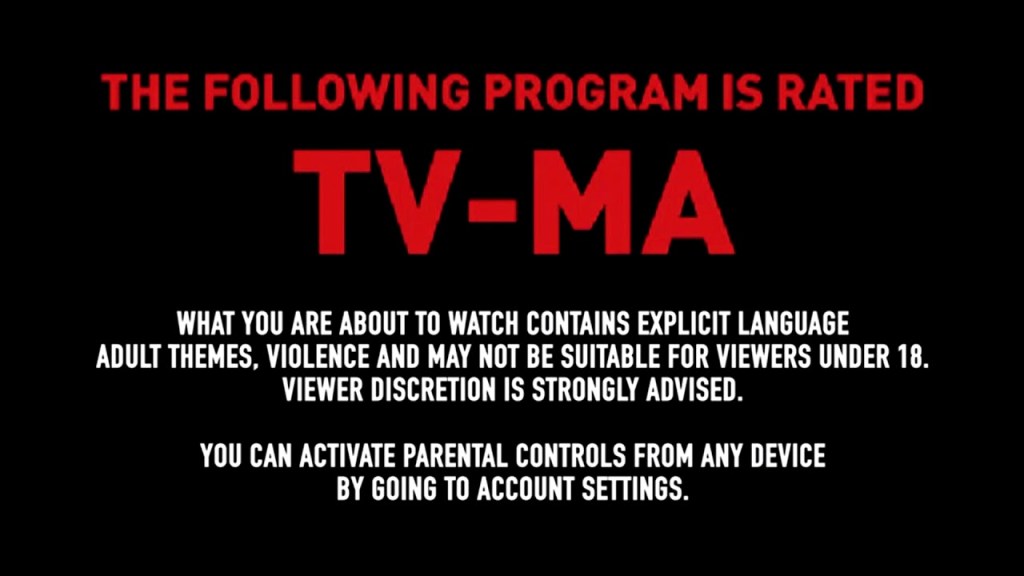
I grew up in the nineties, which means I was among the first kids in America to face the wrath of the V-chip and witness the rise of “parental controls.” Which meant that any time me or my siblings landed on an age-inappropriate program while we were channel surfing, the screen would literally go dark. If you’re too young to remember that, it may seem hard to imagine a childhood like that now. Although believe it or not, we raised very little hell about this at the time because we were all raised so well by my mom that I was the kind of kid who voluntarily changed the channel whenever I saw the TV-14 rating on the corner of the screen. In other words, we followed the rules. But don’t get me wrong. I wasn’t a prude either. Even as a kid, the dark corner of mature TV content had a certain allure. Not because I was drawn to cursing and violence but because my curious mind was drawn to things that were new and different, and as someone who grew up on cartoons and family entertainment, I knew there was something different about adult programs, not just because of their content but because of their realistic atmosphere, subtle acting and low-key cinematic style. It was almost as if I was an adult trapped in a child’s body longing for something more sophisticated than the Disney Afternoon.
Speaking of cartoons, as an animation fan with cable television, I obviously watched a lot of Cartoon Network too, and that network ended up being an important transition point for my regular viewing of adult content when I was a teenager thanks to the late night programming block Adult Swim, which is where I was introduced to shows that were not quite at the maturity level of HBO but still way more mature than what I’ve been watching prior. With this period came a transition from Nickelodeon, Cartoon Network and Disney Channel to teen-oriented networks like The WB, UPN and ABC Family and eventually to adult-oriented networks like FOX, ABC and CBS. I literally grew up on TV (although I never stopped liking cartoons).
Before the Telecommunications Act of 1996 came along and restructured the way TV operates (which I will discuss in detail soon), the FCC had often tried to curb inappropriate programming in ways that were more clumsy. The main example of this that I want to discuss came in 1975 when the FCC introduced the Family Viewing Hour. A policy aimed at American TV networks that forced them to air family-friendly programming during the first hour of prime time (8PM to 9PM). However, this policy was short-lived because it was literally abandoned the following year after a federal court came to the conclusion that it violated the First Amendment.
While that failed experiment may seem like a blip in TV history due to how short it lasted, at the same time, the FCC did not create that policy unprompted. Complaints about sex and violence in American television were on the rise during the mid-seventies, especially after NBC aired the 1974 TV movie Born Innocent, a film that depicted the physical and psychological abuse of a teenage girl among other things that were never before seen on American television, including a pretty disturbing rape scene (putting aside the fact that the film’s depiction of lesbians and its depiction of rape were both denounced as unrealistic and propagandistic by several groups). Normally my reaction to people who complain about inappropriate content is to tell them that it’s not television’s job to raise your kid and that you should just change the channel if you don’t like what you’re seeing, but I get why airing a movie like that without the establishment of a rating system might be problematic.
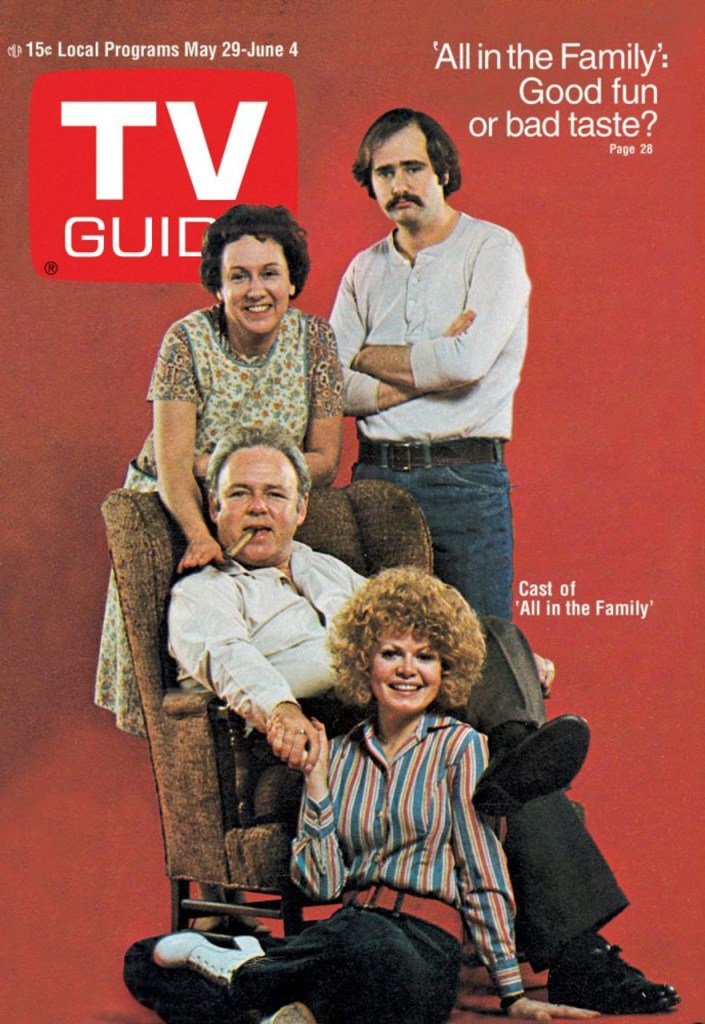
The Family Viewing Hour was obviously not the answer though. In fact, before the FCC abandoned it, All in the Family creator Norman Lear mounted a lawsuit against CBS in response to their decision to move his sitcom from 8PM to 9PM to make way for the Family Viewing Hour, with Lear citing infringement of creative freedom. And Lear won that case! Which only further illustrated the widening chasm between artists and viewers that was happening that decade. Thanks to Norman Lear, the FCC now had to figure out how to walk the line between being too lenient and being too draconian with their regulation of TV content.
Some networks continued to air family-friendly programming blocks voluntarily into the eighties and nineties, but that didn’t stop the perpetual complaint about inappropriate prime time content, especially when FOX started airing shows like Married… with Children and The Simpsons, both of which were a lot more crude than the average sitcom, although eventually the introduction of cable networks like HBO and streaming services like Netflix have rendered complaints like these a lot less loud and a lot less relevant than they once were.
And then came the Telecommunications Act of 1996.

Throughout most of the 20th Century, television had been at the mercy of a federal law signed by President Franklin Roosevelt called the Communications Act of 1934, which officially replaced the Federal Radio Commission with the Federal Communications Commission (FCC), while also absorbing the phone service responsibilities of the Interstate Commerce Commission (which was first established in 1887 to regulate railroads and later interstate bus lines and phone companies). The FCC would end up becoming the primary regulator of televised content, and after President Bill Clinton signed the Telecommunications Act of 1996 (the first major change to the Communications Act of 1934 since it went into effect), that list would also include the internet, the first time in U.S. history that the internet would be added to broadcast regulation law.
But that law also changed the way traditional television worked in a number of ways. After it went into effect, the entertainment industry was required to create a TV rating system similar to the film rating system established by the Motion Picture Association of America. These ratings would become TV-Y (all children), TV-Y7 (children age 7 and above), TV-G (all ages), TV-PG (may contain material unsuitable for children), TV-14 (may be unsuitable for children under the age of 14) and TV-MA (specifically designed for adults and may be unsuitable for children under the age of 17).
The rating labels would appear on the corner of the screen as the program started and they first went into wide use in 1997 (I still remember the first time I ever saw a TV rating at the beginning of a program was when I was watching the 1970s Godzilla cartoon on Cartoon Network and I just went with it like “Oh, I guess they’re rating TV shows now.”) Later that year, the additional content descriptors “D (dialogue),” “L (language),” “S (sex)” and “V (violence)” would be added underneath these ratings, with “FV (fantasy violence)” being used exclusively for TV-Y7-rated programs with a lot of fantasy and sci-fi-based scenes of violence such as Pokémon and Avatar: The Last Airbender.

Many TV viewers, regulators and companies approved of the new rating system and it has been used to this day ever since 1997, although some TV creators, artists and filmmakers have taken issue with the vagueness of some of the system’s guidelines in the past decades, including in ways that, for example, seem unfairly biased against the depiction of fictional gay couples in children’s programming, which is something a lot of TV viewers love to complain about as “not family friendly” even though the depiction of fictional straight couples who are portrayed in the exact same way receive no complaints at all (It’s even more annoying that crackdowns against queer representation are largely enforced in response to homophobic complaints, which makes it seem like the ratings board is regulating content out of fear rather than fairness). But this is just one of many examples of how the FCC is mostly just a representation of the largest group of the most easily offended TV viewers.
The “Viewer Discretion Is Advised” warning before the program was a voluntary addition by networks to further curb complaints about inappropriate content, often shown before programs rated TV-14 and TV-MA (I remember that warning showing up every single time I watched Family Guy in syndication on The CW) and before TV broadcasts of certain theatrical films.

And all of this would work in conjunction with the implementation of the V-chip, a device to be embedded in television sets that enabled the ability to block programming that parents deemed inappropriate for their kids, thus introducing the concept of parental controls to TV sets everywhere. A technological revelation that is now completely irrelevant because many kids all around the world have internet access and they are all watching Game of Thrones and Euphoria. But hey, if you’re worried about television programs being a bad influence on kids, just do what my mom did: raise them smart!
 Entertainment Junkie Blog
Thanks for a history lesson. I grew up in old Yugoslavia, and the only rule was that adult content was broadcast after 8 or 9pm. In the capital, where I grew up, there was one cinema for adult movies, and you could not get in under 18 years old. The regular cinemas were open to anyone. I think there were a few movies where the staff was instructed not to let kids buy tickets (for example, The Fly or Basic Instinct), but that depended on the cinema owner. I was 12 when I went to see Aliens with a group of friends who were just a year or two older than me. And at the beach house in the 80s, where there was a small town cinema, I used to watch all kinds of movies since I was 5 (with friends or my parents). I don’t remember any particularly adult-oriented content, but there was plenty of violence, blood, and action.
After half a century, I still enjoy cartoons and animated movies, so I guess for our generation, that’s not that uncommon. When I was a kid, I remember how shocked I was when I found out my aunt’s husband loves Bugs Bunny. For years, he was the only adult I knew who liked cartoons.
LikeLiked by 1 person