

One of the Hollywood actors with the shortest careers but the biggest lasting impact was John Belushi. The only person to beat Belushi’s record was probably James Dean who literally died the same year he made his leading man debut in East of Eden and before Rebel without a Cause even came out. Although Dean’s death came as a shock. Belushi’s death? Not so much. Belushi was on a different level from his peers. Not just in terms of fame but in terms of personality and debauchery. He was not a normal guy pretending to be wild and funny in front of the camera. He was very much the anarchist he appeared to be on screen only without a script and decency guidelines to fence him in. You could say he was a party animal, just like his character from Animal House, but he may have loved to have fun a little too much.
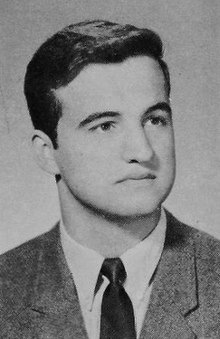
Comedian and actor John Belushi was born in Chicago, Illinois in 1949 and raised in Wheaton. He was the son of an Albanian immigrant and brought up Eastern Orthodox Christian. In the sixties when he was in high school, he had his first brush with popularity when he formed a band with his fellow classmates. Belushi sang and played the drums for that band, and they even recorded a single, but the music career didn’t go anywhere and by the time he went to college he put it behind him. Although he didn’t just have musical talent. He also had a sense of humor, and he would end up forming a comedy troupe in Chicago called the West Compass Trio (named after famed Chicago improv troupe The Compass Players) with Tino Insana and Steve Beshekas. Needless to say, this was more successful than his band, and the trio caught the eye of Second City founder Bernard Sahlins who asked Belushi to join the famous Chicago improv troupe. It was at Second City where Belushi met people like Harold Ramis, Joe Flaherty and future SNL co-worker Brian Doyle-Murray.
Belushi also worked with Chevy Chase and Christopher Guest off Broadway in the seventies in the Woodstock parody National Lampoon: Lemmings, followed by some work writing, directing and acting for The National Lampoon Radio Hour (1973), a radio show created by the staff of the National Lampoon magazine which featured future comedy stars like Gilda Radner, Bill Murray and Richard Belzer.
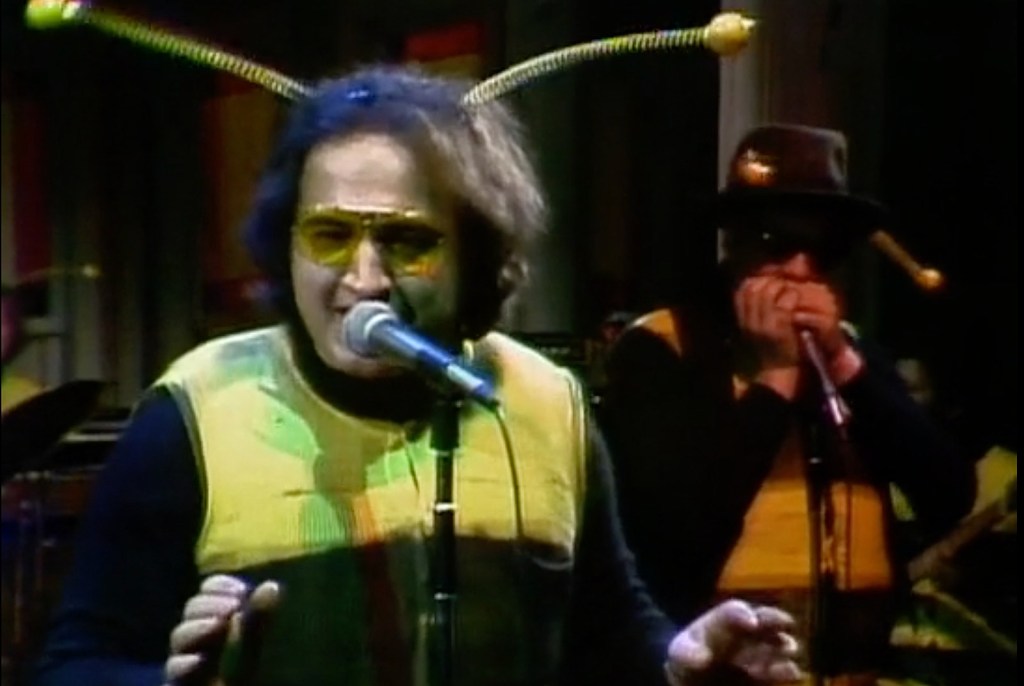
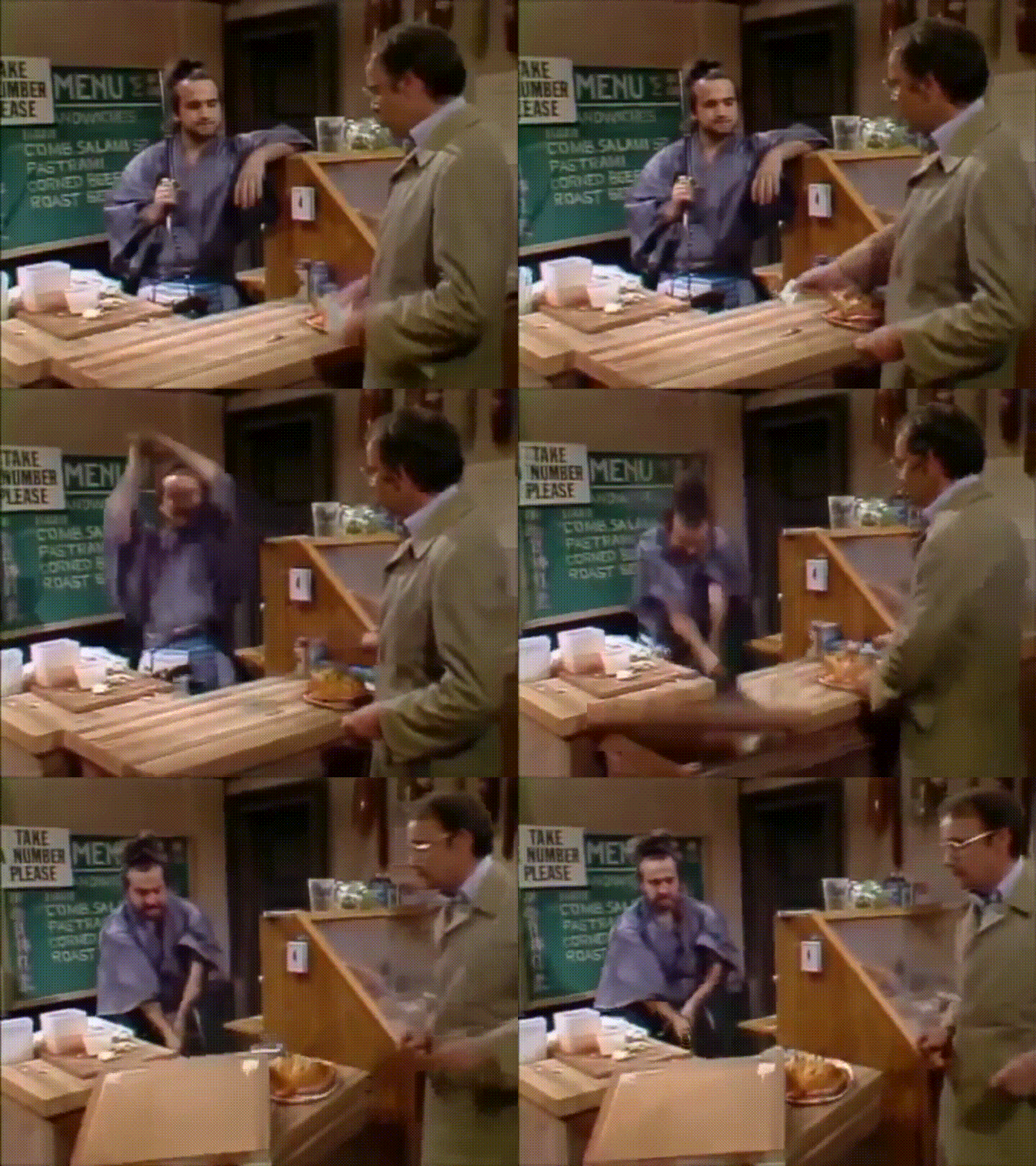
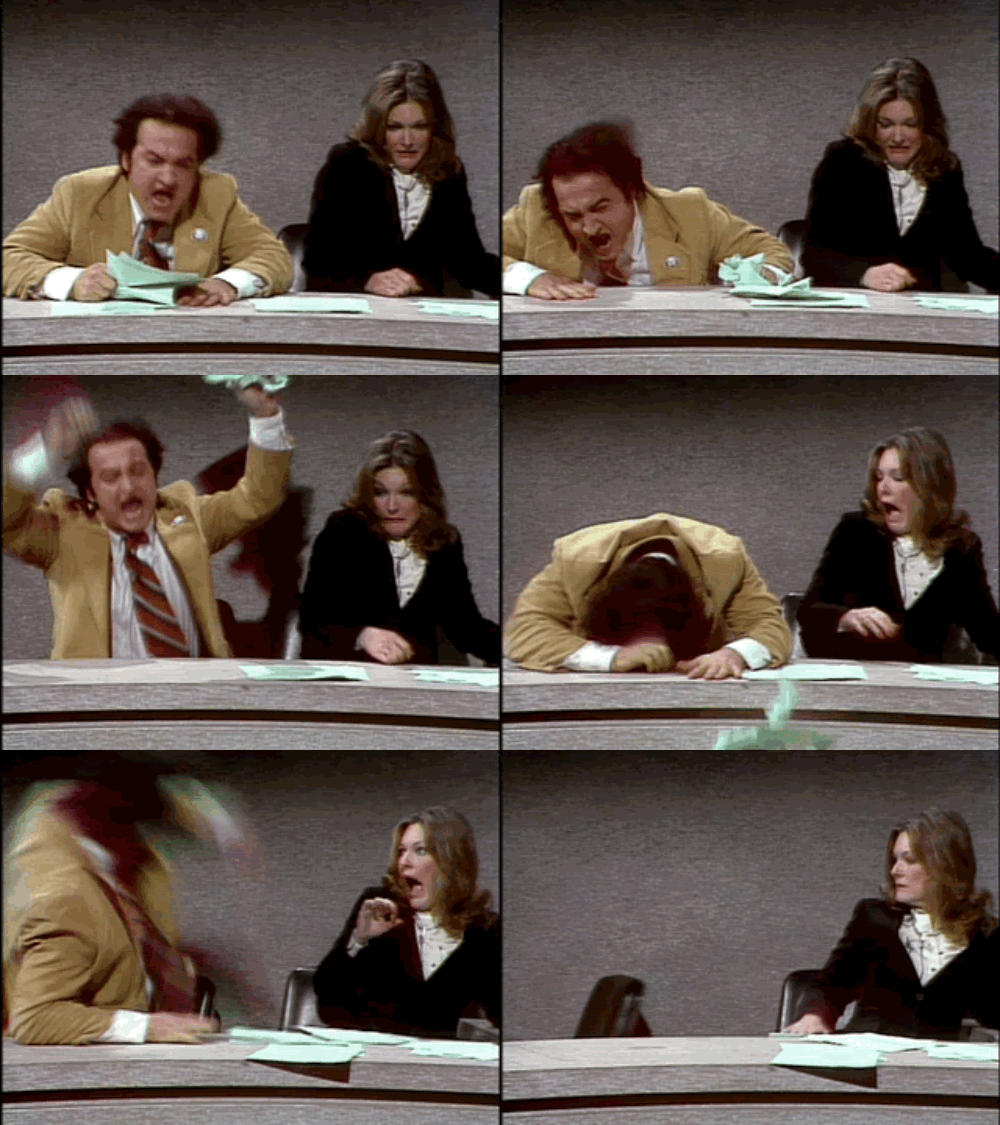
When Lorne Michaels was creating Saturday Night Live for NBC, Chevy Chase and National Lampoon writer Michael O’Donoghue both recommended Belushi as a cast member, although Michaels was reluctant to hire him because of how notoriously difficult the comedian was to tame, and Michaels also wasn’t sure Belushi’s physical humor fit the tone of what he was going for. Belushi himself wasn’t sure he wanted the job either, because at the time SNL came out, television was not considered hip (to say the least). But after Belushi’s audition, Lorne Michaels changed his mind, and Belushi would even end up performing in SNL‘s first sketch in the cold open of the first episode alongside the two men who recommended him, Michael O’Donoghue and Chevy Chase. Belushi would go on to become the most popular cast member on the show during his four years there from 1975 to 1979. Rolling Stone even named him the number-one best SNL cast member when they ranked all 141 members of the show’s cast in February 2015.
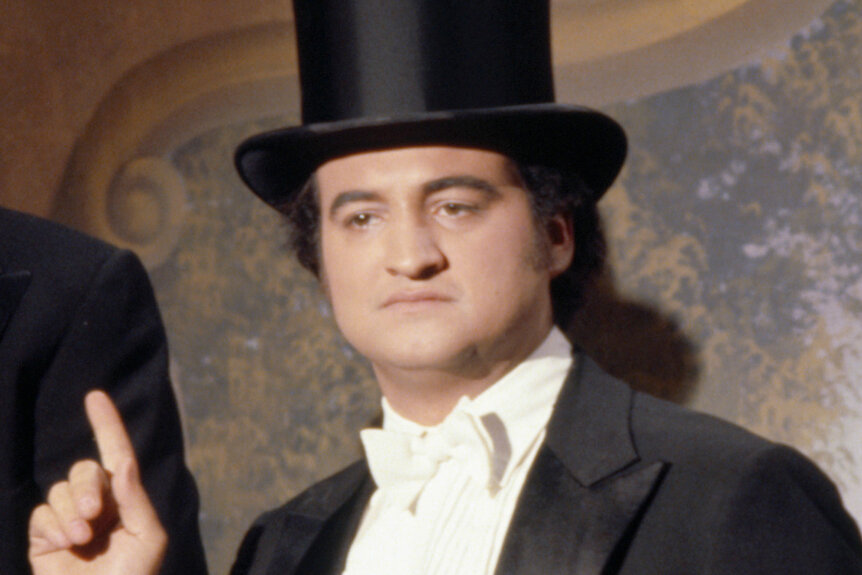
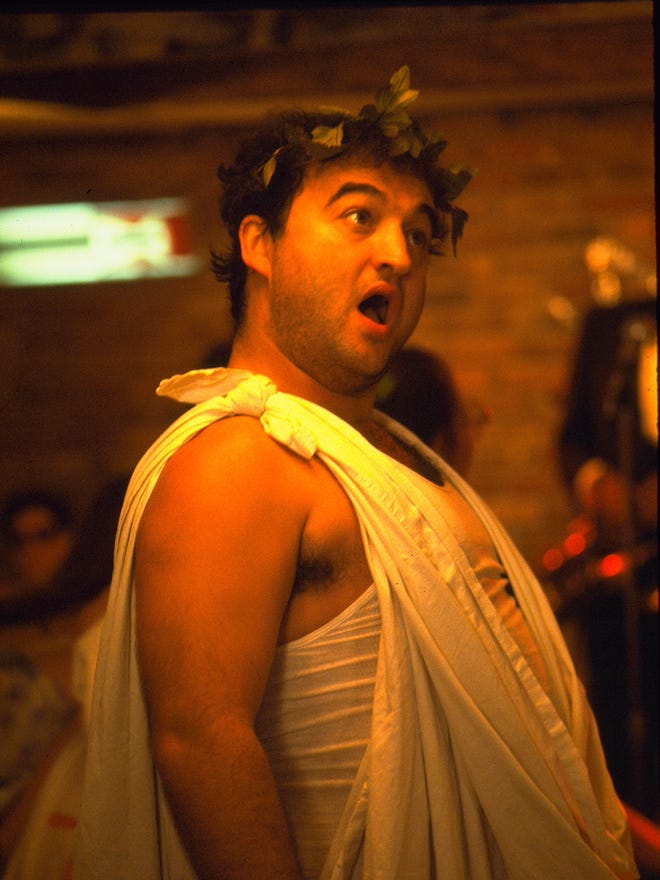
Belushi’s first role on the big screen would be in National Lampoon’s Animal House (1978), a movie that revolved around a troublemaking fraternity called Delta Tau Chi. Despite the cast of that movie featuring many unknowns and Belushi never headlining a film before, Animal House was hugely successful and made $141 million on a $3 million budget, transforming SNL star John Belushi into movie star John Belushi. The film’s reviews were largely mixed at the time of release and it’s not hard to see why, but it’s also not hard to see why so many audiences loved it. It was the highest grossing comedy of all time until Ghostbusters out-grossed it in 1984. Those who enjoy it say it is akin to a Marx Brothers-type satire, and its success led to a string of copycat “nerds vs. jocks” comedies in the eighties, many of which maintained the stupidity, nudity and gross-out humor but not the good writing.
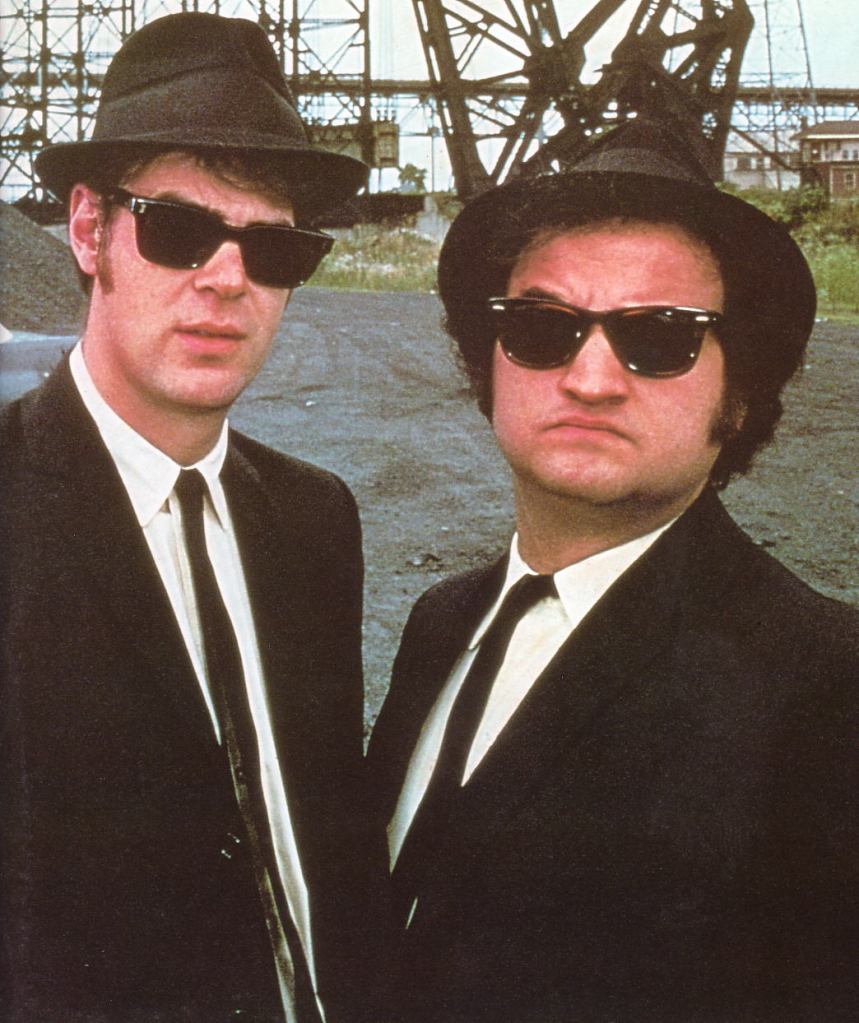
Belushi made other films while he was on SNL, including Jack Nicholson’s Western comedy Goin’ South (1978), the drama Old Boyfriends (1979) directed by Thieves Like Us and Nashville screenwriter Joan Tewkesbury, and Steven Spielberg’s war satire 1941 (1979), but one of the best things to come out of Belushi’s time at SNL was of course the Blues Brothers, which is a music group he formed with fellow SNL cast member Dan Aykroyd after Aykroyd introduced punk rock fan Belushi to the blues. Years after his high school band failed, Belushi even finally had a double platinum-selling hit record thanks to the Blues Brothers, as well as a hit movie directed by John Landis that Belushi and Aykroyd filmed after they both left SNL and was released in 1980. Just like Animal House, The Blues Brothers was not liked by very many critics at the time, but that didn’t stop it from becoming a comedy classic.
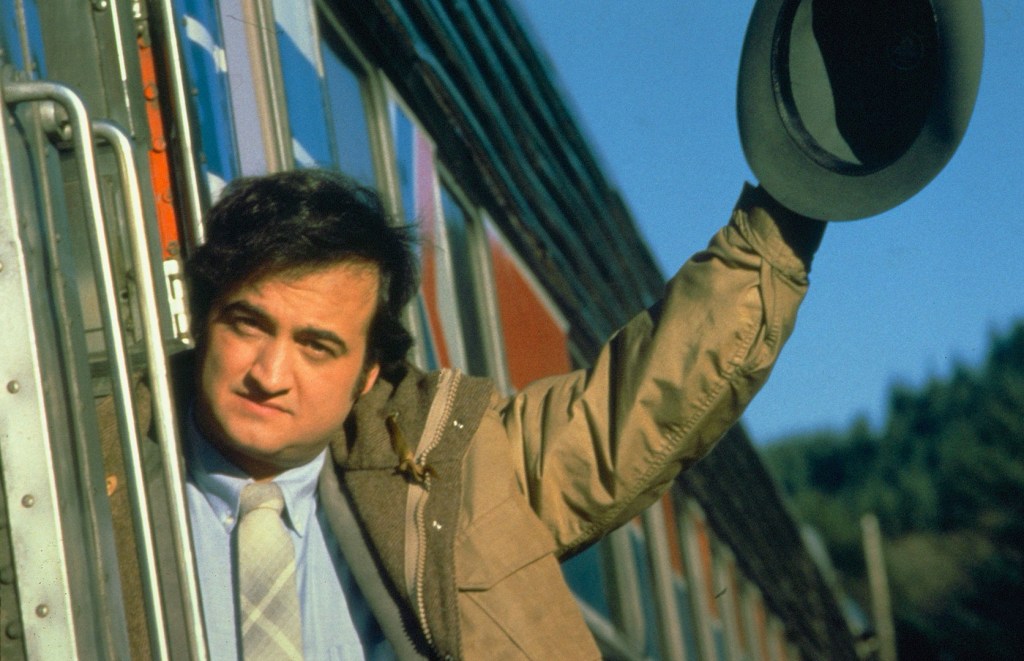
Belushi and Aykroyd also played against type in John G. Avildsen’s black comedy Neighbors (1981), but the first and only time Belushi made a film without Dan Aykroyd post-SNL was when Belushi filmed Michael Apted’s romantic comedy Continental Divide (1981). It had a nice pedigree being produced by Amblin and written by Lawence Kasdan, but it came and went at the box office. Belushi had other film projects in the planning stages, but those were all tragically cut short in 1982.
Belushi had drug-related health issues even before he was famous, but it didn’t help that cocaine use was frequent behind the scenes at SNL (and many other places in the seventies). In fact Belushi was temporarily banned from the set of SNL at one point due to how out of control his cocaine use was getting. People warned Belushi of the danger, so he was well aware of the risk he was taking on his life, but his personality prevented him from doing anything in his life “small.” The drug addiction even interfered with his film career when Blues Brothers director John Landis found Belushi’s cocaine stash and confronted Belushi about it. It was the reason why he was often late on the set, and he openly admitted he was addicted to the drug and even managed to quit the habit long enough to film Continental Divide, but he relapsed hard by the eighties, even resorting to asking his manager Bernie Brillstein for money, which Brillstein reluctantly gave him. Afterwards Belushi checked into the Chateau Marmont on Sunset Boulevard in L.A., where the next day around noon Belushi’s fitness trainer and bodyguard Bill Wallace found Belushi dead in his bungalow. Days later it was revealed John Belushi died of an overdose of cocaine and heroin.
Belushi’s wild behavior and constant drug use was notorious enough that the news of his death at such a young age was not exactly surprising to his co-workers, but given how popular he was and the fact that it only happened four years after Animal House came out, it still sent shock waves through the nation and Belushi became kind of a poster child for the dangers of cocaine. He was originally going to star in the 1984 comedy Ghostbusters, but Aykroyd and director Ivan Reitman instead paid homage to Belushi with Slimer (a character who they both remarked was “the ghost of John Belushi”) while others honored him in song, like musician Eddie Money who paid tribute to Belushi with “Passing by the Graveyard.” Belushi received a posthumous star on the Hollywood Walk of Fame in 2004, Rolling Stone said Belushi put the “Live” in “Saturday Night Live,” and looking back at those old seasons it’s clear that he was by far one of the funniest people in the show’s history. Even though he was somewhat of a loose cannon and he didn’t get along with everyone he worked with, there was a reason why so many people wanted to work with him anyway. He was a larger than life talent, and when he was on top of his game, he was an unbeatable comedic force.
 Entertainment Junkie Blog