
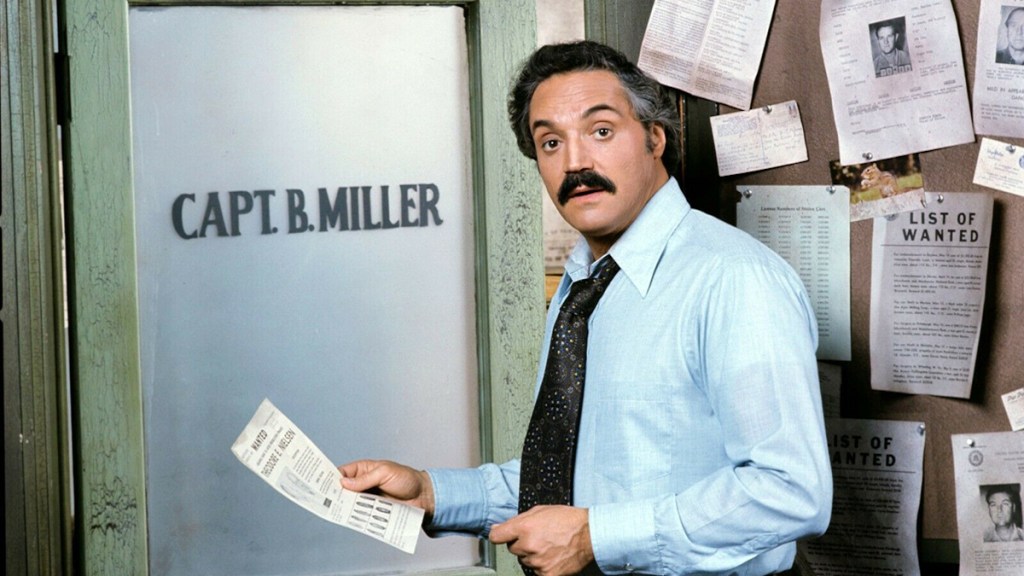
Something I always find fascinating whenever people are asked about realistic and unrealistic TV shows is that comedy almost always wins out over drama when it comes to realistic portrayals of certain aspects of life. Politicians have said that Veep is more accurate than The West Wing. Doctors have said that Scrubs is more accurate than ER. Even the animated sitcom The Simpsons was called the most accurate depiction of a blue-collar nuclear family in television history. What this tells me is something that I’ve always known: laughter is essential to many people’s lives. There are a lot of great dramas on television, but a key part of the human spirit is missing in a lot of them. Many TV shows from the fifties to the seventies had a certain level of relatability but mostly on an exaggerated and sugar-coated surface level. Yes, people liked Andy Griffith, but that was because he was an idealized version of a cop. No police officer actually related to that show. Barney Miller was another story.
Barney Miller was a sitcom about a New York City police department station in Greenwich Village that was created by comedian Danny Arnold and playwright and improv comic Theodore J. Flicker and ran on ABC for eight seasons from 1975 to 1982. It starred Hal Linden as Captain Bernard “Barney” Miller, Max Gail and Ron Glass as police detectives Wojo and Ron, James Gregory as deputy inspector Franklin D. Luger, Abe Vigoda as Sergeant Philip K. Fish (a character so popular that ABC gave him a spin-off called Fish which ran for two seasons from 1977 to 1978), Jack Soo as Sergeant Nick Yemana and Gregory Sierra as Sergeant Chano with the character Sergeant Arthur P. Dietrich (Steve Landesberg) being introduced in the second season and Officer Carl Levitt (Ron Carey) being introduced in the third season. Barney also has a wife named Liz Miller played by Barbara Barrie who would later divorce Barney after an episode involving an ultimatum between his work and his wife (actually this was an excuse to write the wife out of the show to focus more attention on Barney’s work life).
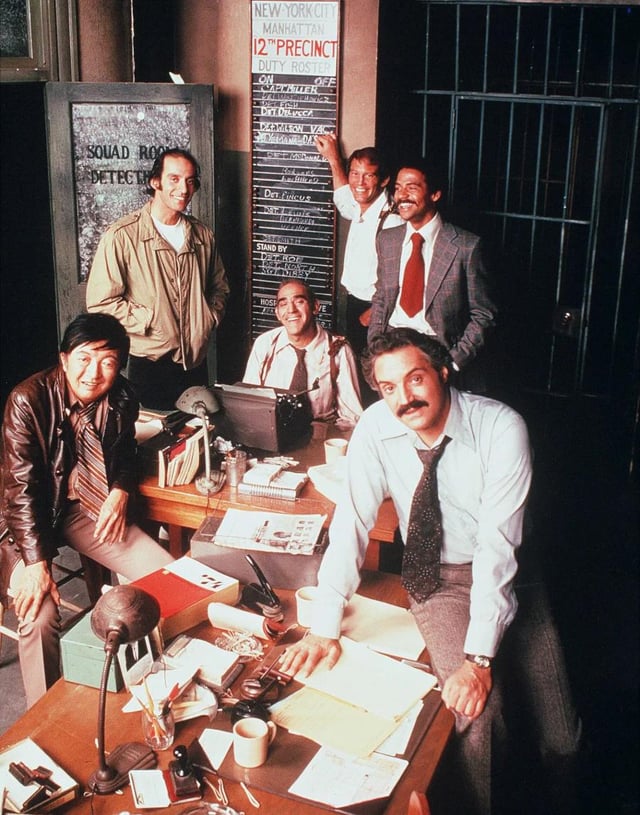
With deliberate allusions to a theatrical stage play, the entire series largely took place at the NYPD’s fictional 12th precinct in the squad room and Barney’s office (although characters occasionally left the building during stakeouts, hospital scenes, etc.) with plots mostly revolving around the crimes several characters are trying to solve each episode.
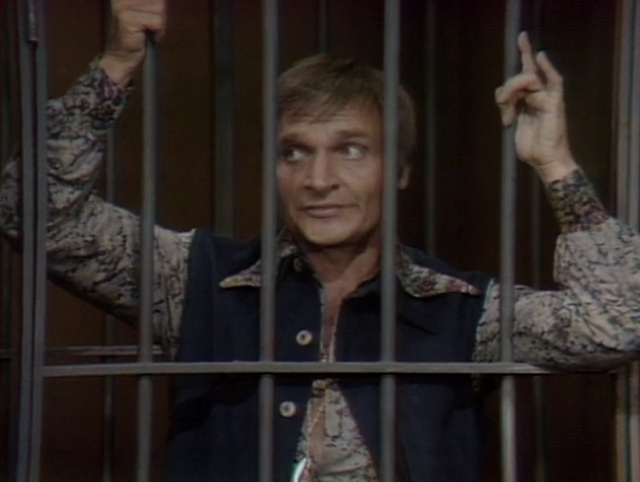
Even some of the actors who played complainants had recurring roles in the series, including Marty and Darryl who were among the earliest recurring gay characters in an American TV series. Gay people encountered so much trouble with the law in the seventies that creator Danny Arnold thought it would be ridiculous to make a cop show that did not include gay people, and he even worked with the activist group Gay Media Task Force while developing the characters to make sure they were portraying them in a respectful way. The characters actually started out as stereotypically effeminate when they first appeared on screen, but in later appearances they spoke in a more realistic way. Just as importantly, most of the straight characters were accepting and non-judgmental towards the gay characters so the show was kind of quietly groundbreaking.
Barney Miller was also one of the few sitcoms on TV in those days to reference the year that the episode aired as the current year in which the episode took place. Which may seem meaningless now, but back then that added greatly to the show’s realism. All in the Family and Mary Tyler Moore rightfully get most of the credit for pushing the needle for sitcoms in this decade, but this show did it in a much more subtle way.
The origin of the series came from an unsold television pilot called The Life and Times of Captain Barney Miller that aired as part of an anthology series in the summer of 1974 called Just for Laughs. Hal Linden and Abe Vigoda were the only surviving members of the main cast from that pilot, which never aired in syndication. Although it was included in Shout Factory’s Complete Series DVD set in 2011.
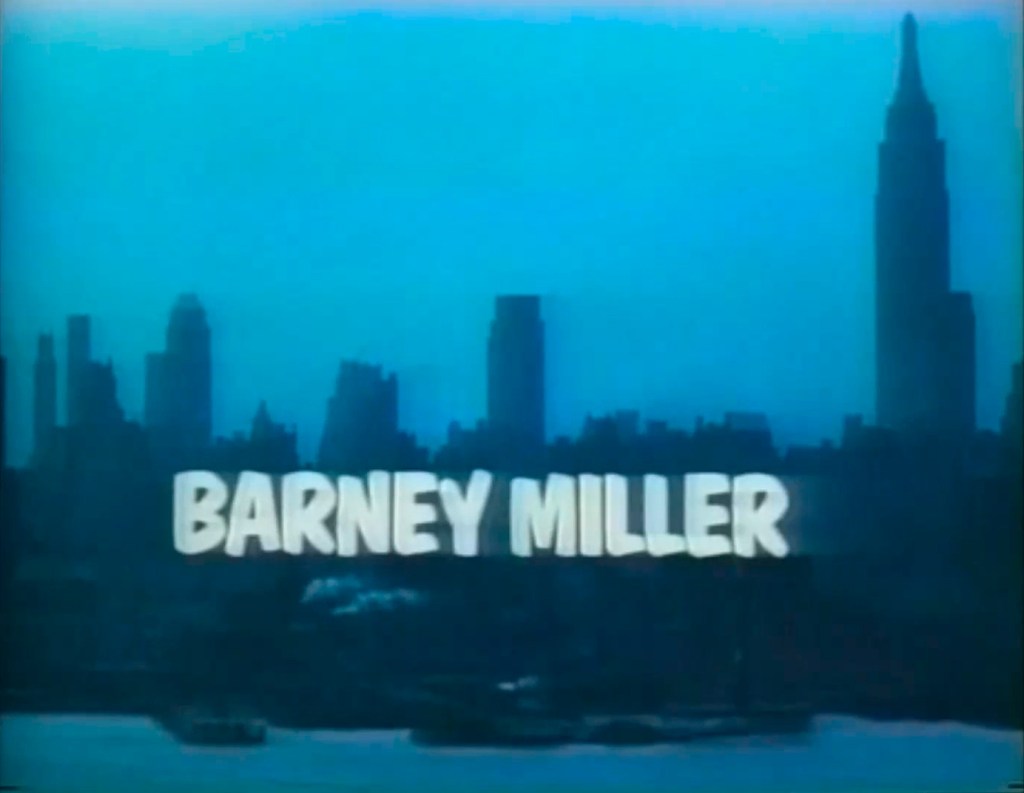
The jazzy instrumental theme song by Jack Elliott and Allyn Ferguson (with the improvised bass line at the beginning by Chuck Berghofer) sets the mood well and it reappears on the soundtrack several times throughout the series, usually when the Manhattan skyline transitions into shots of the set and cast. That song is just as highly regarded as the show itself.
Danny Arnold would film the show in front of a live audience just like how most sitcoms were filmed in those days, but he would also do re-shoots after the audience left to film quieter moments. The crew members of that show can attest that freestyle shooting followed by obsessive refining was typical for Danny Arnold. In fact Arnold was so much of a perfectionist that the writing and the shooting schedules often went long and they were often changed at the last minute. Eventually studio audiences weren’t even needed for the taping.
In 1982, the show’s final year, Barney Miller won a Primetime Emmy Award for Outstanding Comedy Series and during its run it also won Emmys for its writing and directing, not to mention a Golden Globe and a Peabody. But more important than the awards, the show was enjoyed by real-life cops. And most cops don’t like cop shows. But New York police detective Lucas Miller went on record to maintain that Barney Miller (which, again, is a comedy mind you!) was more realistic than other cop shows. Although he also said that the wisecracks real cops made with one another in his squad room were not nearly as funny as the jokes in this show.
 Entertainment Junkie Blog