
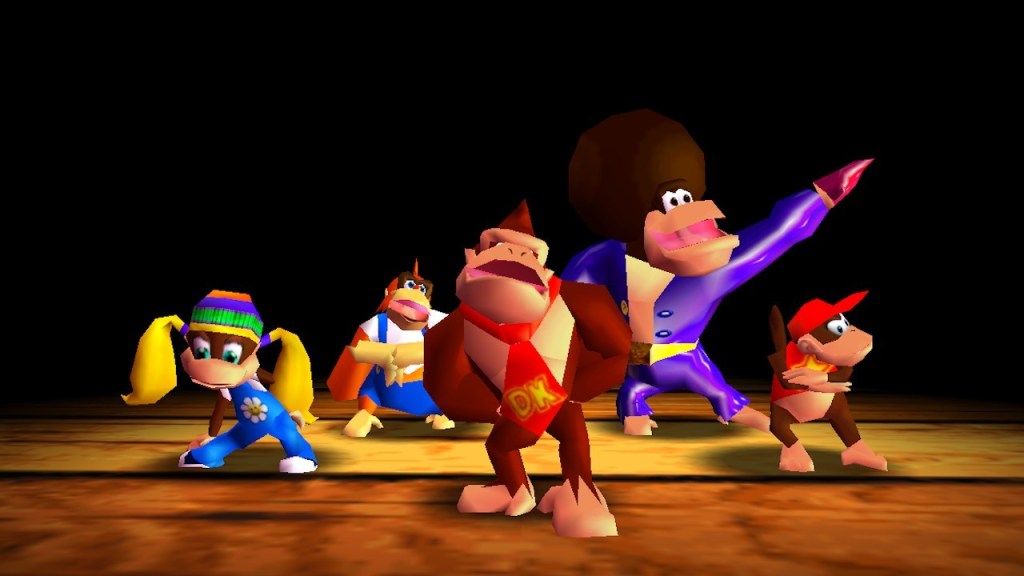
With Donkey Kong Country such a huge success on the Super NES, a 3D Donkey Kong game for the Nintendo 64 was inevitable and highly anticipated. That game was Donkey Kong 64 and its development would also be handled by Rare. After the splash DKC made, Nintendo and Rare were on a hot streak in the late nineties with many critically acclaimed and commercially successful games so it came as no surprise that Nintendo would want to continue their collaboration with Rare and hand them the keys to DK’s first foray into 3D platforming.
The game’s story once again involved King K. Rool and his Kremling army invading DK’s home as the reptilian scallywags not only steal the Golden Banana horde but also kidnap various members of the Kong family as K. Rool hatches a plot to destroy the DK Isles using his weapon the Blast-o-Matic.
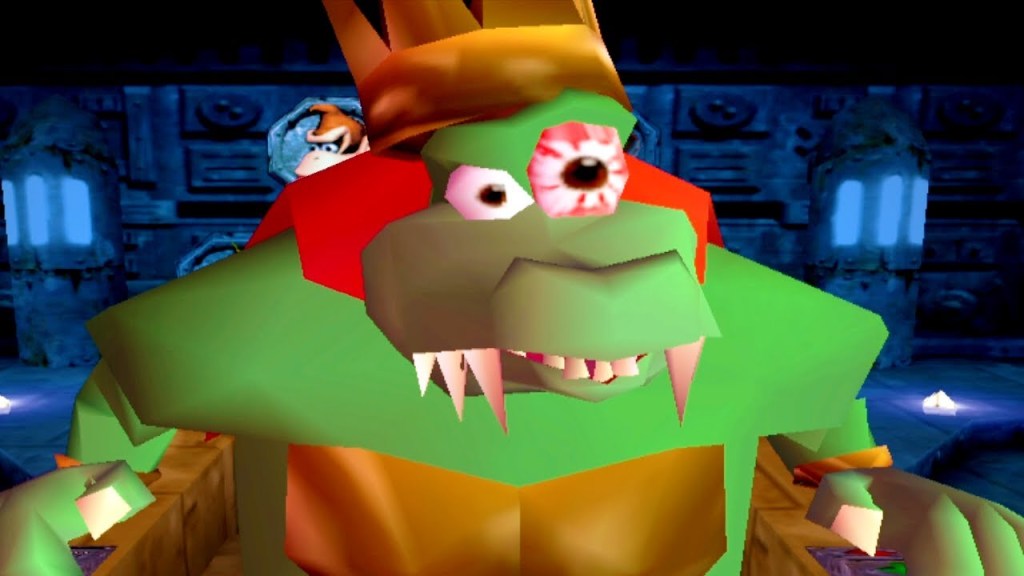


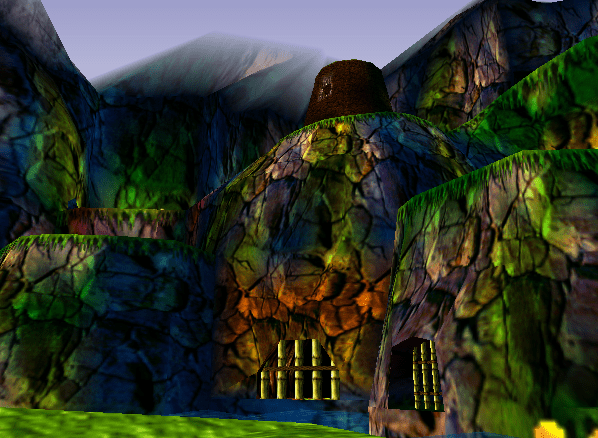
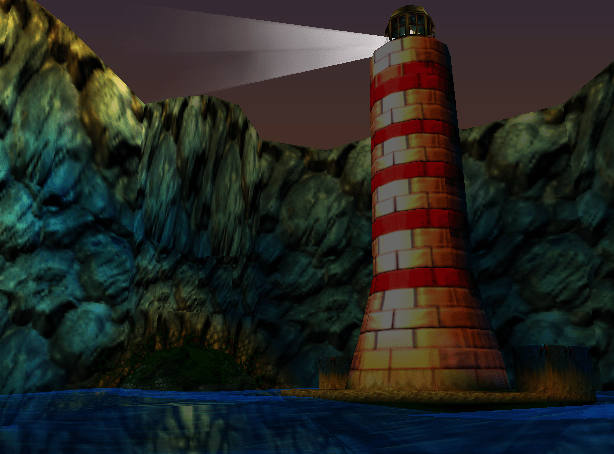
The world of Donkey Kong 64 was bigger than all the worlds in every previous Donkey Kong game. Like a video game version of the Magic Kingdom, the DK Isles consisted of eight main areas with different themes for you to explore as you searched for your family and your Golden Bananas: Jungle Japes (a jungle), Angry Aztec (a desert with a South American flavor), Frantic Factory (a toy factory), Gloomy Galleon (a cove), Fungi Forest (a forest with a magic cuckoo clock that allows you to turn day into night and vise-versa), Crystal Caves (an ice cavern), Creepy Castle (a floating castle in the sky) and Hideout Helm (King K. Rool’s secret headquarters).


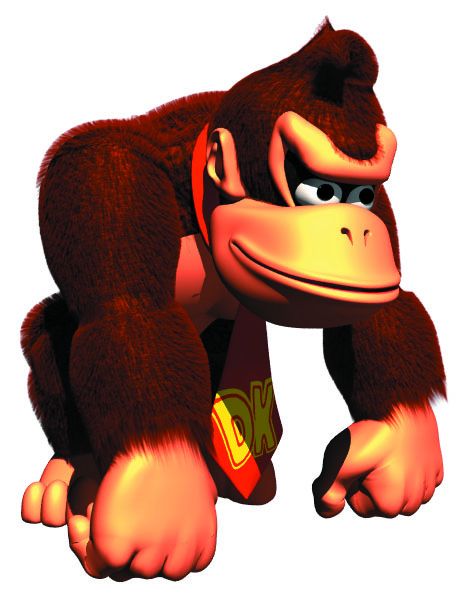
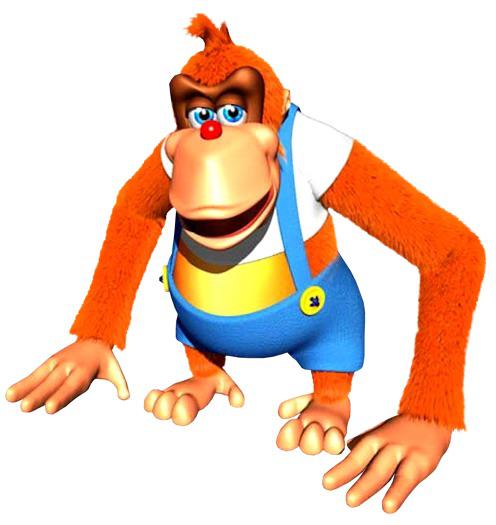
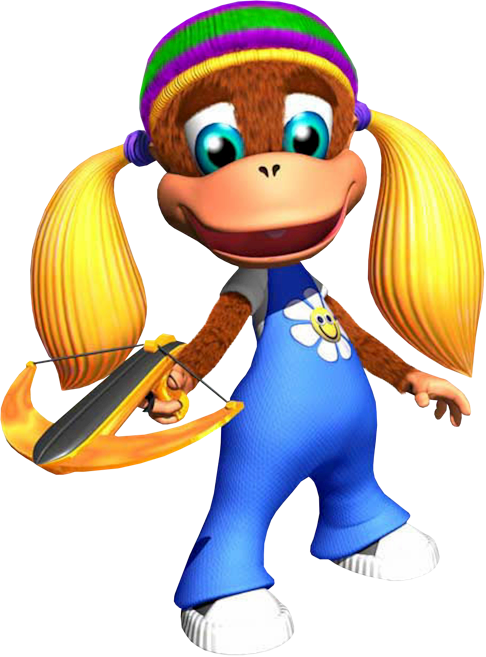
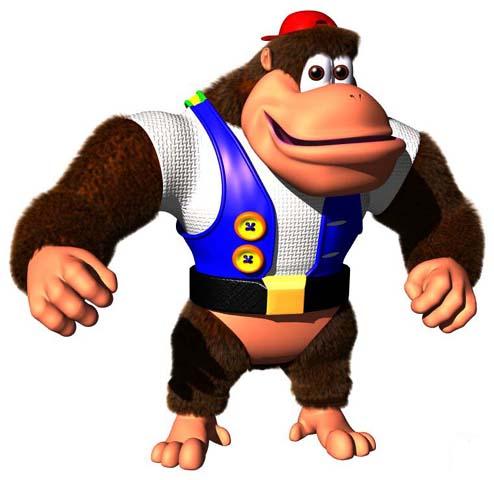
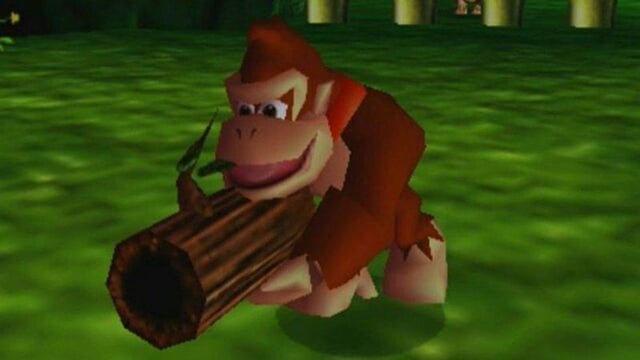
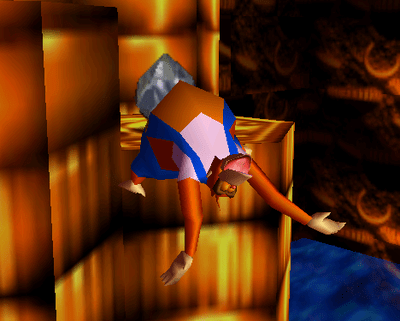
Every time you locate one of your missing family members and free them from their prison, you will be able to tag them and play as that Kong, which will come in handy because each Kong has their own special abilities and there are many areas throughout the game that only certain Kongs can reach. You start out the game playing as Donkey Kong but there are four other Kongs you can play as, including Diddy Kong and three new additions to the series: the inflatable orangutan Lanky Kong who can go to unreachable places with his long arms and his ability to float, Dixie Kong’s pony tail-twirling little sister Tiny Kong who has the ability to shrink in size, and Kiddy Kong’s colossal older brother Chunky Kong who can lift boulders and grow into a giant.

In order for you to learn these magic abilities you must visit Cranky Kong’s lab and drink his potions. Meanwhile camouflage-clad Funky Kong will arm each Kong with their own weaponry which allows them to shoot targets from a distance, Candy Kong will grant them their own magical musical instruments and Wrinkly Kong will give you clues about the whereabouts of the Golden Bananas (although unlike in DKC2 and DKC3, Wrinkly Kong is a ghost, so apparently she died at some point between the events of those games).



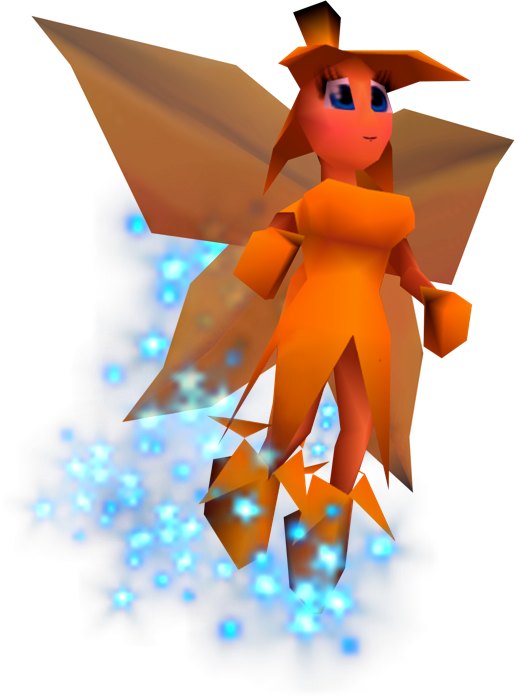
A few of your animal buddies from previous games also return, including Squawks the parrot who guides you on your quest (he also carries a lantern to light your way in dark rooms and will carry Tiny Kong to high places while she is shrunken), Rambi the rhino who can charge into enemies and break things with his pointy horn and Enguarde the swordfish who can charge into underwater enemies and break underwater walls. Other important allies who you will meet in this game include K. Lumsy, a giant Kremling who K. Rool locked in a cage when he disobeyed K. Rool’s orders to destroy DK’s home island, the Banana Fairies who got scared upon King K. Rool’s arrival and dispersed around the DK Isles, Snide the weasel who was in charge of the construction of K. Rool’s Blast-o-Matic but has since reformed, and the duo Troff and Scoff, a pig and a hippo who guard the entrance to each level’s boss and will only be able to let you pass if you feed Scoff enough bananas.


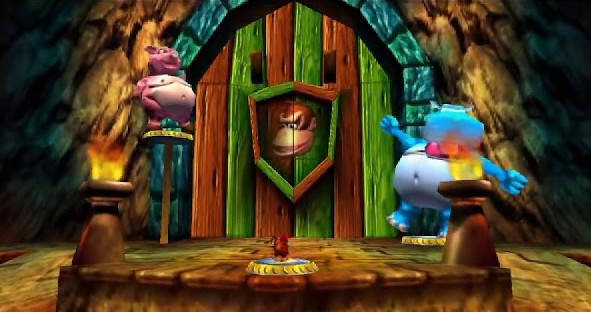
Those boss battles are some of the highlights of the game. Only the Kong whose face is on Troff and Scoff’s door will be able to pass through, which means each boss battle is catered to the abilities of the Kong who faces them. For example, when Chunky Kong fights the dragon Dogadon in Fungi Forest, the only way for you to defeat him is to grow Chunky into the size of a giant and punch Dogadon into the lava. Although sometimes the boss battles are clever on multiple levels, such as when the diminutive Tiny Kong must fight an evil jack-in-the-box in Frantic Factory or when the inflatable Lanky Kong fights a giant blowfish in Gloomy Galleon (the most hilarious boss battle in the game is the one where you have to fight a giant cardboard cutout of King K. Rool).


Donkey Kong Country designer Gregg Mayles was the one who initially led the effort on a Donkey Kong game for the N64. It was originally intended to be a more linear 2.5D platformer (2.5D meaning a 2D platformer in a 3D environment), but after Rare’s open-world adventure game Banjo-Kazooie came out in 1998, the DK64 team scrapped the 2.5D approach and built the game atop the Banjo-Kazooie engine, with many members of the Banjo-Kazooie development team involved in the development of DK64.
This time the game’s direction was handled by George Andreas, Chris Sutherland handled the programming just like he did with DKC and DKC2, Mark Stevenson provided the art, Banjo-Kazooie composer Grant Kirkhope provided the music and Donkey Kong creator Shigeru Miyamoto served as the game’s producer.
Although DK64 was similar to Banjo-Kazooie in terms of gameplay, style and humor, DK64 ended up being bigger and more ambitious, to the point where the game would not be playable unless the N64 Expansion Pak (which came bundled with the game) was inserted into the N64 console at the same time the game was inserted, increasing the memory size and improving the game’s realistic visuals (the only other N64 game besides DK64 that is unplayable without an Expansion Pak is The Legend of Zelda: Majora’s Mask, but both of those games were released late in the N64’s lifespan and the Expansion Pak’s usage remains very rare).

Donkey Kong 64 was a huge success upon its release in 1999, garnering acclaim for its stellar visuals as well as its huge size and scale, and many called it one of the best platformers on the N64. I said in my previous article that the success of Donkey Kong Country basically helped save Nintendo from the threat of the Sega Saturn and Donkey Kong 64 similarly saved Nintendo during the 1999 holiday season from the threat of the Dreamcast. On top of that, both DKC and DK64 were top-sellers for their home consoles.
Although many gamers and critics point out that Donkey Kong 64 is not nearly as groundbreaking as Donkey Kong Country and many of DK64‘s detractors lambast the game for its overblown emphasis on tedious item collection as well as the fact that the game seems too similar to Banjo-Kazooie and not similar enough to Donkey Kong Country. Although those two criticisms are not inherently negative things, which is probably why the game was so popular despite them. I am someone who grew up playing and loving Donkey Kong 64 as a kid and while I was not under any delusion that the game was as clever as Super Mario 64 or The Legend of Zelda: Ocarina of Time, I still enjoyed it and respected it as its own thing. Most of all because it’s ultimately a fun game.

Rare had planned on making more Donkey Kong games after Donkey Kong 64 such as Donkey Kong Racing for the GameCube, and two Game Boy Advance games: the racing game Diddy Kong Pilot and the puzzle game Donkey Kong: Coconut Crackers. But none of those games got made because Microsoft acquired Rare in 2002 and ended Rare and Nintendo’s partnership with the Donkey Kong series. Nintendo continued to have success with Donkey Kong after their partnership with Rare ended, including the Wii game Donkey Kong Country Returns developed by Retro Studios, which was clearly inspired by Rare’s efforts on the Super NES and was just as fun and challenging. No matter what Nintendo does with the character, Rare will always be an important milestone in Donkey Kong’s history and the main reason for the character’s continued success to this day.
 Entertainment Junkie Blog