
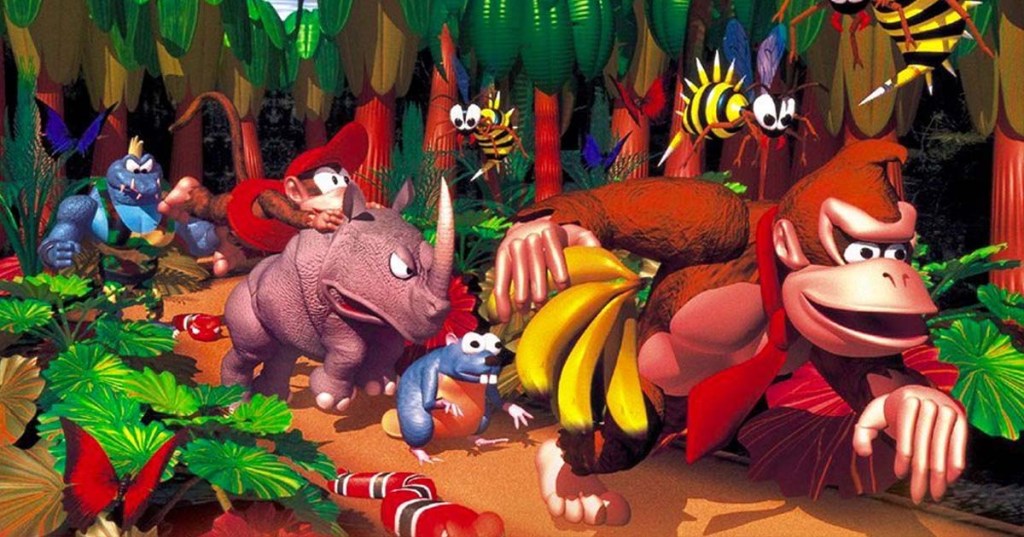
I’ve written about Donkey Kong in the past when I discussed the history of Nintendo, the history of Mario and the history of the groundbreaking 1981 arcade game Donkey Kong. What I have not discussed with much depth is what happened to the character once the game company Rare got ahold of him. Thanks to games like Donkey Kong Country, Rare helped elevate Donkey Kong to legendary status on par with any of Nintendo’s most famous heroes.
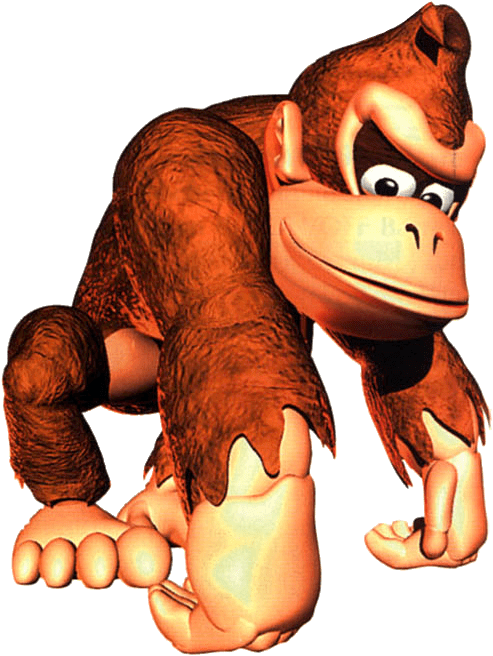
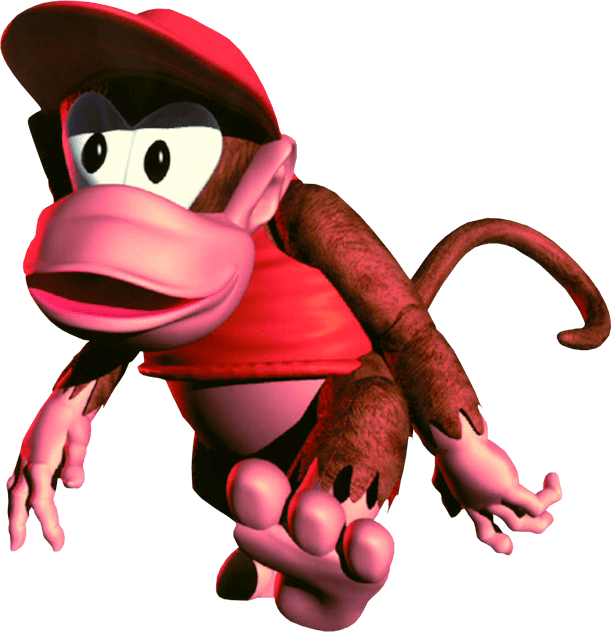
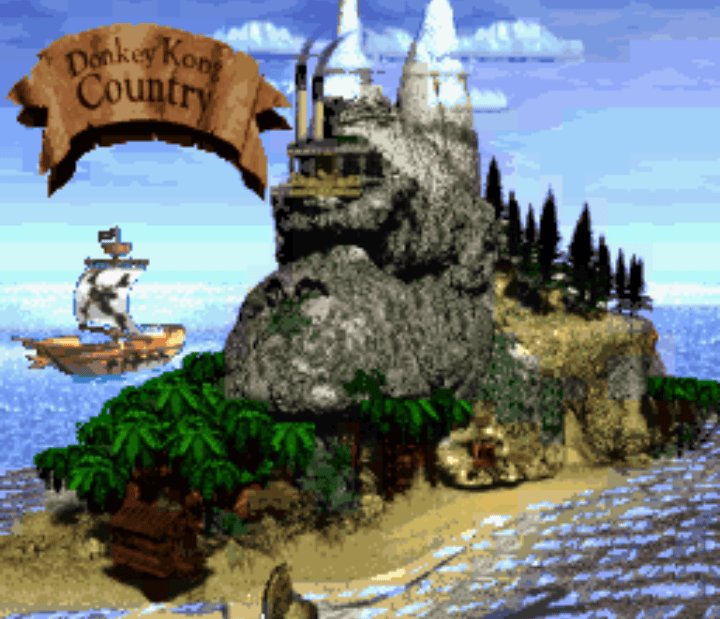
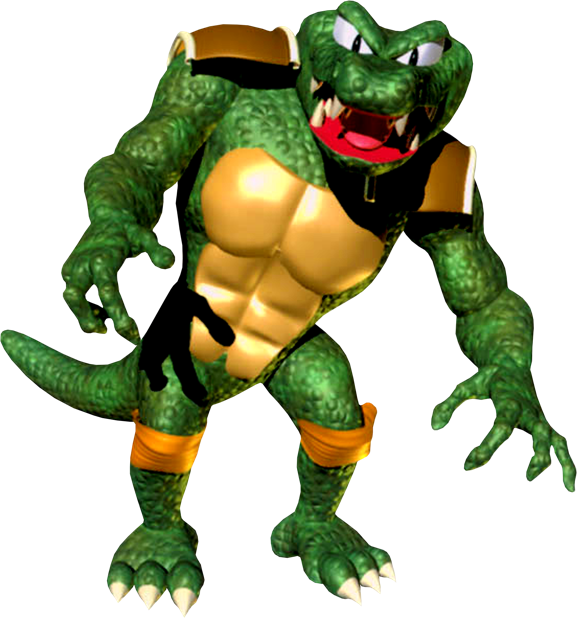
While previous Donkey Kong games centered on the character navigating civilized settings while antagonizing humans like Mario, Donkey Kong Country takes place in the wild on Donkey Kong Island, the birthplace of DK and his family. The game’s story is about an evil reptilian monarch named King K. Rool and his Kremling army invading Donkey Kong Island and stealing the Kong family’s banana hoard. DK, along with his monkey nephew Diddy Kong (who serves as your tag team partner and a second life in case DK dies), set out to take back their bananas from K. Rool and the various creatures throughout the island who work for K. Rool. Donkey Kong Island consists of six main areas for you to explore: Kongo Jungle, Monkey Mines, Vine Valley, Gorilla Glacier, Kremkroc Industries Inc. and Chimp Caverns.
All the while Donkey and Diddy will be receiving aide from other members of the Kong family, including DK’s grandfather Cranky Kong who gives you advice about how to get through various levels, Funky Kong who lends you his plane and allows you to travel across the island more quickly, and DK’s girlfriend Candy Kong who lets you save your progress. You also receive help from animal buddies like Rambi the rhino (Rambo meets Bambi), Expresso the ostrich, Enguarde the swordfish, Winky the frog and Squawks the parrot as you fight Kremlings, Klaptraps, snakes, beavers, buzzards, bees and other unfriendly members of the animal kingdom.
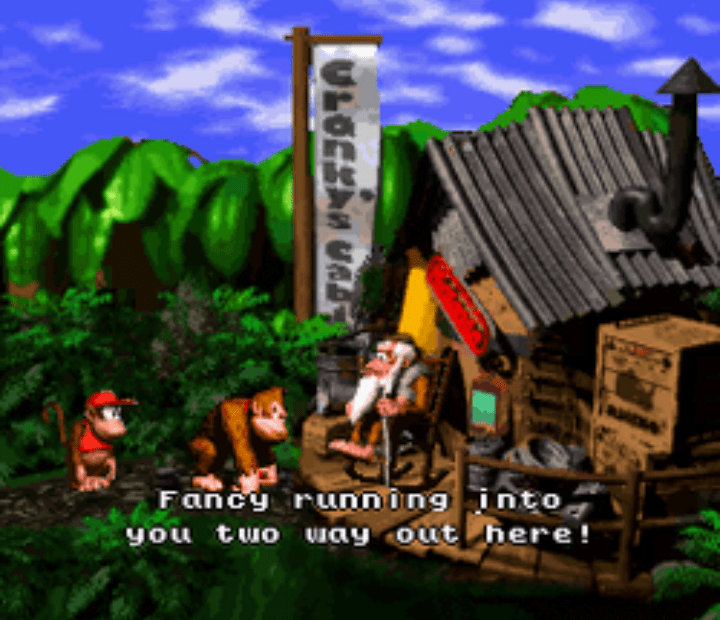

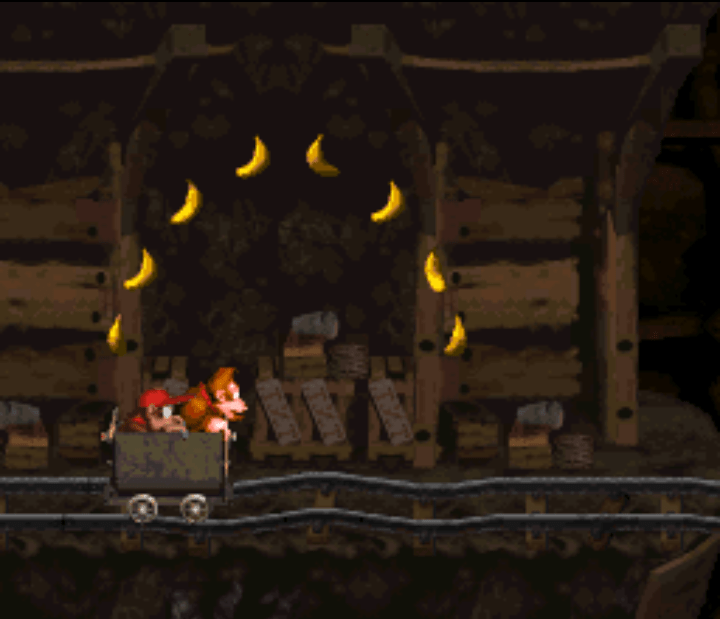
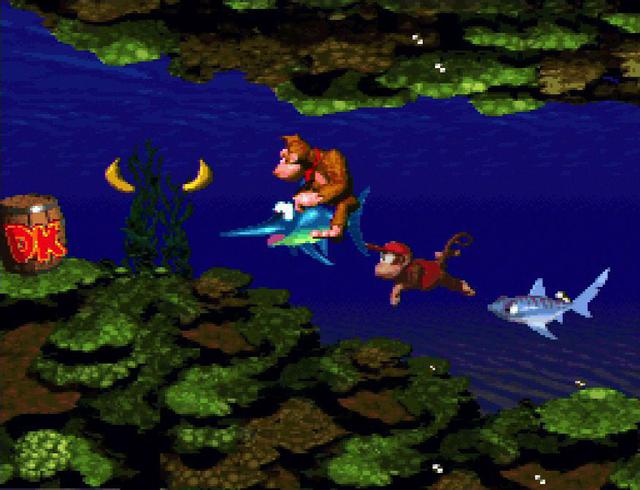
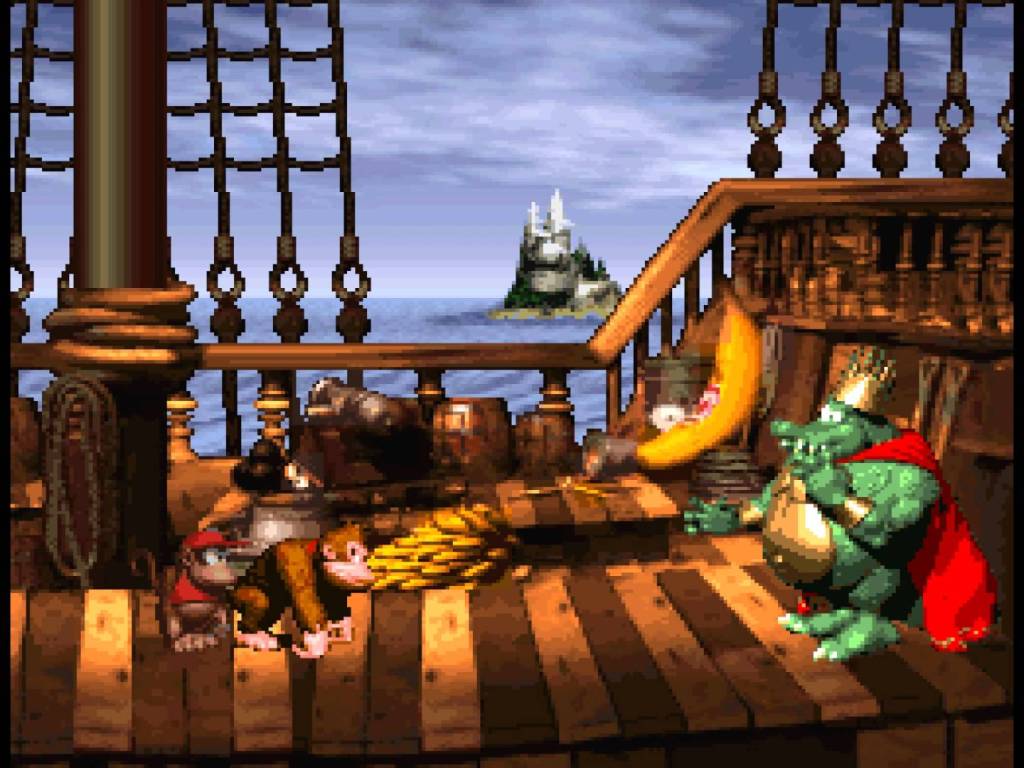
Donkey Kong Country was created by the British software developer Rare and directed by that company’s co-founders Tim and Chris Stamper. The Stamper Brothers partnered with Nintendo earlier when they demonstrated their tech skills by reverse-engineering the NES. This led to Nintendo of America founder Minoru Arakawa granting Rare a development deal for several NES games, most famously Battletoads.
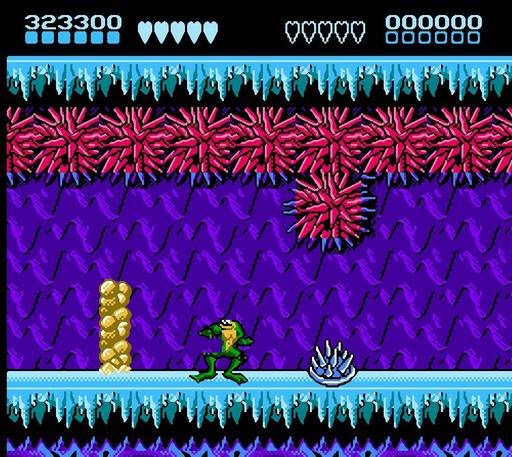
By the time the Super NES came out, Rare had used the profits they made from their various NES games to invest in rendering software for 3D models, which made Rare one of the most technologically advanced game developers. Rare had originally intended on using this technology for the Nintendo 64, but Nintendo saw Rare’s technological ambitions as an opportunity because it was around this time that Sega was overshadowing Nintendo’s popularity in America thanks to the Genesis and Sonic the Hedgehog. And Sega spared no expense on graphics. Nintendo took notice when they saw how beautiful Genesis games like Disney’s Aladdin looked (Virgin Software literally collaborated with Disney artists to design that game) and so Nintendo was looking for ways to compete. When Nintendo learned about Rare’s 3D rendering endeavors, they decided to grant Rare permission to make a Super NES game starring Donkey Kong, a relatively low-stakes proposal since the Donkey Kong series had been largely dormant in the nineties with the original 1981 arcade game still marking the peak of that property’s success. During the game’s secret development Nintendo codenamed the game “Country” in reference to Rare’s headquarters in Twycross, England. The name “Donkey Kong Country” stuck.
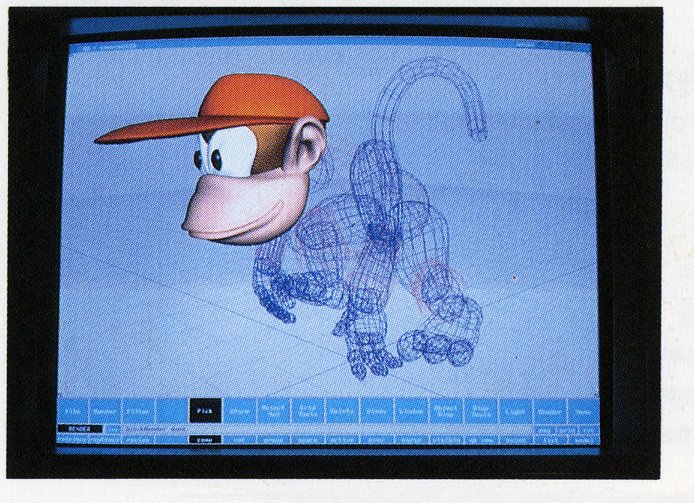
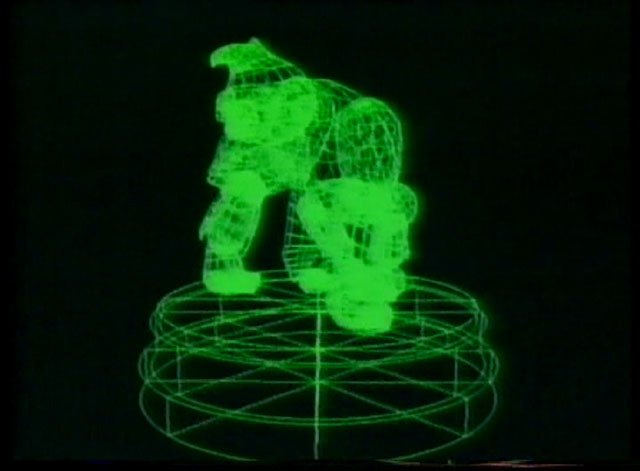
With the Stamper Brothers set to direct, Gregg Mayles and Daniel Owsen would write the game’s script, Gregg Mayles would do the designing, Chris Sutherland would do the programming, Steve Mayles, Kevin Bayliss, Mark Stevenson and Adrian Smith would lend their artistic skills to the game’s look while the game’s equally ambitious soundtrack would be composed by David Wise, Eva Novakovic and Robin Beanland. The development team at Rare sought inspiration from Mario platformers and occasionally the 1981 arcade game (DK and Diddy can lift barrels and hurl them at their enemies). The levels were designed so that a skilled player could get through each of them quickly and smoothly if they knew what they were doing.
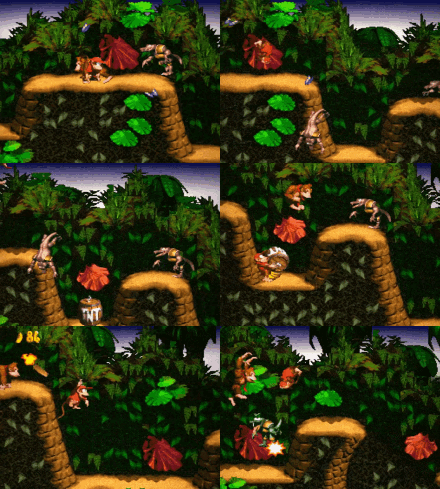
Donkey Kong creator Shigeru Miyamoto was the one who suggested giving DK a red necktie, which became DK’s signature look in every Mario and Donkey Kong game that followed, although the majority of the character redesigns came from Kevin Bayliss. Diddy Kong, who is the Luigi to DK’s Mario, was originally going to be named Donkey Kong Jr. with Bayliss redesigning the classic arcade character with a red hat, a red shirt and a tail, but Nintendo pushed for Rare to make him a brand new character instead and thus DK’s nephew Diddy was born. DK’s grandfather Cranky is implied to be an older version of the original Donkey Kong who serves as Mario’s rival. The Kremlings were originally proposed as characters in another Rare game that was unrelated to Donkey Kong but that game got scrapped and they were repurposed as DK’s main antagonists.
Just like with Battletoads on the NES, Rare pushed themselves to the limits of the Super NES’s hardware capabilities to make sure Donkey Kong Country looked good, and the rendering process was obviously challenging because it was obviously a brand new process. Despite some at Nintendo being reluctant to Rare’s radical new approach to realistic-looking graphics, Miyamoto gave the game his approval and provided notes to help Rare in the game’s development, which was a big deal because at that time Nintendo rarely gave outside developers so much creative control over one of their properties. Although the game had a development team of 20, a budget of $1 million and like I said, a relatively low-stakes property to risk it on. Which is why it was such a huge deal when the game came out in 1994 and became a huge success.
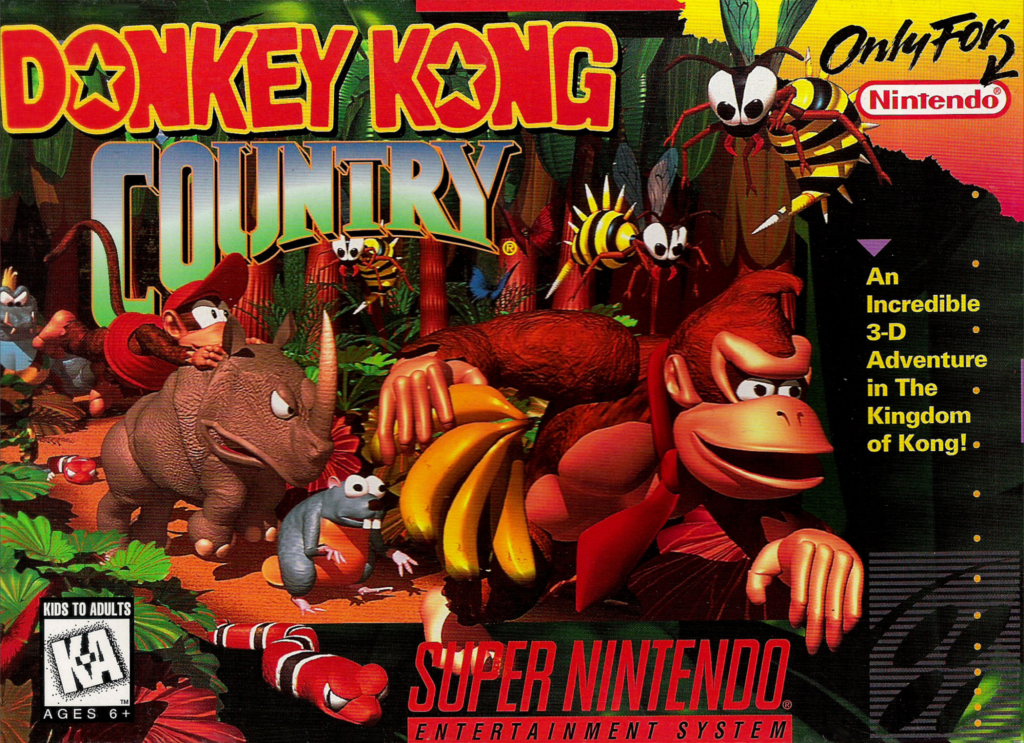
Nintendo promoted this game heavily in the months leading up to its release and they also leaned heavily into the game’s amazing graphics and the fact that you didn’t have to wait for the release of the Nintendo 64 to enjoy them. A heavy blow to the Sega CD and the 32X add-ons that Sega was unsuccessfully selling to Genesis owners. In other words, if Sonic had Mario in a chokehold, Donkey Kong swatted Sonic away. The amount of promotion and the graphical appeal paid off because Donkey Kong Country became the third best-selling SNES game of all time after Super Mario World and Super Mario All-Stars, and in some ways it saved the SNES amidst competition from heavy hitters like Sega and Sony who were both getting ready to enter the 32-bit era while Nintendo was still behind in the 16-bit era. And not only was the game a commercial hit but it was acclaimed by critics too. A lot of praise was obviously aimed at its graphics but also at its depth and variety as well as its imagination, sense of humor and killer soundtrack.
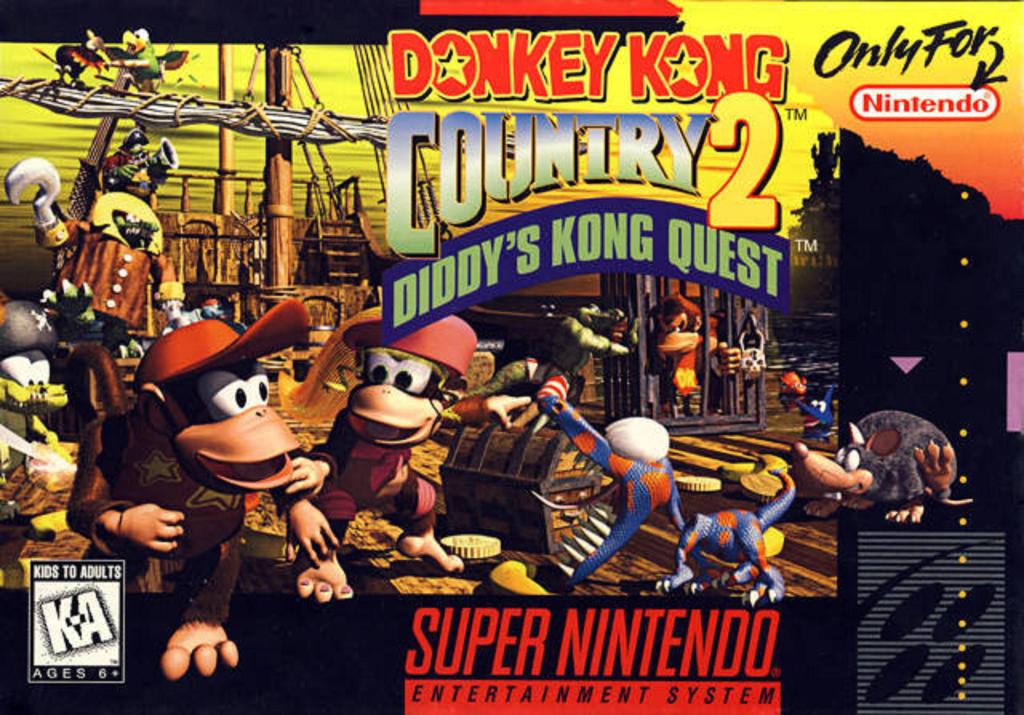
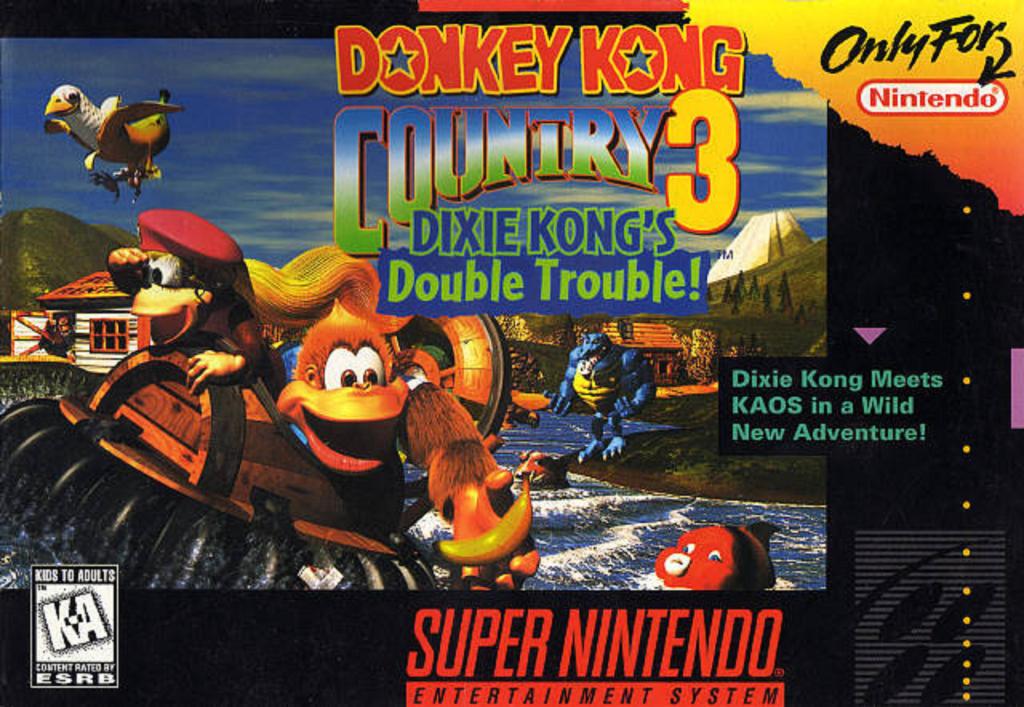
The success of Donkey Kong Country was a major factor in Nintendo and Rare’s close working relationship in the N64 era which led to other successful games like Goldeneye 007, Diddy Kong Racing, Banjo-Kazooie and Perfect Dark. But Rare would continue working on Donkey Kong games as well, including the sequel Donkey Kong Country 2: Diddy’s Kong Quest (1995, SNES) in which Diddy Kong and his girlfriend Dixie Kong must rescue Donkey Kong from the Kremling pirate Kaptain K. Rool, and the threequel Donkey Kong Country 3: Dixie Kong’s Double Trouble! (1996, SNES) in which Dixie Kong and her cousin Kiddy Kong must journey to the “Northern Kremisphere” to save both Donkey Kong and Diddy Kong. Both games received positive reviews for their visuals and gameplay and DKC2 was even considered one of the best 2D platformers ever made at the time.
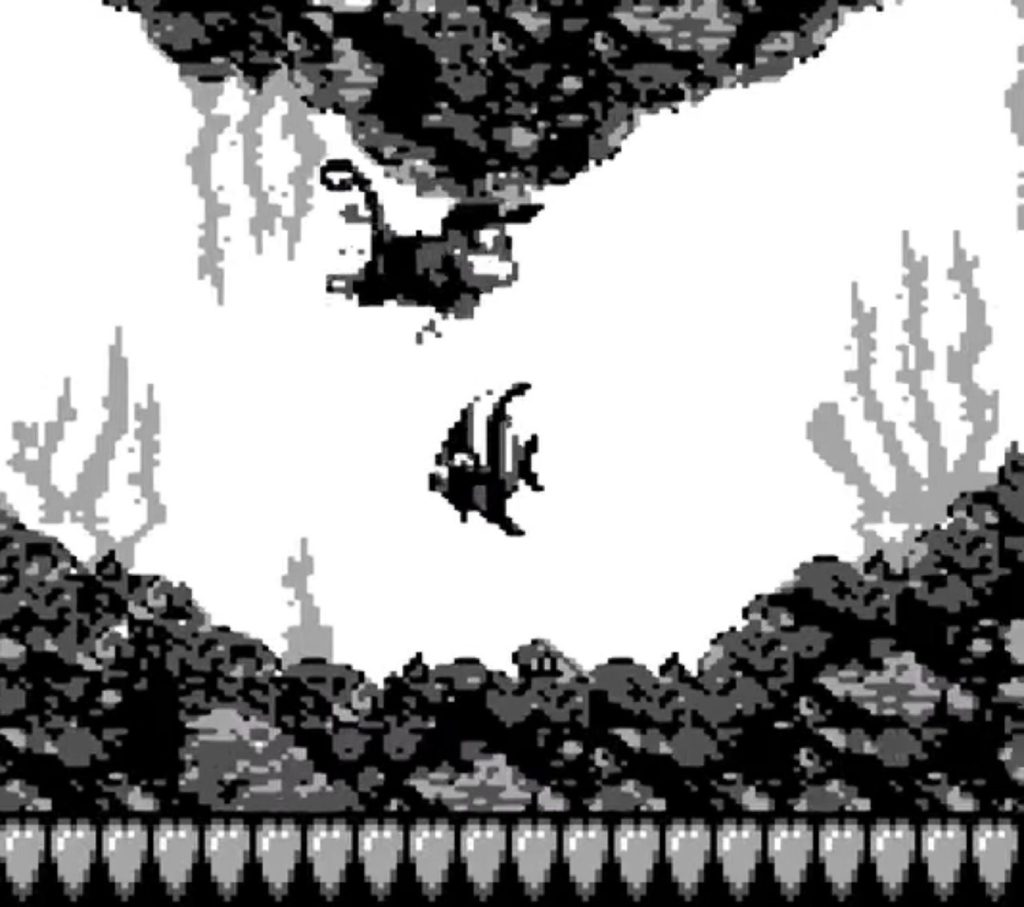
Rare also made a Game Boy game called Donkey Kong Land (1995) which brought DKC‘s pre-rendered 3D graphic style to a traditionally 8-bit handheld screen with impressive results. Donkey Kong Land was originally proposed as a port of DKC but instead Rare made an original platformer with new areas, new enemies and a new soundtrack. It was a success and it was followed by the Game Boy games Donkey Kong Land 2 (1996) and Donkey Kong Land III (1997).
In my next and final article about the Rare era of Donkey Kong, I will talk about DK’s transition from sprites to polygons and his one final splash on the Nintendo 64.
 Entertainment Junkie Blog