
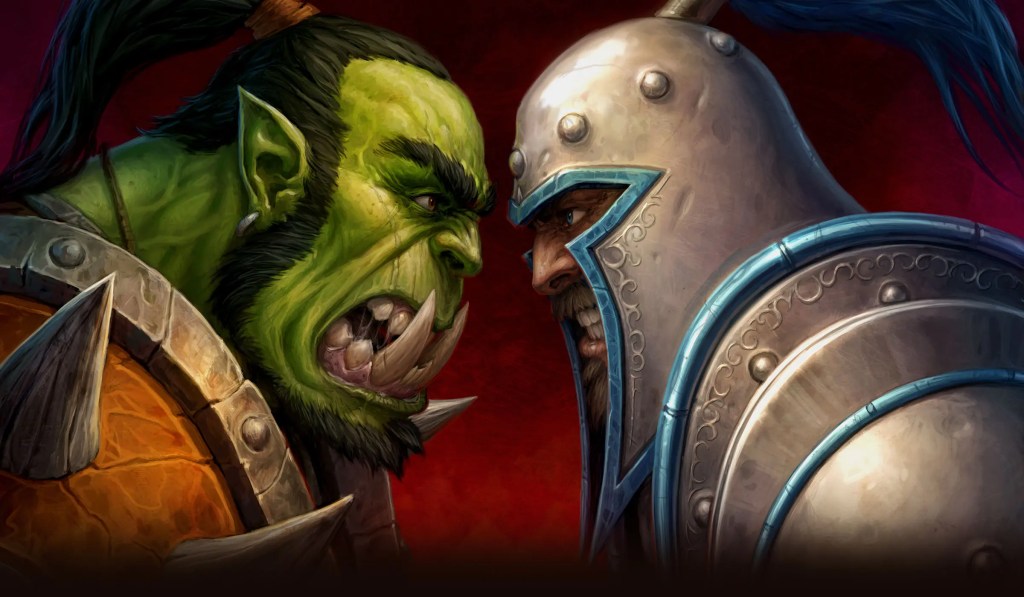
For a lot of gamers, when they hear “real-time strategy game,” “Online role-playing game” or even “computer game” in general, the first thing that comes to mind is Warcraft. Thanks to World of Warcraft in particular, the series has become synonymous with massively multiplayer online role-playing games (MMORPGs). Of course games like Warcraft had existed long before then. Blizzard Entertainment just perfected the genre.
Real-time strategy (RTS) games have existed in various incarnations since the 1980s, including Utopia (1982), Cytron Masters (1982), Bokosuka Wars (1983), The Ancient Art of War (1984) and Herzog (1988). Although Herzog‘s sequel Herzog Zwei (1989) is often credited as the first true modern RTS game as well as a precursor to the multiplayer online battle arena subgenre. Herzog Zwei wasn’t hugely popular but it served as the inspiration for the much bigger hit Dune II (1992) developed by Westwood Studios. The first Dune was a much more traditional adventure game, but Dune II established the format for RTS games that would be followed for years to come, so even though Herzog Zwei came first, Dune II is more archetypal.
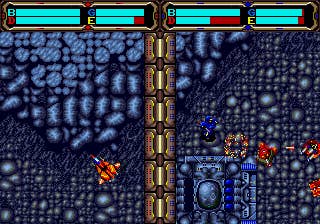

Among the core mechanics of Dune II that eventually became RTS standards are the economic model of gathering resources and building bases (as this game is based on the Frank Herbert novel your main goal is of course harvesting spice), the ability to use your computer mouse to move units across the screen with precision, and the fog of war system, which hides enemies or terrain from your view until it is explored or conquered. Basically anyone who has played Command & Conquer, Age of Empires and Warcraft owe a debt to the road paved by Dune II.
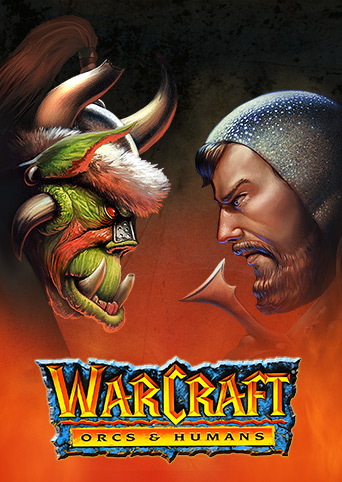
A California-based video game developer founded in 1991 called Blizzard Entertainment tried to capitalize on the success of Herzog Zwei and Dune II with a high fantasy real-time strategy game for the Microsoft DOS called Warcraft: Orcs & Humans (1994). Set on a fictional terrestrial planet called Azeroth populated by multiple humanoid and non-humanoid races, you have the choice as a player to fight on either the side of the human inhabitants or the side of the invading orcs.
The single-player campaign mode consists of a series of various missions often involving finding resources and building armies, while the multiplayer mode mainly consists of destroying enemy forces. As the game has a medieval high fantasy setting, it was obviously possible to fight these enemies with magic as well as weaponry. Going beyond the concepts of Dune II, Warcraft not only allowed players to build armies and fight enemies but also rebuild towns and rescue friendly forces from enemy camps. Plus even more specific missions, such as one where you are tasked with killing the orc chief’s daughter, which is an orc campaign and not a human one by the way!
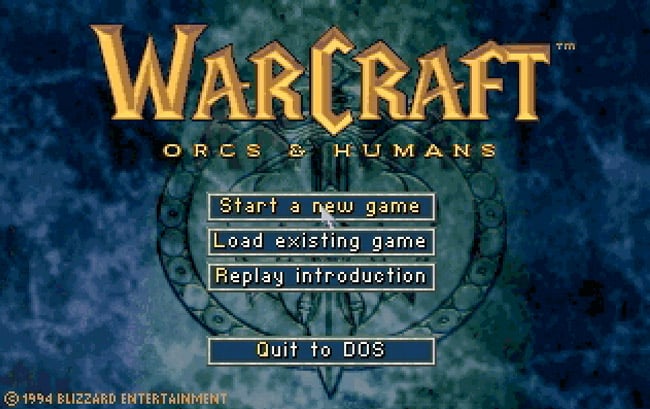
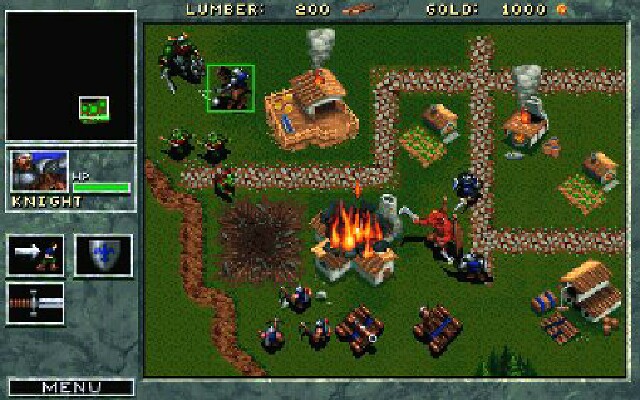
Warcraft: Orcs & Humans became Blizzard’s biggest hit by far, ranking among the top 20 CDs in the sales charts across all mediums. Gamers were addicted and critics found it fun and engrossing and praised its colorful presentation, simple interface and strategic depth. This was the nineties so the game was still slow, glitchy and clunky compared to the RTS games of today, but at the time it was declared one of the best computer games ever made.
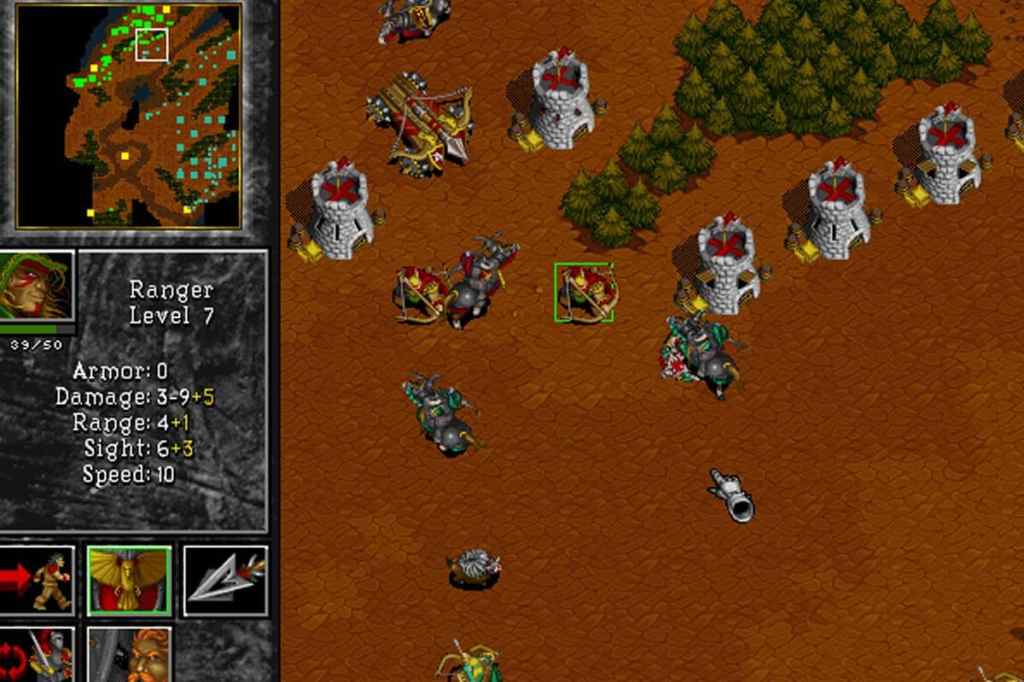
A sequel called Warcraft II: Tides of Darkness (1995) soon followed and it was another commercial and critical hit that elevated Blizzard to top status among game developers. The AI was better, the interface was more user-friendly and the strategic possibilities were more varied with a lot of replay value added thanks to the map editor and multiplayer options. And this was also the first Warcraft game to receive an expansion pack, released a year later and titled Warcraft: Beyond the Dark Portal.
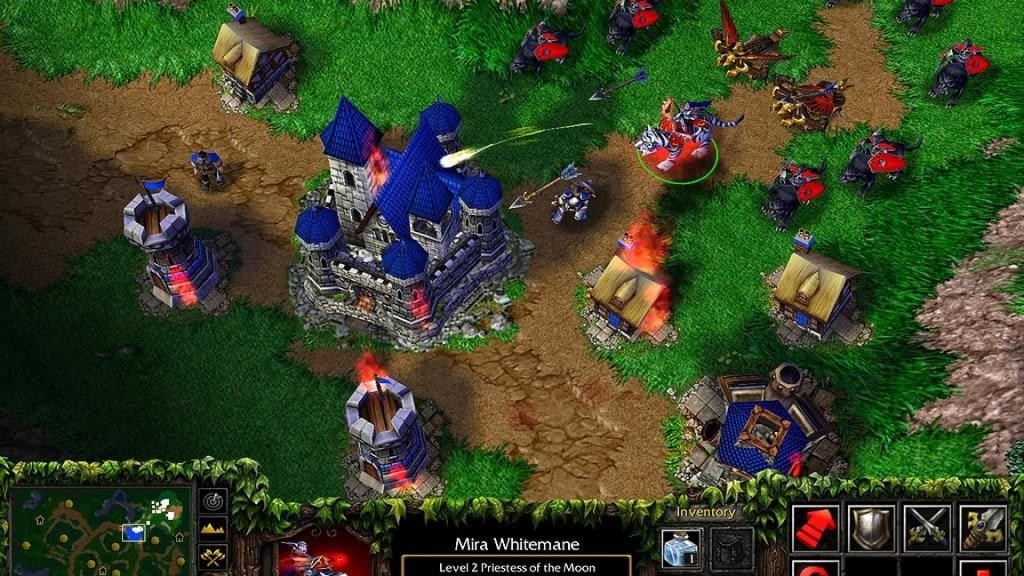
Warcraft III: Reign of Chaos (2002) was the first three-dimensional Warcraft game and Blizzard’s winning streak continued because it also received wide acclaim and was hugely popular. The story of the campaigns was praised for its epic scale and nuanced character portrayals with the consensus among gamers being that the Warcraft series had successfully transitioned to 3D.
This all culminated in the release of the MMORPG World of Warcraft (2004) which is still active on Windows and Macs and being updated with expansion packs and new storylines to this day. World of Warcraft allows players to create and customize avatars and explore an open online world with other players around the world, whether you are fighting them or working with them, all while leveling up and earning experience points to become more powerful.

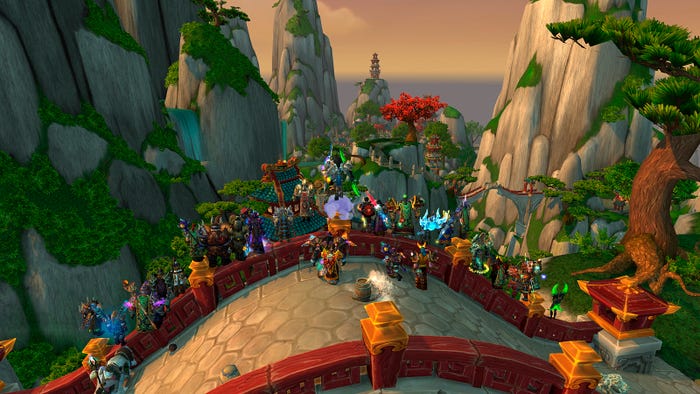
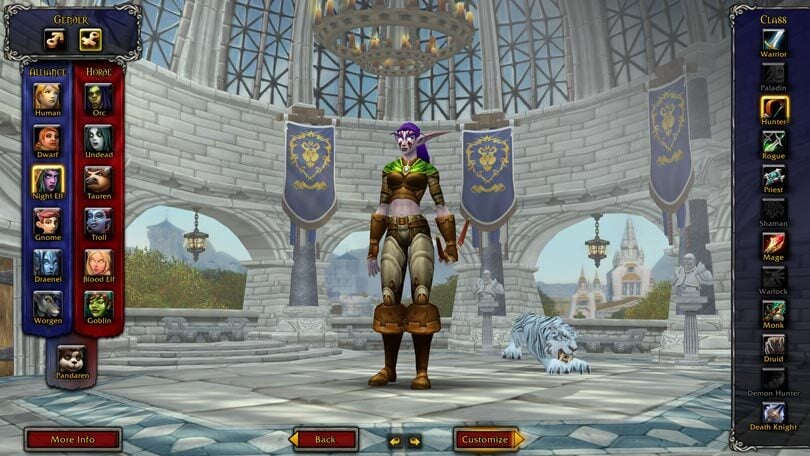
World of Warcraft is the most popular entry in the Warcraft series and often seen as the greatest MMORPG and one of the greatest video games of all time. Today Warcraft has reached mainstream status in the same way games like Mario, Grand Theft Auto, Pokémon and Tetris have and its popularity shows no signs of slowing down.
 Entertainment Junkie Blog