

Hideo Kojima, one of the few unique voices and actual celebrities in the video game industry, first won over the majority of his fans because of the Metal Gear series, which is by far his most famous series of games. I’ve written a specific article about those games before, but the creativity of the man behind them deserves a closer examination.
Japanese game developer Hideo Kojima was born in Setagaya, Tokyo in 1963 and moved to Osaka at the age of four. He spent most of his youth indoors watching TV, and as per his family’s tradition, they actually watched a film every night, which makes total sense when you think about how much of a knowledgeable film buff Kojima is to this day. From a young age, Kojima even showed interest in making films when he and his friend shared a Super 8mm camera.
By the time he attended university, Kojima studied economics with an initial plan to work his way into film production. Before that, the way he told stories was by writing fiction. Although when he was first introduced to the Famicom (the original Japanese name for the NES), the video game industry began looking even more appealing than the film industry. Of course this was in the eighties and at that time the video game industry was still new and pretty niche compared to other businesses. So niche that there weren’t a lot of companies Kojima could find listed on the Japanese stock exchange for him to apply to, but luckily Konami was one of them.


Hideo Kojima joined Konami in 1986 to work in their MSX computer division. It wasn’t the Famicom, which disappointed him, and Kojima found the hardware of the MSX more limited, but he worked with what he had. The first game he worked on at Konami was the MSX racing platformer Penguin Adventure (1986), a sequel to the 1983 MSX game Antarctic Adventure in which you play as a penguin who goes on a quest to find a golden apple to save a princess. Kojima was only involved as an assistant director in the planning stages of the game for about a month so this wasn’t exactly a big showcase for his talents. He wasn’t even credited in the final game. But he would soon get the chance to develop his own game.


The video game Metal Gear (1987) was originally designed without Kojima’s involvement to be more action-centered where fighting enemies was the goal, but when hardware limitations hindered the development of the game’s combat, Kojima fixed the problem by taking over as the game’s director and shifting the focus from fighting to stealth. Kojima created a story in which the game’s protagonist (Codename: Solid Snake) was a special forces operative sent to the state of Outer Heaven to stop a nuclear tank called “Metal Gear” from falling into the wrong hands. An early example of the stealth genre (a genre which this game helped popularize), Metal Gear is regularly ranked among the best MSX games ever made and it gained popularity in the U.S. as well when it was ported to the NES (albeit in a watered-down fashion, but American gamers didn’t know that). The game received praise for being addictive, challenging and groundbreaking concept-wise.
Konami went on to make a sequel for the NES called Snake’s Revenge in 1990 without the involvement of Kojima, but that same year, Kojima made his own sequel for the MSX2 called Metal Gear 2: Solid Snake which received much more acclaim. Critics said it surpassed the first game in gameplay, writing and characterization, and many gamers agreed. Needless to say, the Metal Gear sequel that Kojima was actually involved in is the one considered canon.
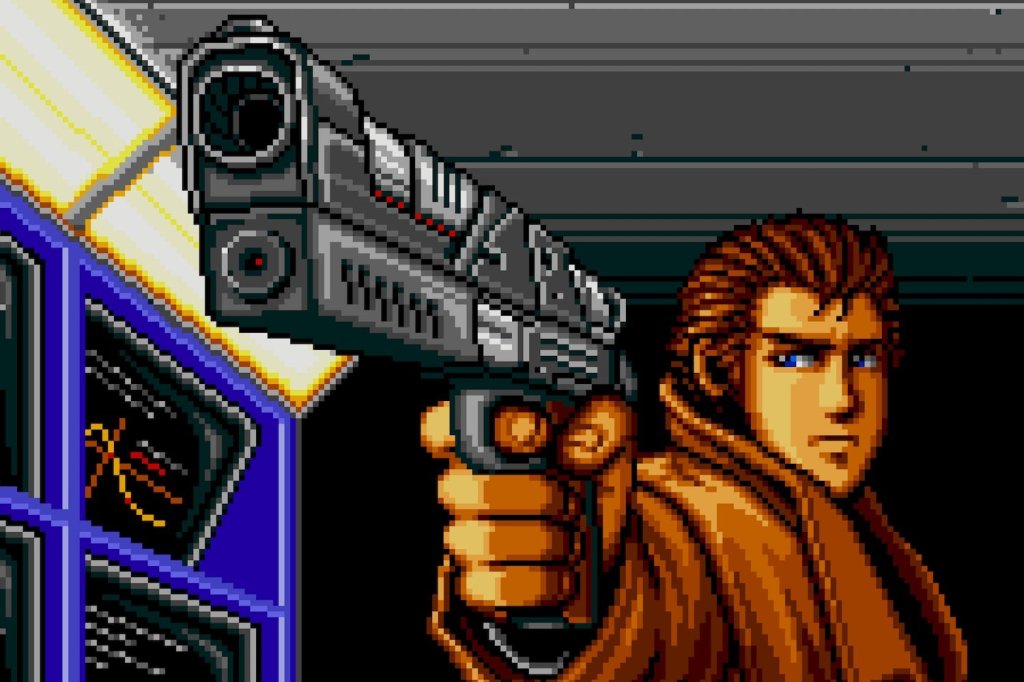
Another game Kojima wrote, directed and designed in the eighties was a cyberpunk graphic adventure game called Snatcher (1988) which Kojima and his team almost treated more like an anime film than a video game in its presentation. This was a precursor to what would become a staple in Kojima’s highly cinematic directing style for future games. Once again, the hardware of ’80s game systems was too limited to accommodate Kojima’s ambitions (forcing him to end the game on a cliffhanger when he had to trim down the six-chapter story to two chapters). Released for the MSX2 and NEC’s PC-8801, the game was a modest hit in Japan. Kojima later remade the game in a more stylized graphic scheme with SD Snatcher (1990) for the MSX2 (“SD” stood for “Super Deformed” in reference to this radical graphical overhaul). Kojima changed some of the gameplay rules as well, leaning more into top-down RPG elements.

Kojima wrote, directed and designed another graphic adventure PC game called Policenauts in 1994. This game told the story of an astronaut waking from cryosleep years in the future after an accident at a space colony sent him drifting into space. Kojima’s interest in movies, as well as science, science fiction and buddy cop stories, was very apparent to anyone who played this game. Policenauts was successful with gamers and critics, with much of the praise aimed at its captivating setting, talented voice cast, high-quality animation and its spectacular presentation in general.
Kojima wasn’t done with the Metal Gear series, however. Eight years after Metal Gear 2 was released, he produced, wrote, directed and designed a 3D sequel called Metal Gear Solid (1998) which was originally planned to be made for the 3DO Interactive Multiplayer until that console was discontinued and development shifted to the Sony PlayStation instead. Thanks to the hardware of the disc-based PlayStation, Metal Gear Solid was able to weave actual movie-like cutscenes into the gameplay like never before. Kojima loved cutscenes so much that it has become a joke and sometimes even a point of contention among gamers that the cutscenes in Kojima’s games are too long and intrude on the gameplay. But I never minded this and neither did a lot of other people because the stealth-based gameplay was very fun and the story was very well-told. In fact the game received so much acclaim for its story, themes, characters, innovation and gameplay that it turned Kojima into a celebrity in the world of video games, and the game is still considered a classic to this day.
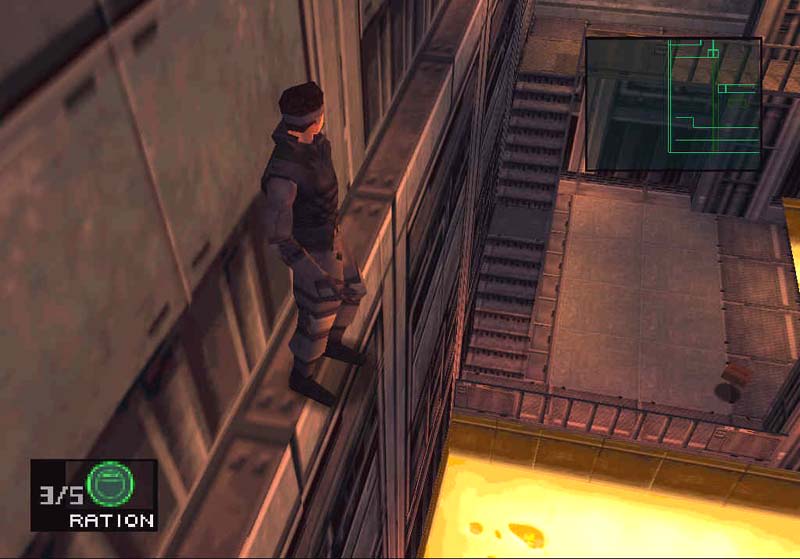


The Metal Gear series began on the MSX but it was the success of Metal Gear Solid on the PlayStation that really propelled the series forward and influenced every new modern entry. Kojima would write, direct and design all nine of the main entries in the Metal Gear series, which would go on to include the PlayStation 2 games Metal Gear Solid 2: Sons of Liberty (2001) and Metal Gear Solid 3: Snake Eater (2004), the PlayStation 3 game Metal Gear Solid 4: Guns of the Patriots (2008), the PlayStation Portable game Metal Gear Solid: Peace Walker (2010), a prelude called Metal Gear Solid V: Ground Zeroes (2014) and its follow-up Metal Gear Solid V: The Phantom Pain (2015). Kojima would also serve as supervising director for the PS3/Xbox 360 game Metal Gear Rising: Revengeance (2013) developed by PlatinumGames, and he would often produce various spin-offs like the PSP game Metal Gear Solid: Portable Ops (2006), the card-based RPG Metal Gear Acid (2004) and the Game Boy Color game Metal Gear: Ghost Babel (2000).
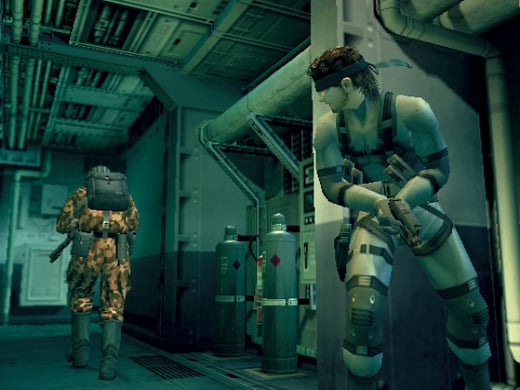
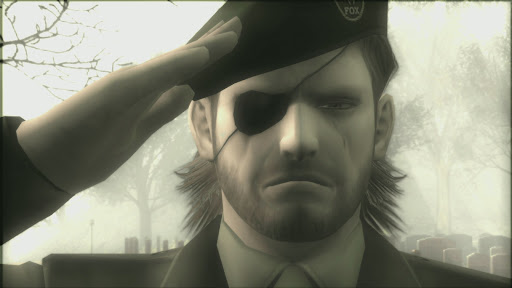
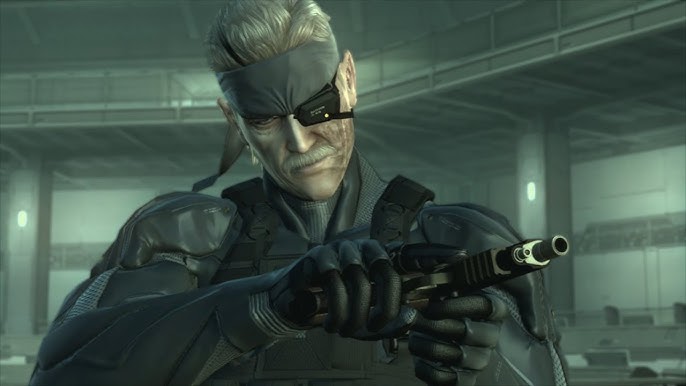

The Metal Gear series not only popularized stealth games but also the combination of cinematic storytelling and interactive entertainment. The games have a huge fan base thanks to their intricate stories, their often offbeat sense of humor and their serious political themes. As well as the character of Snake himself.
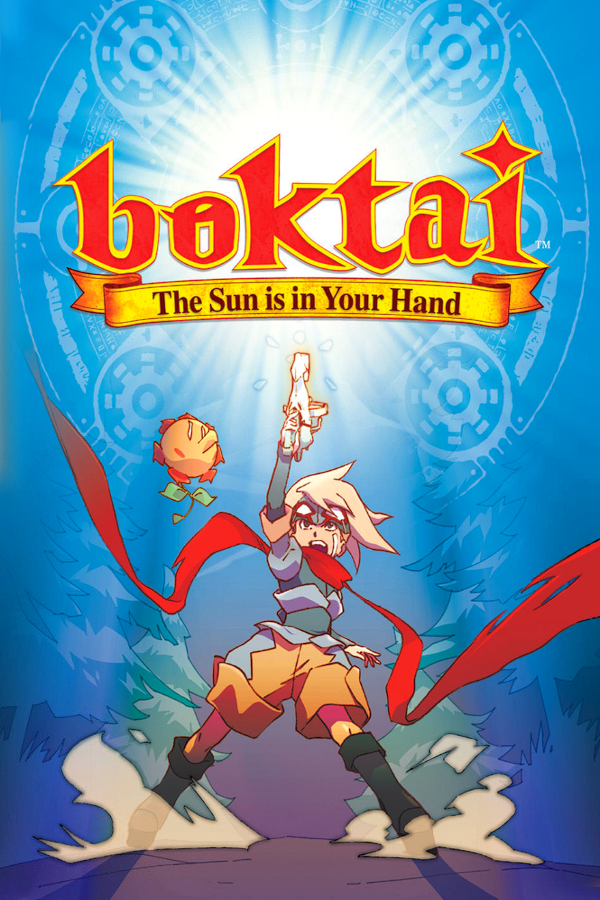
Another game Kojima had a hand in designing was the Game Boy Advance RPG Boktai: The Sun Is in Your Hand (2003) about a vampire hunter named Django who uses a solar-powered gun to defeat his enemies. The Game Boy Advance cartridge actually has a light sensor that measures light exposure and charged your in-game weapons, which was meant to encourage people to play the game outside in the daytime (an interesting mechanic, although you could find ways to charge your weapons within the game on rainy days too). It was successful enough that Kojima also produced a sequel called Boktai 2: Solar Boy Django (2004) and a Nintendo DS entry called Lunar Knights (2006).

Kojima also produced Konami’s dating sim series Tokimeki Memorial (1997-99), the sci-fi hack-and-slash game Zone of the Enders (2001) for the PS2, its 2003 sequel Zone of the Enders: The 2nd Runner (which was seen as an improvement over the first game thanks to an increase in action), and MercurySteam’s Castlevania: Lords of Shadow (2010) for the PS3 and Xbox 360.
One of the most interesting games Kojima was involved in was P.T. (2014) which stands for “Playable Teaser” and was co-directed by Guillermo del Toro. P.T. served as an interactive teaser for an upcoming horror game to be directed by Kojima and del Toro called Silent Hills, which was to be the ninth main entry in the Silent Hill series. Although Silent Hills had been in development for the PS4 since 2012, Konami cancelled the game in 2015 and it never got made. A hugely unpopular move, especially since P.T. was already out and already successful, even considered by some to be among the best horror games.


The same year that Silent Hills was cancelled, Hideo Kojima split up with Konami and formed Kojima Productions. The studio’s first game was Death Stranding (2019) for the PS4. Taking place in a post-apocalyptic version of the United States where monstrous creatures roam the country, you control a character named Sam Porter Bridges (Norman Reedus) who is tasked with delivering supplies to various isolated colonies. In addition to Norman Reedus, the game also featured the voices and visual likenesses of Mads Mikkelsen, Léa Seydoux, Margaret Qualley, Troy Baker, Tommie Earl Jenkins and Lindsay Wagner who all provided motion-capture performances, while film directors Guillermo del Toro and Nicolas Winding Refn served as the models for the characters Deadman and Heartman (Deadman was voiced by Jesse Corti and performed via motion-capture by Justin Leeper, and Heartman was voiced by Darren Jacobs and performed by Masanari Sasaki).
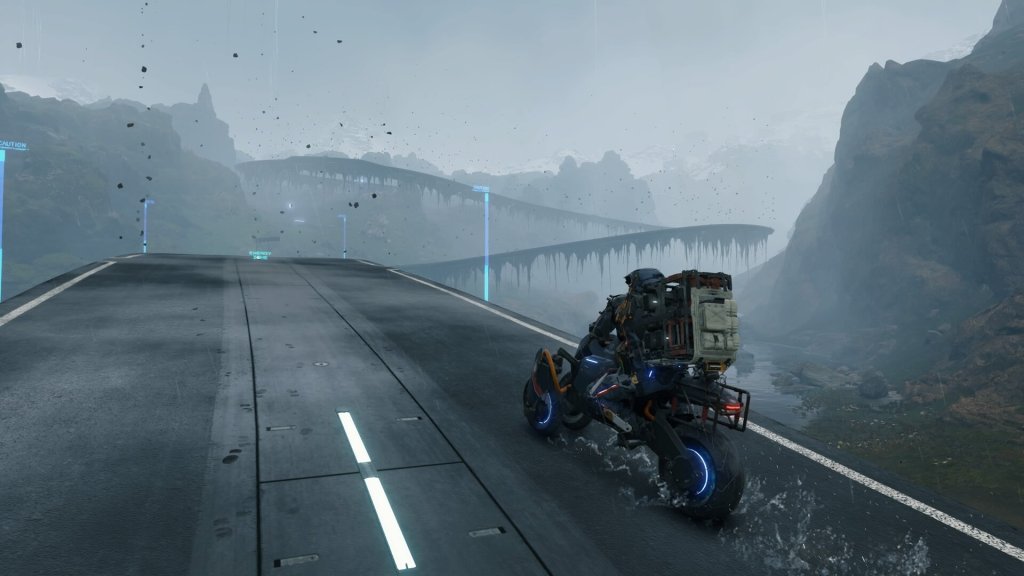


A lot of praise was aimed at Death Stranding‘s acting as well as its story, visuals and soundtrack. But the actual fun factor of the game was the subject of debate, with the long list of fetch quests consisting of traversing the countryside that make up the majority of the gameplay seen by some as lackluster and tedious. The story itself was one of the most bizarre and confusing of all of Kojima’s narratives as well. But the game sold well and received many industry accolades. A sequel titled Death Stranding 2: On the Beach is currently set to be released in 2025 for the PlayStation 5 and just like the first game, Kojima will write, direct and design it (this time with the knowledge of how humans handle a real-life pandemic in 2020 to reportedly influence his writing process).
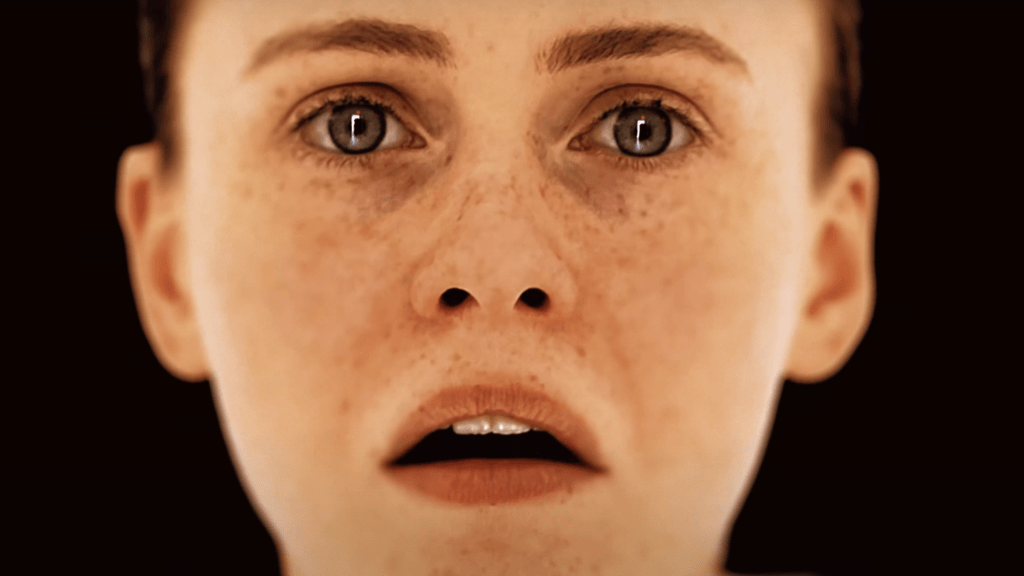
Another interesting-sounding game on the horizon from Kojima and Kojima Productions that does not yet have a release date is a horror game called OD that is being developed for Xbox Game Studios, being co-written by Jordan Peele (horror master behind the films Get Out, Us and Nope) and will star Sophia Lillis (It, It: Chapter Two, Dungeons & Dragons: Honor Among Thieves), Hunter Schafer (Euphoria) and Udo Kier (German character actor who has been working since 1966 and was in Armageddon and Blade). We were robbed of Hideo Kojima’s last horror game but at least he’s getting a second chance. He has stated that the game will explore the idea of testing one’s fear and will not only contain a unique style of gameplay but possibly pioneer a new type of media. Which sounds ambitious and also like typical Hideo Kojima.

 Entertainment Junkie Blog