

Ever since the success of Shrek 2, DreamWorks would follow a common formula with their films, often with an abundant streak of celebrity-fused comedies that seemed to be following Pixar’s tactic of targeting both the kids and the adults in the audience, but often in much more clumsy ways. Shark Tale (2004) for instance is a comedy starring Will Smith as a fish who claims to be a shark slayer that has many adult-oriented in-jokes and references but often feels too juvenile for adult crowds. It made its budget back so it was still a hit with families, but not with film critics who found it derivative and overly desperate to be hip at best and culturally insensitive towards Italian-Americans at worst.

This marked the beginning of my frustration and often wary feelings towards DreamWorks Animation when I was a teenager. I usually found their output light on substance and heavy on dumb jokes. Still, not everything the studio made was bad. I gave all of their films a chance and I found enough of them funny and entertaining to never fully write them off despite their cheap humor. One example of this was PDI’s Madagascar (2005) directed by Eric Darnell and Tom McGrath. The film tells the story of a lion (Ben Stiller), a zebra (Chris Rock), a hippo (Jada Pinkett Smith) and a giraffe (David Schwimmer) who escape from a zoo in New York City and make their way to the island of Madagascar. I get why it got mixed reviews. Its humor and writing are not the most clever. But like many of the audiences who watched it in droves and turned it into a hit, I just thought it was plain funny. I also liked the nice art design and compelling cast of characters, including many scene-stealing side characters. Those penguins could have easily been annoying or worse – totally pointless, but thankfully they avoid those pitfalls by not only being essential to the plot but also comedic highlights.


Beginning in 2006, DreamWorks Pictures would stop distributing the films of DreamWorks Animation and produce live-action films exclusively, following the company’s split in 2004 into two separate entities. DWA then entered into a distribution deal with Paramount, whose first release was Over the Hedge (2006), Tim Johnson and Karey Kirkpatrick’s well-received heist comedy about a raccoon (Bruce Willis) and a turtle (Garry Shandling) who leave the wild and enter the city in search of food to steal. It was based on the newspaper strip by Michael Fry and T. Lewis. Paramount would also release PDI’s Shrek the Third (2007). The threequel told a story about Prince Charming trying to overthrow Shrek and Fiona’s reign over Far, Far Away and was directed by longtime DreamWorks story artist Chris Miller. It was a commercial success but received the most mixed reviews of the trilogy. That same year Jerry Seinfeld’s Bee Movie (2007) told the story of a honey bee who befriends a florist and tries to sue the human race for exploiting the bee population after learning that they buy and sell honey. The bizarre story was not a big success with critics or audiences at the time but it does have a big cult following.


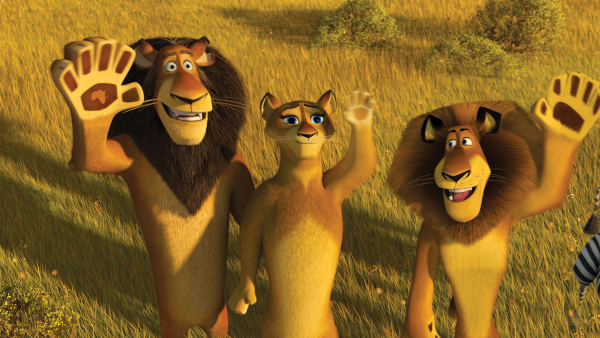
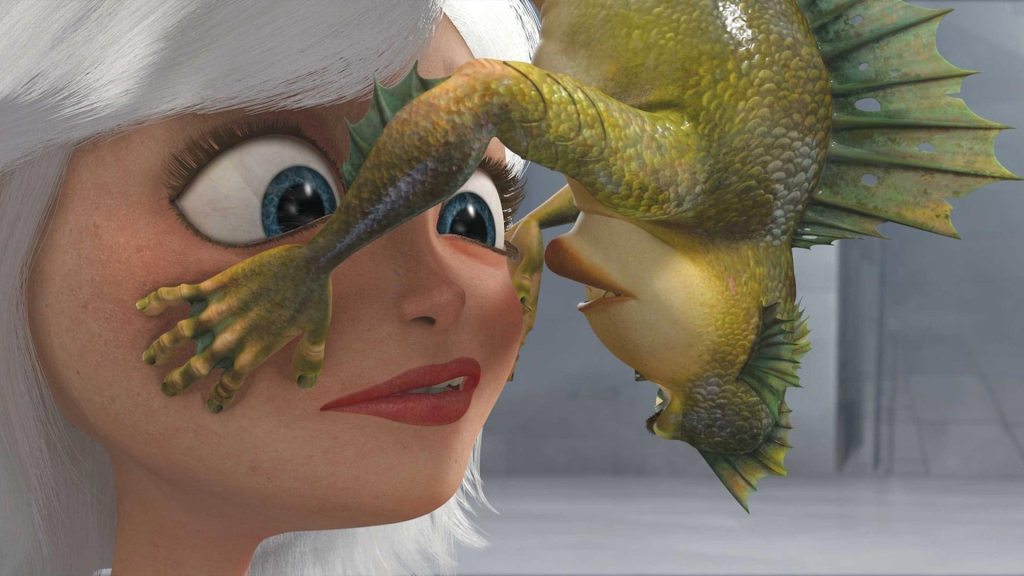
John Stevenson and Mark Osborne’s excellent Oscar-nominated comedy Kung Fu Panda (2008) stars Jack Black as a clumsy kung fu-loving panda named Po who lives in an animal-populated version of ancient China and learns how to be a kung fu warrior. It stars Dustin Hoffman as the red panda who trains him and it also featured the voices of Angelina Jolie, Seth Rogen, Lucy Liu, David Cross and Jackie Chan. It remains one of DWA’s best, most popular and most beautiful-looking films (even employing traditional animation at points). Eric Darnell and Tom McGrath returned to direct PDI’s entertaining Madagascar sequel Madagascar: Escape 2 Africa (2008) in which the group of zoo animals make their way to the continent of Africa and meet a pride of lions, including Alex’s father who was voiced by Bernie Mac. A year later DWA released the sci-fi comedy Monsters vs. Aliens (2009) directed by Conrad Vernon and Rob Letterman and starring Reese Witherspoon as a giantess, Seth Rogen as a gelatinous blob, Hugh Laurie as a mad scientist-turned-cockroach and Will Arnett as the fish-like, ape-like Missing Link. It was a modest hit and generally well-received by critics.

Next year saw the release of what many say rivals Shrek and Kung Fu Panda for the title of DWA’s best film. The endearing and epic fantasy How to Train Your Dragon (2010) came from Chris Sanders and Dean DeBlois, the directing team behind the equally heartfelt Lilo & Stitch, and it was loosely based on the novels by Cressida Cowell. Sanders and DeBlois set out to tell a slightly more mature story than what was offered in the novels, which were heavier on sweetness and whimsy. Even hiring live-action cinematographer Roger Deakins to give the film an epic feel. It told the story of a teenage Viking boy (Jay Baruchel) who finds and tries to tame a wild dragon who eventually becomes his friend. Highly praised by most everyone who watches it, it was largely celebrated for its dazzling visuals and dramatic depth and to this day it is still DWA’s highest-rated film on Rotten Tomatoes at 99% based on 214 different reviews.


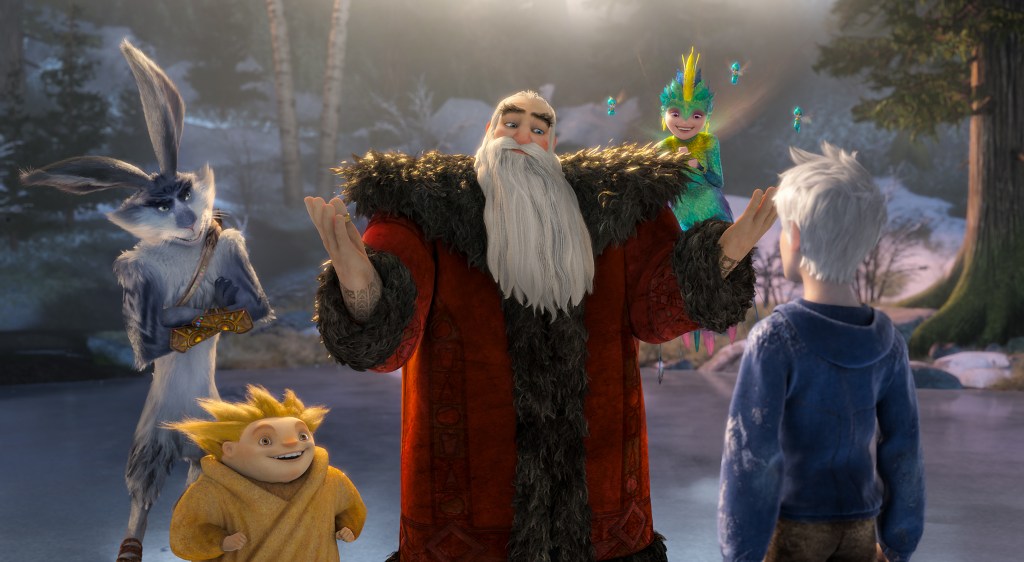
I won’t cover every single one of DreamWorks Animation’s films in detail, but I’ll give the basic rundown. After How to Train Your Dragon came PDI’s fourth and final Shrek film Shrek Forever After (2010) directed by Mike Mitchell, PDI’s Megamind (2010) directed by Tom McGrath and starring Will Ferrell as an inept alien supervillain, Kung Fu Panda 2 (2011) directed by Jennifer Yuh Nelson, the Shrek spin-off Puss in Boots (2011) directed by Chris Miller, PDI’s third and final Madagascar film Madagascar 3: Europe’s Most Wanted (2012) directed by Eric Darnell, Conrad Vernon and Tom McGrath and Rise of the Guardians (2012), a William Joyce-based fantasy film directed by Peter Ramsey featuring Santa Claus (Alec Baldwin), the Tooth Fairy (Isla Fisher), the Easter Bunny (Hugh Jackman), the Sandman and Jack Frost (Chris Pine) teaming up to defeat the evil Pitch Black (Jude Law) who seeks to end dreams and spread darkness. Although despite the film having its fans, DWA lost more money with this film than any other (Santa with tattoos may have been too much for people).


After their deal with Paramount expired, DWA partnered with 20th Century Fox and produced Chris Sanders and Kirk DeMicco’s prehistoric family comedy The Croods (2013) starring Emma Stone and Nicolas Cage, David Soren’s Turbo (2013) about a snail (Ryan Reynolds) who dreams of racing in the Indy 500, Rob Minkoff’s Mr. Peabody & Sherman (2014) animated by PDI and based on the classic Jay Ward cartoon characters, Dean DeBlois’ hit sequel How to Train Your Dragon 2 (2014) and Eric Darnell and Simon J. Smith’s spin-off film Penguins of Madagascar (2014), a classic example of a spin-off overreaching while attempting to capitalize on popular characters. The box office failure of Penguins of Madagascar led to the closure of PDI the following year, as well as a smaller number of annual releases from the studio (RIP Pacific Data Images).


After that came Tim Johnson’s sci-fi comedy Home (2016) starring Rihanna as a girl who befriends an alien voiced by Jim Parsons, Jennifer Yuh Nelson and Alessandro Carloni’s Kung Fu Panda 3 (2016) in which Po finds his biological father (Brian Cranston), Mike Mitchell’s candy-colored jukebox musical Trolls (2016) starring Anna Kendrick and Justin Timberlake, Tom McGrath’s The Boss Baby (2017) starring Alec Baldwin and David Soren’s outstanding superhero comedy Captain Underpants: The First Epic Movie (2017) adapted by Nicholas Stoller from the popular book series by Dav Pilkey, not just in the book’s content but in its visual style.


NBCUniversal owner Comcast acquired DWA in 2016 and began distributing all their theatrical releases, starting with Dean Deblois’ How to Train Your Dragon: The Hidden World (2019), which I thought was the best film in the trilogy and the best-looking DWA film at the time when I watched it in the theater. This was followed by Jill Culton’s yeti adventure film Abominable (2019) which DWA produced in collaboration with the Chinese animation studio Pearl Studio. I found it emotionally satisfying and gorgeously designed. After that came Walt Dohrn’s Trolls World Tour (2020), Joel Crawford’s The Croods: A New Age (2020), Elaine Bogan’s Spirit Untamed (2021) based on DreamWorks Animation Television’s Spirit Riding Free (a Netflix series that is itself based on Spirit: Stallion of the Cimarron), Tom McGrath’s The Boss Baby: Family Business (2021) and The Bad Guys (2022), a Tarantino-inspired 2D-tinged heist comedy directed by French animator Pierre Perifel and featuring a group of humanoid animal thieves, Mr. Wolf (Sam Rockwell), Mr. Snake (Marc Maron), Ms. Tarantula (Awkwafina), Mr. Shark (Craig Robinson) and Mr. Piranha (Anthony Ramos). The stylish film took visual inspiration from Sony Pictures Animation’s Spider-Man: Into the Spider-Verse and won over many critics and audiences with its writing, voice acting and sense of humor.

Joel Crawford’s Puss in Boots: The Last Wish (2022) was also aesthetically inspired by Spider-Verse (in fact Spider-Verse co-director Bob Persichetti was originally planned to direct it before Crawford took over) but this film about Puss in Boots (Antonio Banderas) facing his mortality after losing nearly all of his nine lives was more than a Spidey copycat (and no, that pun was not intended). The film was a huge word-of-mouth hit with audiences and a hugely acclaimed critical hit as well. Low expectations may have contributed to that. I know I was shocked by how good the film was, especially when the first Puss in Boots film was barely a blip in my memory, but I sincerely think The Last Wish may be DreamWorks Animation’s best film. Like I said at the start of this article, I usually disparage DWA’s clumsy balance of mature and juvenile content, but this was the kind of film that I always wished the studio had made: something darker and more bold than what other studios like Disney might do (at least the modern Disney) and executed in creative and clever ways rather than condescending and juvenile ways. Puss literally facing “Death?” That is clever. And the fact that Puss is literally having panic attacks? That is bold for a family film. Crawford’s respect for Shrek’s adult brand of humor combined with his desire to do something new was apparent and particularly well-handled. The film’s subject matter and deep themes have been widely lauded and everything about the film worked on an entertainment level and even an intellectual level (spoiler alert, but the fact that Puss ultimately “defeats” Death by ACCEPTING Death is one of the best narrative resolutions of any film). To the surprise of absolutely no one, the film also earned an Oscar nomination for Best Animated Feature.

After the one-two punch of The Bad Guys and The Last Wish came Kirk DeMicco’s underrated teen comedy Ruby Gillman, Teenage Kraken (2023), which was DWA’s biggest box office bomb to date but deserved much more attention and praise than it received. Then came Walt Dohrn’s Trolls Band Together (2023), the Netflix film Orion and the Dark (2024) from director Sean Charmatz and Being John Malkovich and Eternal Sunshine of the Spotless Mind writer Charlie Kaufman, Mike Mitchell’s Kung Fu Panda 4 (2024) and the critical and commercial favorite The Wild Robot (2024) directed by Chris Sanders and starring Lupita Nyong’o as a robot who is lost in the woods and befriends the wild life. The film will almost certainly receive an Oscar nomination for Best Animated Feature (with some predicting a win) and according to Sanders a sequel is already in development. Current future DWA films on the release slate also include Dog Man (based on the Captain Underpants spin-off), The Bad Guys 2, Gabby’s Dollhouse: The Movie (based on DreamWorks Animation Television’s Netflix series Gabby’s Dollhouse) and Shrek 5.

I no longer think of DreamWorks Animation as the second-rate Disney wannabe I thought it was when I was younger and constantly comparing it to films like Finding Nemo and Toy Story. In fact DWA deserves a lot of praise for taking bigger creative swings than most other American animation studios and the way it refuses to pigeonhole itself with a house style or a strict formula. All the movies I mentioned in these past three articles differ in animation style and writing quality to the point where I no longer have any expectations for what this studio will do next. Which is a good thing. Hollywood should stop focusing so much on making animation studios tell stories that will appeal to as many people as possible and focus more on letting them tell those stories as well as possible, while giving filmmakers and artists permission to trust their creative instincts. More often than not, that leads to better films. Although DWA’s unpredictable pattern of quality makes me think that image of a boy fishing on the moon is an appropriate logo for the studio, because with DreamWorks you never know if you’re going to get a guppy or a whopper.

 Entertainment Junkie Blog