

Filmmaker Lawrence Kasdan was born in Miami Beach, Florida in 1949 and raised in Morgantown, West Virginia. He lived a typical life for an American kid in the fifties, although it was pretty atypical to have two parents who were aspiring writers while you are the one who goes on to become a successful writer in Hollywood. Plus his childhood wasn’t exactly ideal. He once said that he learned more about values from watching movies than he did from his home life and his school, and that his time watching movies was the happiest part of his childhood (Kasdan would later use his difficult childhood for inspiration when writing his movies).
Films Lawrence Kasdan loved (and was inspired by) when he was younger include The Magnificent Seven, The Great Escape and Lawrence of Arabia, and when he was old enough to go to college he would eventually study drama at the University of Michigan, where he excelled at writing fiction. That university had a well-paying scholarship program as well so Kasdan’s writing skills earned him $2,000 total, encouraging Kasdan to pursue his dream of being a filmmaker even more. He wanted to be a director but he used screenwriting as a way to open the door for his bigger ambitions, eventually moving to L.A. to get into UCLA’s writing program, but that was more difficult than he expected and it didn’t last long, so he planned to use his Master’s Degree in education and teach high school as a fallback profession, but teaching jobs were surprisingly hard to come by, so he finally landed on becoming an advertising copywriter in Detroit. He was successful at this, even though it was a job he disliked (he even won a Clio Award for his work at that company), but he continued following his true passion of writing screenplays on the side, and his perseverance eventually paid off.
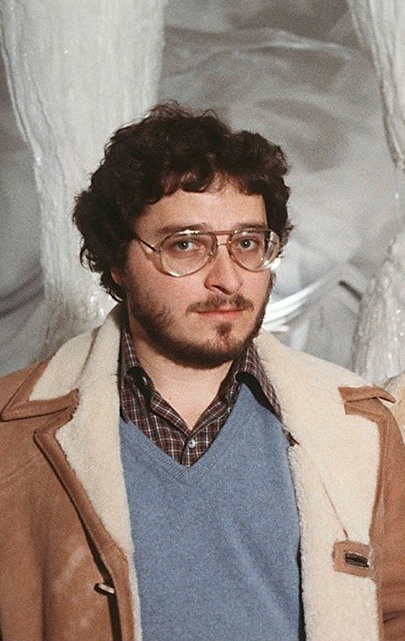
A couple of his early finished screenplays were actually optioned and made into movies, even though Kasdan was not happy with how either of them turned out. The first was The Bodyguard, which Kasdan wrote in 1975 and was sold to Warner Bros. in 1977, although it was constantly rewritten and would not get onto the screen until years later when Kevin Costner finally read it after working with Kasdan on Silverado. With Costner attached to the project, the film finally came out in 1992, although despite its box office success it got mostly negative reviews and Kasdan sided with the critics. The other screenplay he got sold was Continental Divide, which was Kasdan’s homage to old school romantic comedies in the vein of a Spencer Tracy/Katharine Hepburn film. Kasdan showed it to Steven Spielberg while he was directing Close Encounters of the Third Kind and Spielberg convinced Universal to buy it, but the finished film, which starred John Belushi and Blair Brown and was released in 1981, was also completely different from what Kasdan envisioned (you can see why Kasdan would rather direct his own movies).
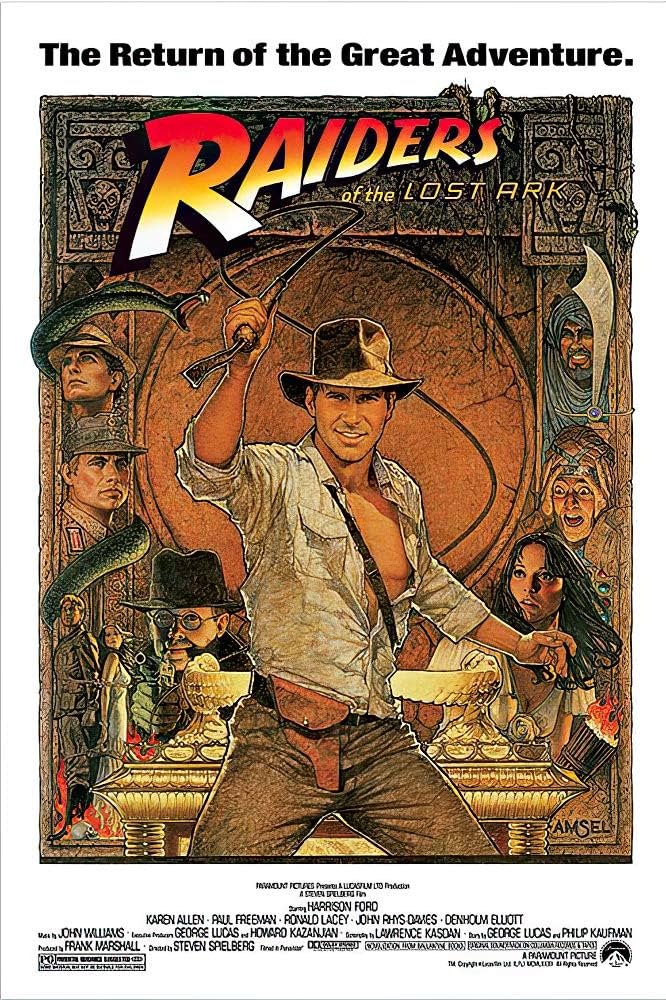
Of course one good thing that came out of Continental Divide was Spielberg’s newfound respect for Lawrence Kasdan’s writing style, which led to Spielberg asking Kasdan to write the screenplay for Raiders of the Lost Ark. Director Spielberg and producer George Lucas both wanted Raiders to have a classic serial feel and Kasdan was the perfect man for the job. The three men would end up brainstorming all their ideas for what their dream adventure movie would be. Kasdan envisioned Indiana Jones as an Errol Flynn or Steve McQueen-like hero while Lucas wanted him to be more of a James Bond-like playboy (they compromised). The finished film came out in 1981 and was a colossal hit and is now a classic. Kasdan was asked to write for the various sequels as well but he wanted to move on to other projects, although some of his ideas for Raiders made it into its 1984 prequel Indiana Jones and the Temple of Doom and he would also assist David Koepp with some of the dialogue in Indiana Jones and the Kingdom of the Crystal Skull.
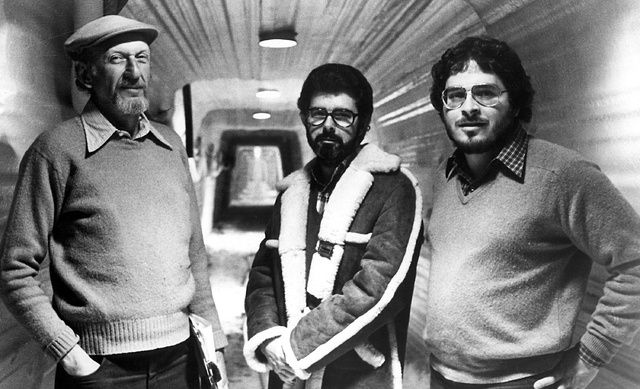
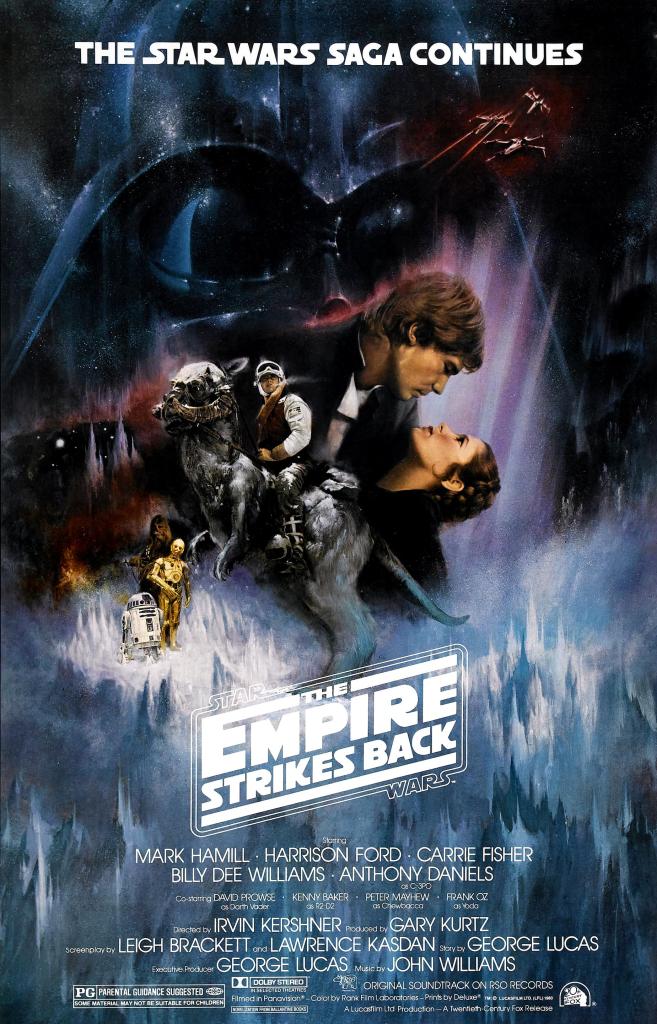
Another successful film series Kasdan helped shape was Star Wars. Lucas initially hired sci-fi novelist Leigh Brackett to write the script for his 1980 film The Empire Strikes Back (Brackett was a screenwriter who worked with Howard Hawks back in the forties) but she died during pre-production and Lucas hired Kasdan to refine the script. Kasdan was responsible for adding some elements to the story that made it darker than the previous film and he also helped develop the personalities of the characters further. The result is a film that many fans see as even better than the first Star Wars.
Kasdan later assisted Lucas on the screenplay for Return of the Jedi (1983), and Lucas also wanted Kasdan to return for the prequel trilogy, but Kasdan was very much an independent filmmaker and he could see that Star Wars very much belonged to Lucas, and given how much Lucas clashed creatively with Kasdan over the development of these films, as well as with directors Irvin Kershner (Empire) and Richard Marquand (Jedi), Kasdan resisted the offer to return and suggested Lucas write the prequel trilogy himself (which might explain why the writing in the prequels is so much worse than the writing in the original trilogy).

After George Lucas sold Lucasfilm to Disney in 2012, Lucasfilm once again tried to woo Kasdan back for the sequel trilogy. He was reluctant, but the idea of Han Solo dying in The Force Awakens, something both Kasdan and Harrison Ford wanted in Return of the Jedi but was vetoed by Lucas, was an appealing enough proposal, and so was the idea of a Han Solo origin film (Han Solo was Kasdan’s favorite character). After the sequel trilogy got off to a good start, Kasdan co-wrote the 2018 prequel Solo with his son Jonathan Kasdan. Although that movie was plagued by behind-the-scenes drama and went on to become the first Star Wars film in history to bomb at the box office. The film was actually pretty entertaining and didn’t deserve the negative reputation, but regardless, Kasdan felt Lucasfilm blew it and he left the Star Wars universe for good after that.
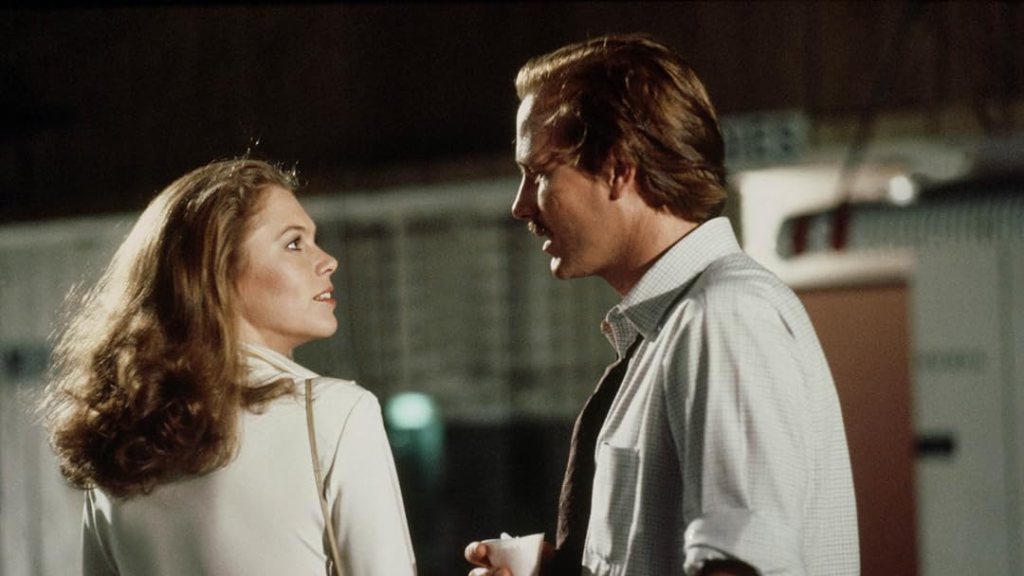
The success of Empire and Raiders in the early eighties finally gave Kasdan what he always wanted: the cachet to direct his own films. His first film was the neo-noir erotic thriller Body Heat (1981) starring William Hurt and Kathleen Turner. The Double Indemnity-inspired tale of a treacherous love affair between a lawyer and the wife of a wealthy businessman was liked by critics and audiences and is yet another Kasdan film that ended up becoming a classic.
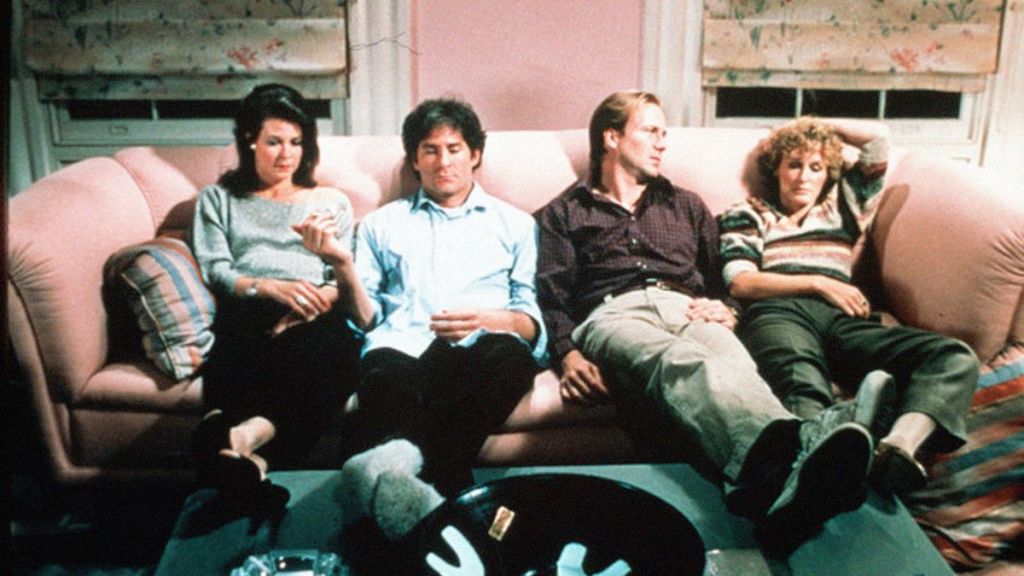
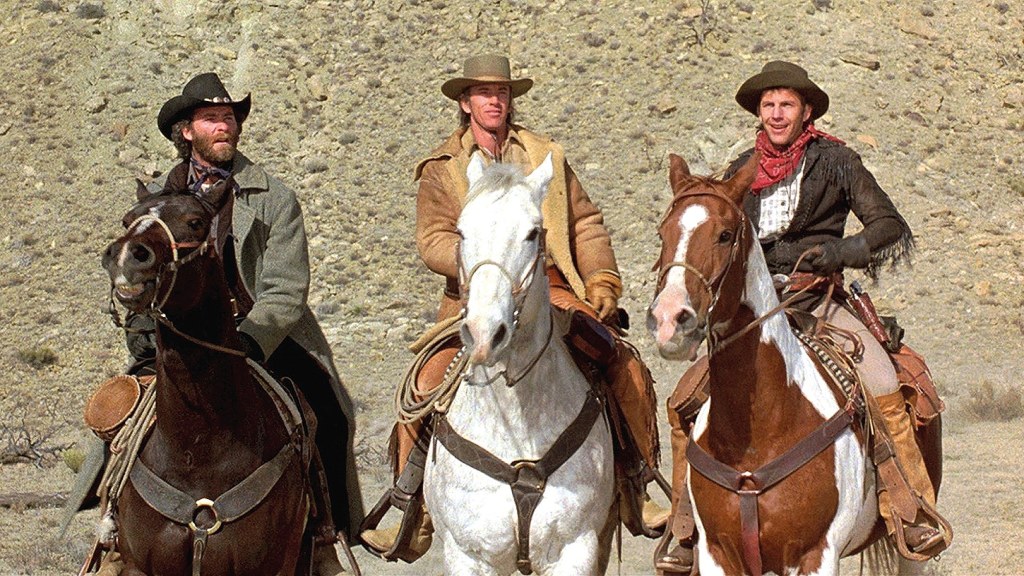
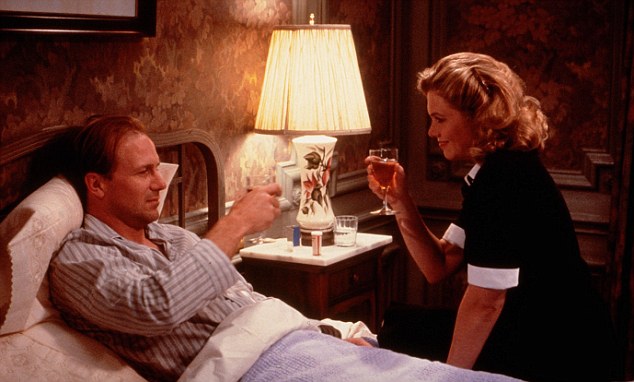
His second directorial effort The Big Chill (1983), about a group of University of Michigan alums who reunite after their friend commits suicide, also received a positive reception, with Kasdan even receiving an Oscar nomination for the screenplay he wrote with Barbara Benedek and the film itself receiving an Oscar nomination for Best Picture. Kasdan’s Western Silverado (1985) similarly got a positive if much more modest reception, although it has a great cast and a great score by Bruce Broughton. On the other hand The Accidental Tourist (1988), a drama about a marriage that falls apart after a family tragedy (which reunited William Hurt and Kathleen Turner) received critical acclaim and another Oscar nomination for Best Picture and Best Adapted Screenplay as well as a Best Supporting Actress win for Geena Davis.
Unfortunately the eighties were the highpoint of Lawrence Kasdan’s career. While the drama Grand Canyon (1991) was advertised as “the Big Chill of the ’90s” and got decent reviews, more forgettable for critics and audiences were his black comedy I Love You to Death (1990), the epic Western Wyatt Earp (1994), romantic comedy French Kiss (1995), the perfectly fine but unmemorable Mumford (1999), Stephen King-based sci-fi horror film Dreamcatcher (2003) and the negatively reviewed flop Darling Companion (2012). Kasdan continues to write and direct to this day. As I type this he is currently working on a film adaptation of Lou Berney’s novel November Road about a mob enforcer who gets entangled in the assassination of JFK. The release date for that movie is currently TBA but it sounds interesting. I’m just hoping he can escape this post-eighties curse and inject it with some of the magic that made Spielberg and Lucas see something in him.
 Entertainment Junkie Blog