

The talented and effervescent Dick Van Dyke was born in West Plains, Missouri in 1925 and grew up in Danville, Illinois. He had participated in drama since he was in high school, which led to his desire to become a professional entertainer, although he dropped out of high school to enlist in the U.S. Air Force during World War II first, serving not as a pilot but as a radio announcer (he was deemed too scrawny to fight). But in the late 1940s, he became a local radio DJ in Danville and even formed a comedy duo with pantomime performer Phil Erickson called “Eric and Van – the Merry Mutes,” who toured a lip-synching pantomime act across the West Coast before moving to Atlanta, Georgia and starring in their own local TV series The Merry Mutes in the early 1950s.
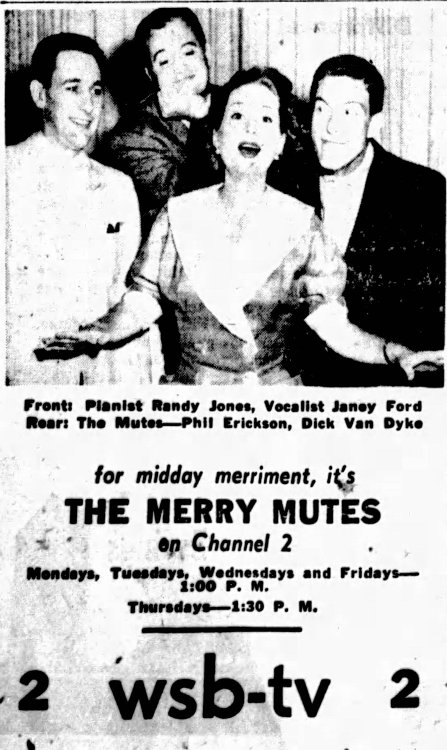
But Dick Van Dyke really got his start on the televised talent show Chance of a Lifetime in 1954 when it was airing on DuMont, and this led to various other TV gigs, including CBS The Morning Show host, To Tell the Truth panelist and guest star on The Phil Silvers Show.
Most people who think of Dick Van Dyke either think of his television career or his movie career, and it is here that I feel I have to divide this blog into two sections because both sides of his career are equally fascinating and worthy of their own focus.
Dick Van Dyke’s Television Career
By far the biggest thing to happen to Dick Van Dyke in his career was the moment Carl Reiner chose him to play the lead role in a sitcom Reiner was developing centered on a comedy writer that was based on Reiner’s own experience writing for Your Show of Shows, and it was originally titled Head of the Family (and originally starred Reiner in the lead role) before the producer recommended a replacement and Reiner cast Dick Van Dyke instead. The newly dubbed The Dick Van Dyke Show ran on CBS for five seasons from 1961 to 1966 and starred Van Dyke as comedy writer Rob Petrie who worked for a comedian named Alan Brady (played by Carl Reiner) along with fellow comedy writers Sally (Rose Marie) and Buddy (Morey Amsterdam). The series also introduced the world to Mary Tyler Moore, who played Rob’s wife Laura Petrie. The show was clever, genuinely hilarious and it holds up pretty well. It was even quietly groundbreaking in the ways that it smoothly combined the domestic sitcom with the workplace sitcom, with Van Dyke shining as a brilliantly physical but not overly hammy leading character, winning the Emmy for Outstanding Lead Actor three different years, while the series itself won the Emmy for Outstanding Comedy Series four different years.

Carl Reiner and Dick Van Dyke would collaborate again on The New Dick Van Dyke Show, which ran for three seasons from 1971 to 1974 on CBS, but it surrounded Van Dyke with an all new cast of characters. It did well enough and it won Van Dyke a Golden Globe nomination for his role as local talk show host Dick Preston, but in the same tradition as shows like Newhart and Here’s Lucy which were also fairly successful follow-ups, they couldn’t quite catch lightning in a bottle twice.
Van Dyke also received praise for his work as an alcoholic businessman in the 1974 TV movie The Morning After (a role that resonated with Van Dyke, who had drinking problems in his personal life), but he returned to comedy with the short-lived but funny 1976 sketch variety series Van Dyke and Company. That show only aired for one year on NBC but it had plenty of great guest stars like Andy Kaufman (making his primetime debut), Chevy Chase, Carol Burnett, Sid Caesar and Lucille Ball, and before it faded away into television obscurity it won the Emmy for Outstanding Variety Series the following year.
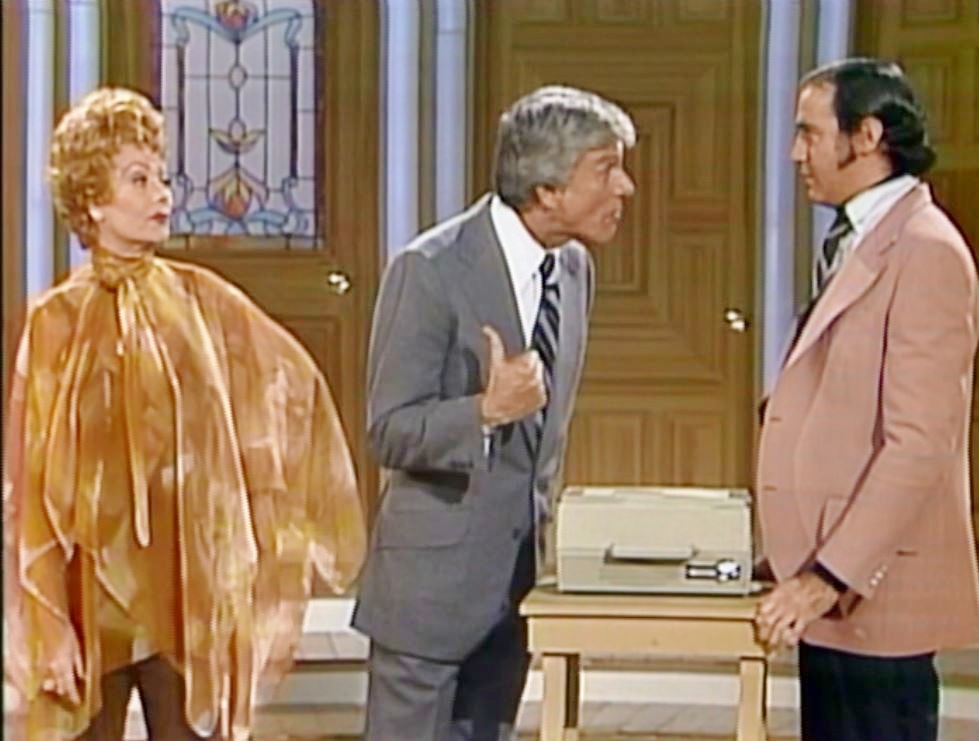
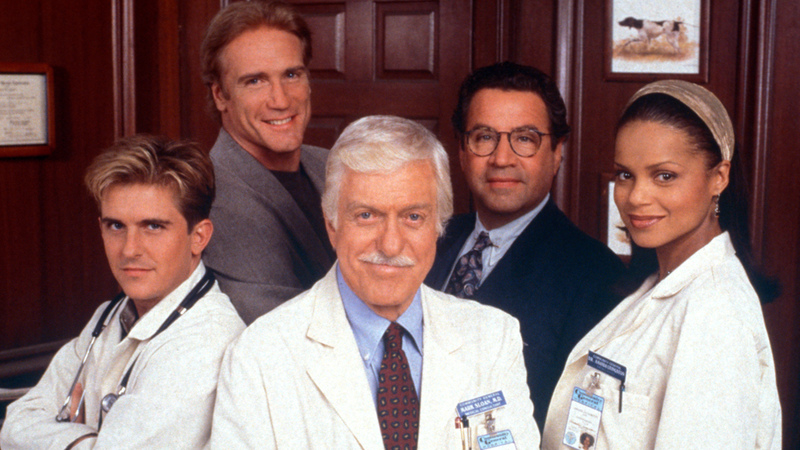
Other television appearances include The Carol Burnett Show, of which Van Dyke briefly joined the cast as a regular during the show’s final season in 1977, plus he voiced himself in The New Scooby-Doo Movies and had guest starred in Columbo, Matlock and Airwolf (with his son TV star Barry Van Dyke who played the lead role in Airwolf’s final season), he got an Emmy nomination guest starring as Bea Arthur’s love interest in The Golden Girls, and he made appearances in comedies like Coach, Sabrina the Teenage Witch, Scrubs, The Middle, Kidding and The Simpsons. But his last major lead role in a TV series came after Van Dyke played D.A. Fletcher in Warren Beatty’s film Dick Tracy (1990), which led to the producers of the TV series Jake and the Fatman casting him as a character named Dr. Mark Sloan, who subsequently got his own spin-off with the comedic mystery medical crime drama Diagnosis: Murder, which had a very successful run on CBS from 1993 to 2001.
Dick Van Dyke’s Film Career
While Van Dyke was finding success on television in the 1950s, he also made his Broadway debut in The Girls Against the Boys for a short run in 1959, but that led to the more successful stage musical Bye Bye Birdie, for which Van Dyke played the lead role of Albert Peterson from 1960 to 1961 starring alongside Chita Rivera, Barbara Doherty and Paul Lynde. The musical won four Tony Awards, including Best Featured Actor in a Musical for Van Dyke, and Van Dyke made his big screen debut reprising the role when the play was adapted to film in 1963 with Ann-Margret, Janet Leigh and Maureen Stapleton. There were a few differences from the stage show but the film was still successful.
Of course during the Bye Bye Birdie phase of his life Van Dyke was simultaneously achieving stardom with The Dick Van Dyke Show, and based on his work on that series Walt Disney chose Van Dyke to play the equally physical Bert in Disney’s musical fantasy Mary Poppins (1964). Van Dyke also lobbied to play the elderly bank director Mr. Dawes in that movie, but he had to convince Disney he was right for that part through a screen test, for which he passed. More notorious was J. Pat O’Malley’s poor job as Van Dyke’s cockney accent coach, but Bert was such a likable character and the movie was such a masterpiece that it was easy to forgive that.
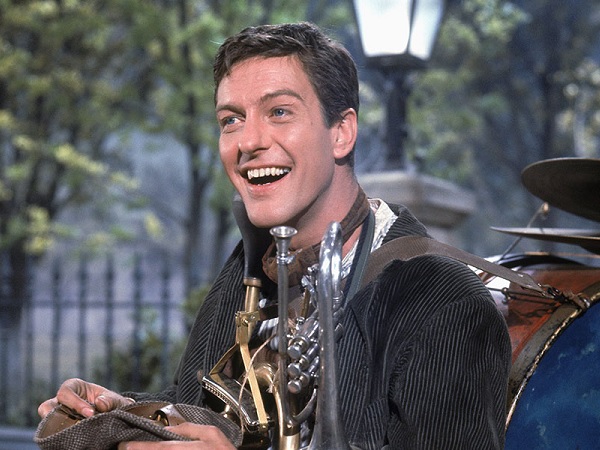
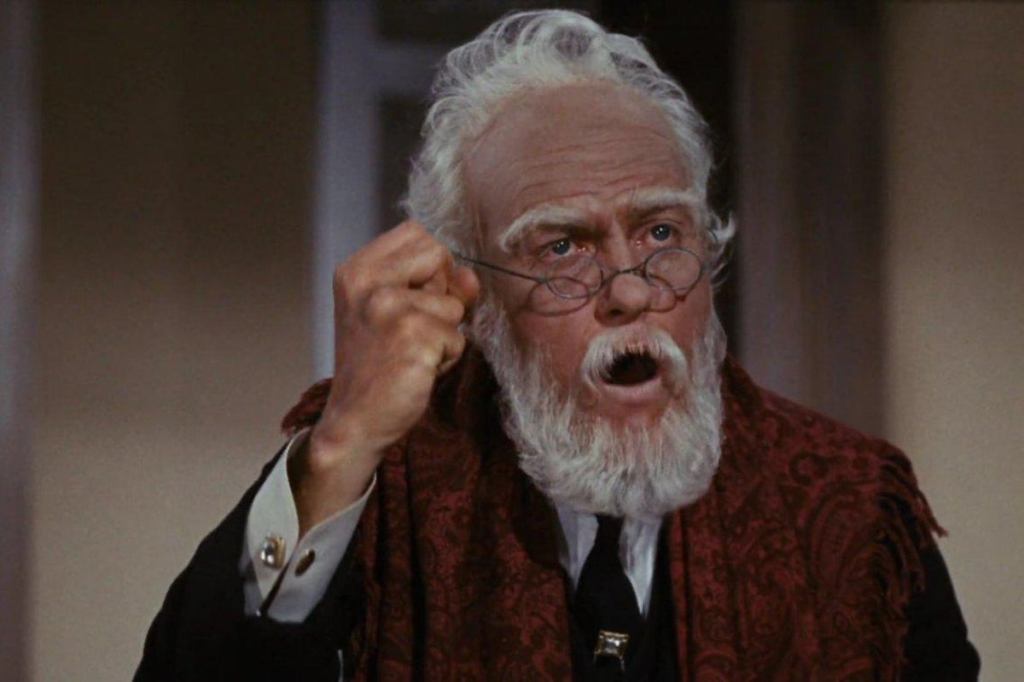
Van Dyke starred in several more big screen comedies and he was a decent box office draw, but he did not have a ton of successful films after Mary Poppins, although the most fondly remembered is the musical fantasy Chitty Chitty Bang Bang (1968) for which Van Dyke played an eccentric inventor named Caractacus Potts and reunited with Mary Poppins songwriting duo The Sherman Brothers with another great soundtrack.

Other films Van Dyke appeared in include Carl Reiner’s passion project The Comic (1969), which was little seen and not well-received but was a film Reiner wrote for Van Dyke and one that both men were proud of. Van Dyke, who was deeply influenced by silent-era comedy and was a fan of comedians like Stan Laurel and Buster Keaton, played a silent-era comedian in the film starting with his funeral and telling his life story in flashback. Van Dyke also starred in a film written and directed by another comedy legend when he was cast in Norman Lear’s 1971 satire Cold Turkey as a preacher who uses a publicity stunt to try to discourage Americans from smoking. Cold Turkey was also little seen, but it received positive reviews and Norman Lear would go on to become a hugely successful television producer that same year.


He didn’t act in a ton of films after that, but he did make a few more memorable appearances in Disney’s 1990 crime comedy Dick Tracy and the Night at the Museum films as a veteran security guard alongside fellow security guards Mickey Rooney and Bill Cobbs. Plus Van Dyke made a welcome appearance as Mr. Dawes Jr. in Mary Poppins Returns (2018) during one of that film’s best scenes, which only proved to me further that Van Dyke’s appeal could never wane. In fact Van Dyke’s zest for trying new things has remained intact throughout his career. Did you know he released his first solo album since 1963 when he recorded his jazzy 2017 album Step (Back) In Time? And that he performed a rap (???) in the album Rhythm Train? Or that he was a consultant for Marvel’s 2021 Disney+ series WandaVision? Or that he was the oldest contestant in The Masked Singer history? His refusal to slow down despite working in show business so long and achieving so much only makes me appreciate him more.

 Entertainment Junkie Blog