
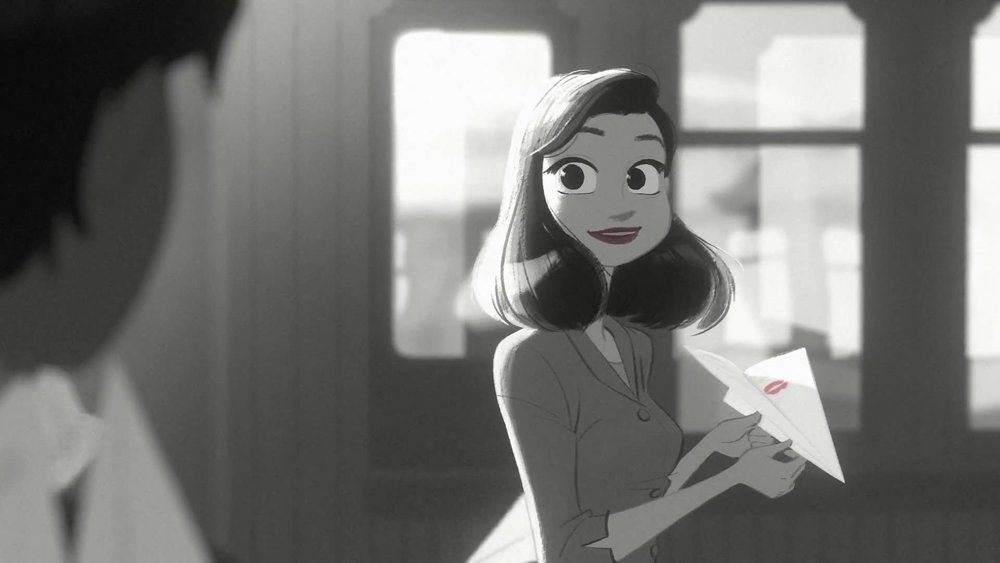
Computer animators have been influenced and inspired by hand-drawn animation ever since the earliest CG films, whether it’s through the cartoony movement of CG characters in films like Hotel Transylvania or through cel-shading, a stylistic technique that gives 3D models a 2D luster that has been embraced by Hollywood in such recent films as Tom & Jerry, The Bad Guys, Nimona and Wish, but actually started becoming more common during the late nineties and early 2000s, especially in the video games of that era. But sometimes animators push the limits and create something totally new, which is what happened with the animated short film Paperman, a film that blends traditional animation with computer animation in interesting ways.
Released in theaters in 2012 alongside the feature film Wreck-It Ralph, not to mention the first Disney short to win an Oscar since the 1969 film It’s Tough to Be a Bird won in 1970, Paperman is a nice 6-and-a-half-minute pantomime romance set in New York City about an accountant named George who tries to get the attention of a woman named Meg, who works in the office building across from him, by using paper airplanes. If this were an ordinary hand-drawn or computer-animated short it would be charming, but the animation technique used here made this love story stand out from a technical point of view as well.

The origin of the short starts with its director John Kahrs, who began his animation career at Blue Sky Studios where he worked from 1990 to 1997 before joining Pixar as an animator on A Bug’s Life, Toy Story 2, Monsters, Inc., The Incredibles and Ratatouille, later joining Disney Animation to animate for Bolt, Tangled, Wreck-It Ralph and Frozen. Kahrs had the idea for Paperman while he was still at Blue Sky, inspired by the experience he had on his commute through the city and the “random connections” you can sometimes have with strangers. Kahrs made up the tale of George and Meg, describing it as an urban fairytale, finally pitching the concept to Disney when he was hired there. Although Disney didn’t immediately greenlight it, after Tangled was completed and the studio was looking for projects to fill the gap between the releases of Tangled and Wreck-It Ralph, Kahrs finally got the go-ahead.

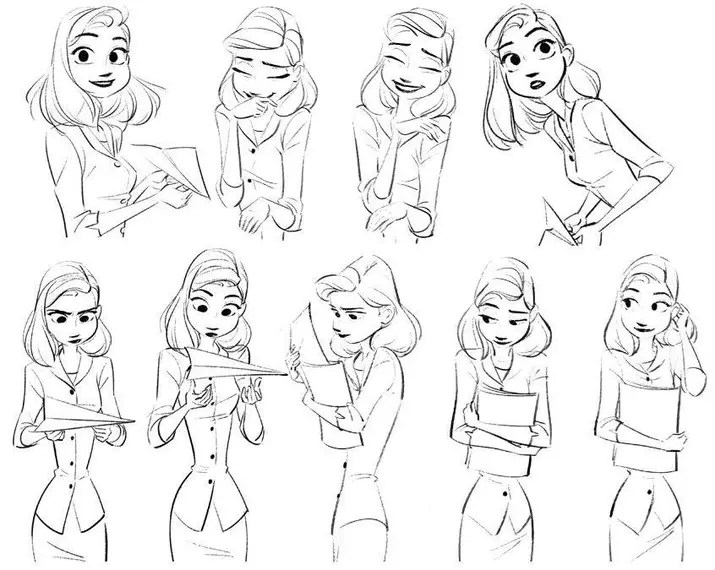
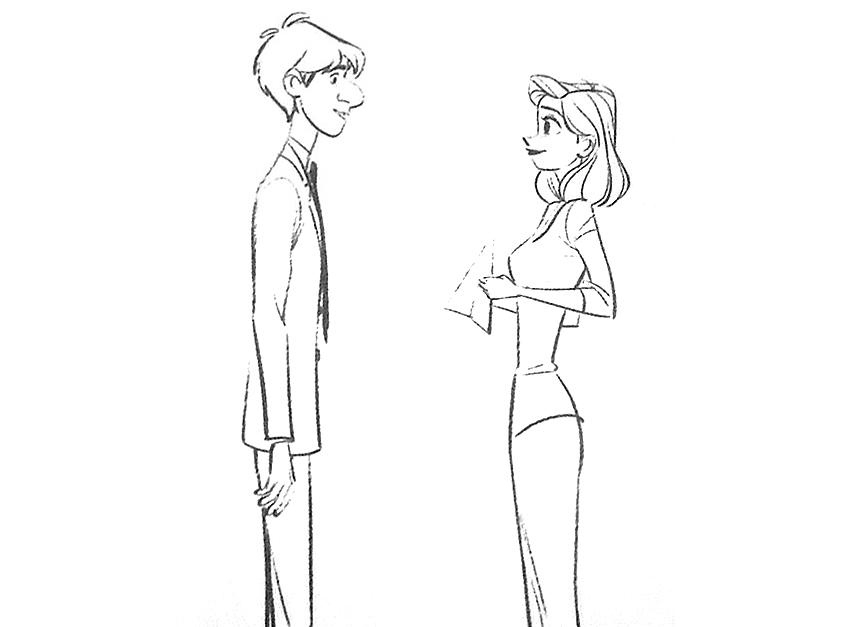
The unique look of this film comes from an animation system developed by programmer and Disney software engineer Brian Whited called Meander, which began development in 2010 as a hybrid animation process used to bring digital tools to the process of drawing by hand.
While most animated films rendered by a computer are created with three-dimensional vector graphics, another common type of computer animation involves raster graphics. Rather than vector graphics which require dimensional equations and texture mapping, raster graphics are animation frames composed with pixels. A still frame of a raster graphic is known as a bitmap, with the most common and mainstream association with this technique being video game graphics from the 1980s and 1990s. 8-bit and 16-bit video games are brought to life through the animation of bitmaps, and while vector graphics can simulate reality through things like lighting and shading in real time, raster graphics simulate reality in more abstract but still effective ways, as many retro gamers can attest. Although animation of raster graphics can technically consist of scalable vector graphics (SVGs) as well as bitmaps.
Of course as computers started becoming more sophisticated at the turn of the 21st century, modern raster graphics have gotten closer to simulating actual pencil sketches and now even a kid with an iPad can digitally draw on a touch screen, while the raster process can also be used to color and enhance cels for hand-drawn animated movies after each frame has been scanned into a computer. Disney’s Meander combined the geometry of vector with the slick responsiveness of raster to achieve things in animation that neither a computer nor a drawing can achieve alone, not only assisting animators artistically, but assisting them in ways that streamline such arduous tasks as inbetweening (the process of filling in the intermediary frames between two key animation poses to create smoother movement).
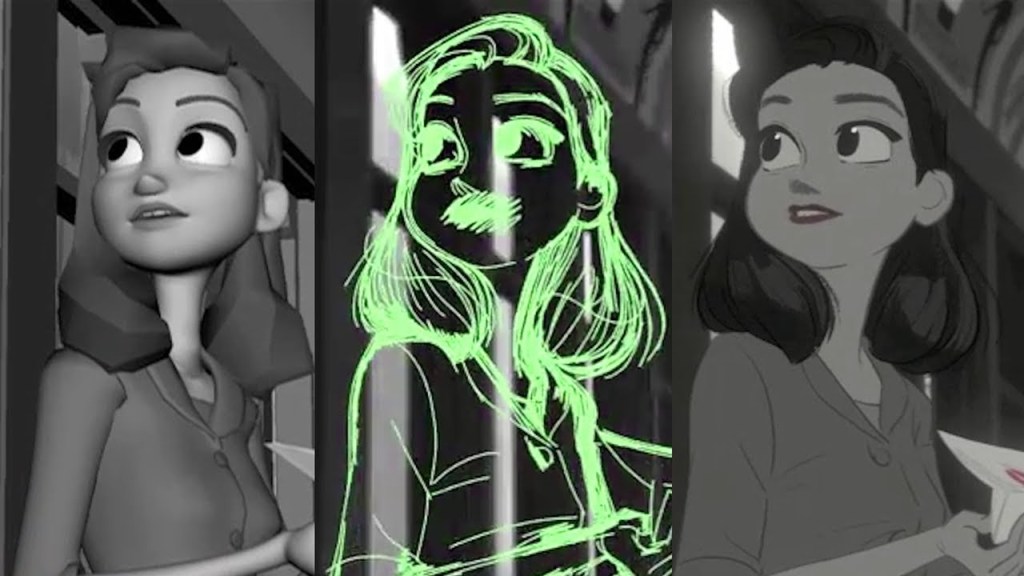
In Paperman, the character models were created with vector graphics and enhanced with raster graphics. The final look has a completely different feel from both traditional 3D and 2D animation but it works very well here and looks stunning. The technical term for what Meander does is “final line advection,” and it gives hand-drawn animators control over the final look of a CG image. John Kahrs was inspired to pursue this technique by his time working on Tangled with Glen Keane. After seeing the beauty of the hand-drawn concept art for that film, Kahrs wanted to see if he could translate the feeling of that style onto a CG image more literally. Kahrs compared it to the revolutionary Xerox process, which was the animation process Disney adopted in the sixties between the two releases of the beautifully inked Sleeping Beauty and the more rough and sketchy One Hundred and One Dalmatians. Kahrs liked how the Disney films of the sixties translated the animator’s drawings onto the screen more directly, and some have even pointed out how the characters in Paperman have a stylistic similarity to the human characters of One Hundred and One Dalmatians, but the Disney artists found new ways to bring that classic Milt Kahl drawing style to life, befitting the innovation and pioneer spirit that Disney Animation has always been known for.
Since the release of Paperman, Disney has only implemented Meander one other time on Patrick Osborne’s 2014 short film Feast, and so far the use of this style on a Disney feature film, while still on the table, has no sign of life, but other CG films beyond Disney have made similarly bold technical leaps to enhance computer animation with 2D stylization, from comic-inspired films like The Peanuts Movie and Spider-Man: Into the Spider-Verse to the quirky sketchbook-inspired look of The Mitchells vs. The Machines to the grungy graffiti style of Teenage Mutant Ninja Turtles: Mutant Mayhem.

 Entertainment Junkie Blog