

When I was a kid I spent most Saturday mornings and weekday afternoons on the television watching cartoons almost religiously. Since the early pre-cable days of television it was usually either NBC, CBS or ABC that aired these shows, but syndication was really having a moment in the 1980s. In that decade, shows like Inspector Gadget, DuckTales, Teenage Mutant Ninja Turtles and even Star Trek: The Next Generation proved that shows could enjoy major popularity in syndication. Filmation’s He-Man cartoon may have been the biggest driving force for the proliferation of syndicated shows from the 1980s to the 2000s, and inadvertently, the proliferation of animated shows that blurred the line between entertainment and toy commercial. I grew up in the nineties and by that time He-Man began waning in popularity, so I mostly missed the He-Man train, but I definitely was feeling the ripple effects of that series without even knowing it.
He-Man was part of the Masters of the Universe franchise, which first began development by Mattel in the late 1970s as a line of toys. Star Wars may have played a hand in the franchise’s development because when Mattel was approached to produce a toy line based on George Lucas’s film back in 1976 they initially turned it down. A decision they regretted after the movie came out in 1977 and became a global phenomenon. So Mattel tried to create their own line of space warriors, but nothing they made captured the public’s imagination until toy designer Roger Sweet presented Mattel with prototypes molded from the toy company’s own Big Jim action figure line that included an axe-wielding barbarian, a tank-headed soldier and a spaceman, with Mattel choosing the barbarian as the basis of the toyline.
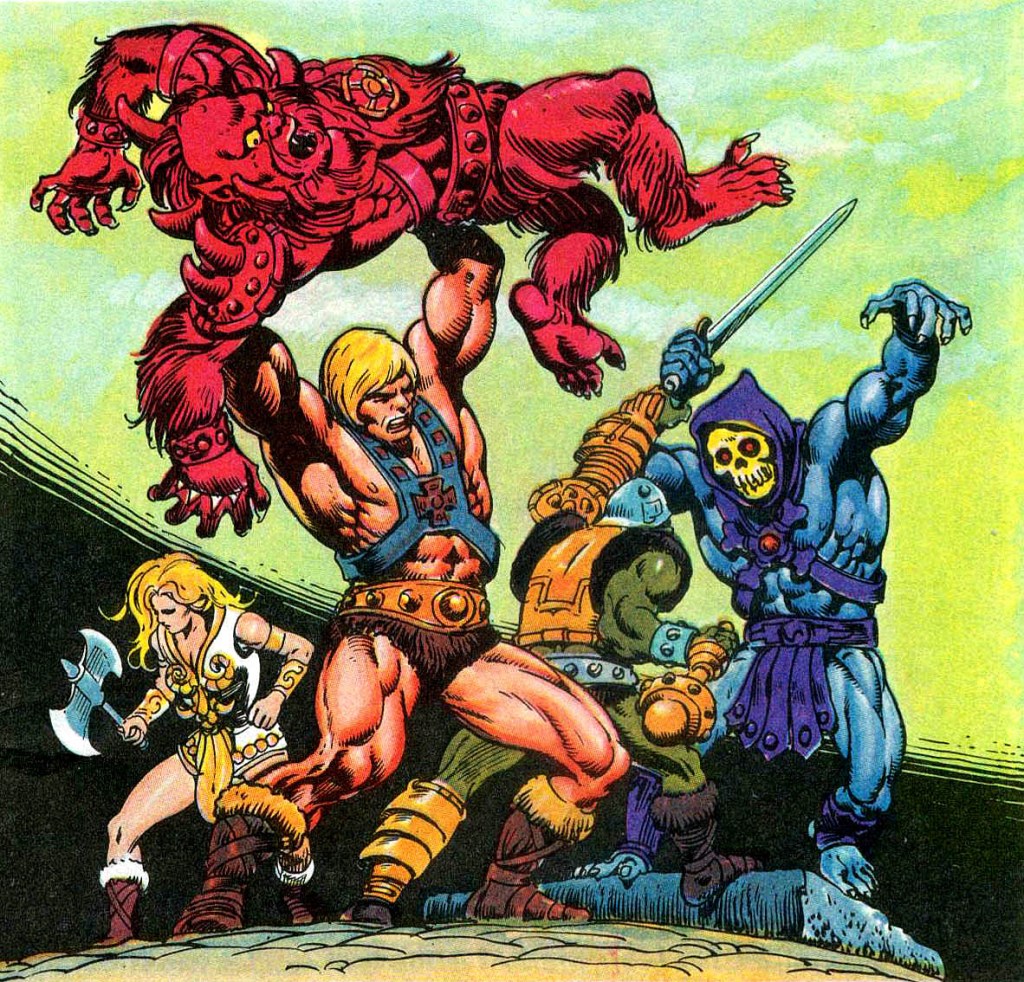
The character became known as He-Man, the most powerful man in the universe. As the franchise evolved, He-Man’s backstory and the mythos of Eternia began taking shape. The most famous version: Prince Adam, prince of Planet Eternia who resides in Castle Grayskull, transforms into He-Man when wielding his Power Sword and uttering the words “By the power of Grayskull…” In the process, the prince’s pet, a timid green tiger named Cringer, would also transform into the mighty Battle Cat who wears armor and who He-Man often rides into battle. He-Man’s main archenemy is the sorcerer Skeletor, evil lord of destruction who hails from another dimension and seeks to conquer Castle Grayskull. The series is a combination of medieval sword and sorcery and science fiction, and the backstory was explained within the pages of minicomics that accompanied the release of the toys. DC Comics was responsible for these early comics and publishers like DC, Marvel, Dark Horse and Image would continue making Masters of the Universe comics for years afterward.
In addition to Battle Cat, He-Man’s allies would go on to include the wise soldier Man-At-Arms, his daughter Teela who is a fellow warrior and captain of the Eternian Royal Guard, Stratos the bird-like warrior, the spring-legged Ram-Man and the multi-faced Man-E-Faces, while Skeletor’s army of minions would include Beast Man, Mer-Man, Trap Jaw, Tri-Klops and Evil-Lyn, a powerful wielder of sorcery like Skeletor who is even depicted as more powerful and more competent than Skeletor in some versions of the series.

All these toys and comics soon led to animation studio Filmation and Filmation founder Lou Scheimer developing a television series based on the franchise. He-Man and the Masters of the Universe made its television debut in the fall of 1983 and aired in first-run syndication for two seasons until 1985. It made several changes both big and small to the lore established by the toys and comics but the Filmation version became the most popular version. For many fans it’s hard to imagine anyone other than John Erwin voicing He-Man and Alan Oppenheimer voicing Skeletor after this show came out, but that’s how popular it was. The series also featured a cast of regulars that included Cringer/Battle Cat (Alan Oppenheimer), Teela (Linda Gary), Man-At-Arms (Alan Oppenheimer), Man-E-Faces (Lou Scheimer) and a flying sorcerer named Orko (Lou Scheimer) who was created specifically for the animated series as a comic relief, in addition to Skeletor and his minions Beast Man (John Erwin) and Evil-Lyn (Linda Gary), although other characters from the toyline such as Stratos and Ram-Man would make occasional appearances as well.
The series was originally pitched to ABC, but they turned it down. A decision that led to He-Man and the Masters of the Universe becoming the first syndicated show based on a toyline in television history, as well as the most popular syndicated show in the 2-11 age group by mid-1985.


The show was also more violent than typical cartoons from the previous decade, but it was still a pretty toned down type of violence. He-Man barely used his sword or punched people, rather using wrestling-style moves. Although that didn’t ward off the controversy of using cartoons to advertise to children, a backlash that also took aim at G.I. Joe around the same time, but just like with G.I. Joe, He-Man tried to mitigate the negative publicity by including morals and lessons for kids at the end of each episode. Although Filmation’s Fat Albert and Hanna-Barbera’s Super Friends had educational segments years earlier so it’s not like that was an entirely new phenomenon.
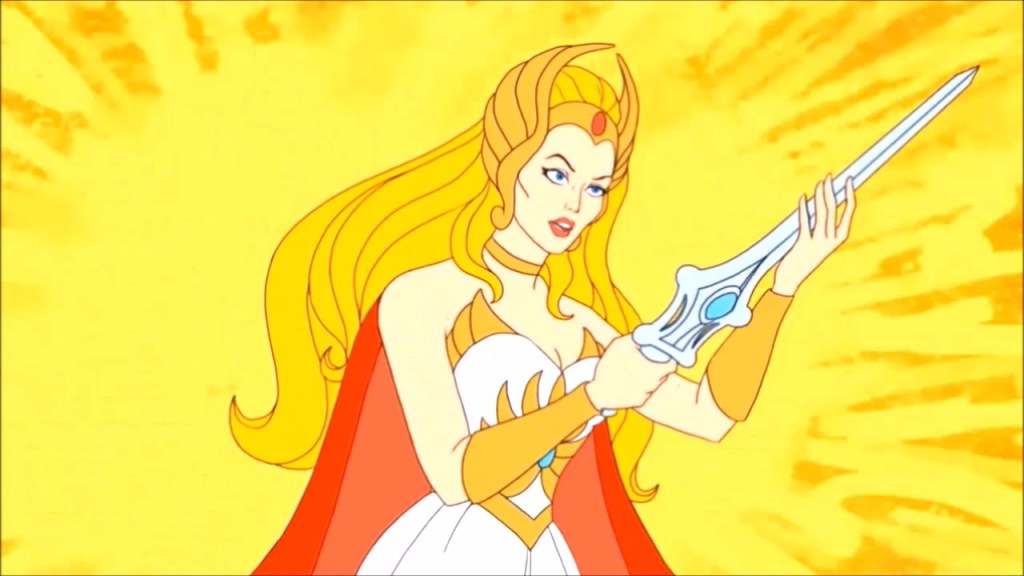
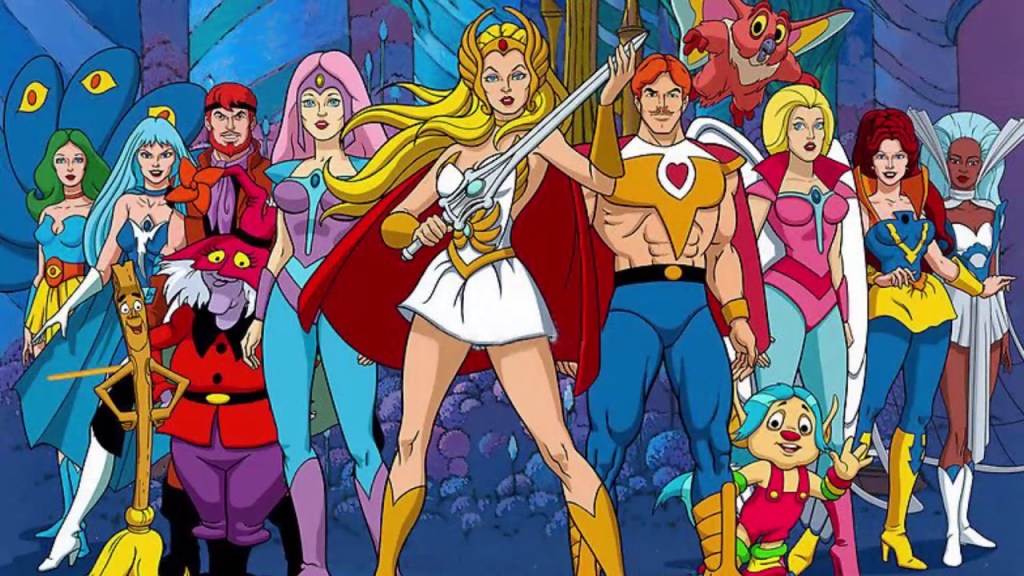
He-Man and the Masters of the Universe was and still is Filmation’s most successful animated series, and its popularity led to a spin-off called She-Ra: Princess of Power, which also ran for two seasons from 1985 to 1987 and followed He-Man’s sister She-Ra, alter ego of Princess Adora, accompanied by Swift Wind the winged unicorn, alter ego of Adora’s steed Spirit. Mattel of course financed the series and created an accompanying toyline which was targeted at girls and was also successful. The first five episodes of She-Ra were compiled into a theatrically released feature film called The Secret of the Sword in 1985 which was released six months before She-Ra made its television debut and served as a bridge between the He-Man series and the She-Ra series. Despite the predictable Saturday morning cartoon plot, it was successful at the box office.
An original live-action film directed by Gary Goddard and released by Cannon Films called Masters of the Universe (1987) followed two years later with Dolph Lundgren as He-Man and Frank Langella as Skeletor, but it was a commercial failure, and He-Man stuck with animation ever since. Although the campy film still has its fans.

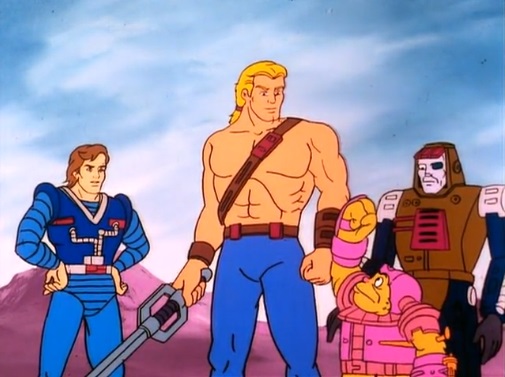
Jetlag Productions created another syndicated animated series called The New Adventures of He-Man which rebooted the franchise with new characters and a more sci-fi heavy approach, taking place on a futuristic planet called Primus. It ran for a single season in the fall of 1990 and accompanied the toyline reboot that hit store shelves a year earlier. The series was dramatically different in tone from the 1980s cartoon and is mostly forgotten now. After that, the Masters of the Universe franchise would not come out with new toys, shows or films for a decade.
When He-Man finally did make his comeback in the 2000s, it was at a time when the franchise’s original fans were becoming adults. First Mattel tried to bank on the franchise’s nostalgic appeal by releasing commemorative toylines and releasing the original series on DVD with bonus features that included documentaries and interviews with the show’s creators, and then in 2002 Mattel launched both a new toyline and a new animated He-Man and the Masters of the Universe reboot produced by Mike Young Productions, starring Cam Clarke as the voice of He-Man and Brian Dobson as the voice of Skeletor. It had more depth and tighter continuity than previous TV series and it ran on Cartoon Network’s Toonami block for two seasons from 2002 to 2004.

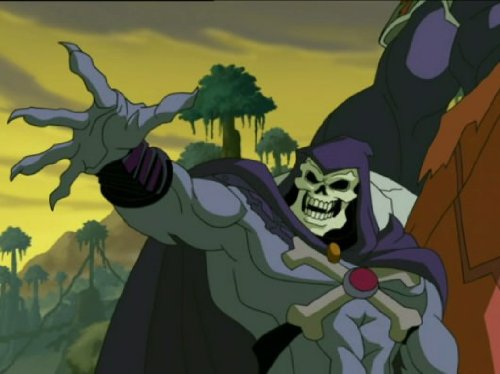
He-Man and the Masters of the Universe franchise later found a home on Netflix with all the animated series that followed making their debut on that streaming service. These include She-Ra and the Princesses of Power (2018-20) developed by ND Stevenson (Nimona, Lumberjanes) and produced by DreamWorks Animation Television, Kevin Smith’s Masters of the Universe: Revelations (2021) produced by Powerhouse Animation Studios with a sequel series subtitled “Revolution” currently in development, and a CGI reimagining of He-Man and the Masters of the Universe (2021-22) developed by Rob David which ran for three seasons. Another live-action Masters of the Universe film is also in the works, but that’s been in development hell since 2007 and even Netflix has shown disinterest in financing that, so who knows if Mattel will find anyone to distribute it.
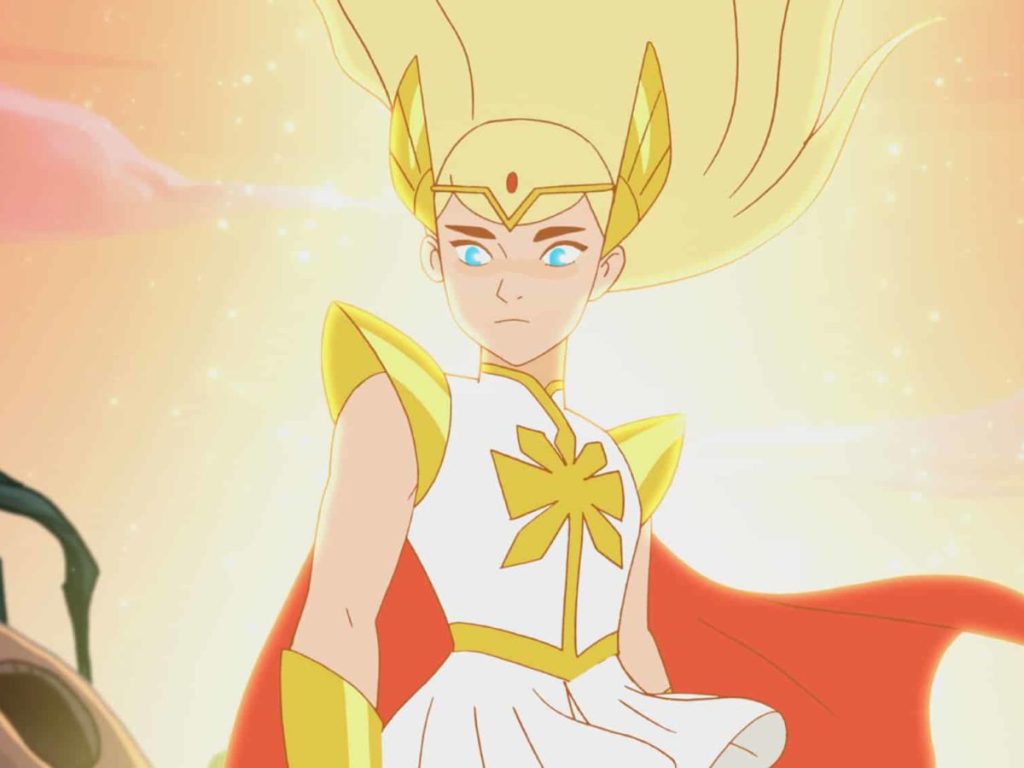
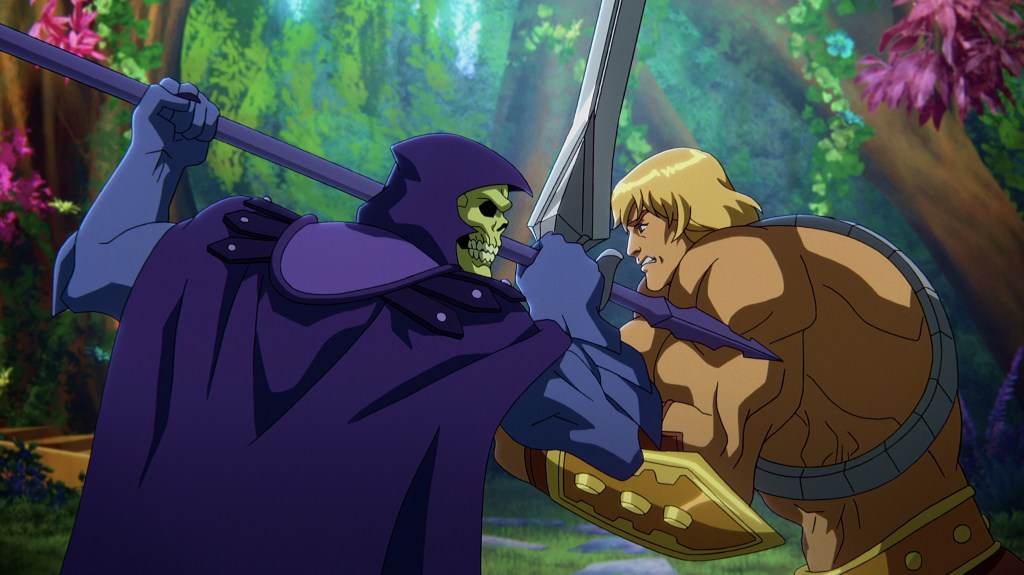
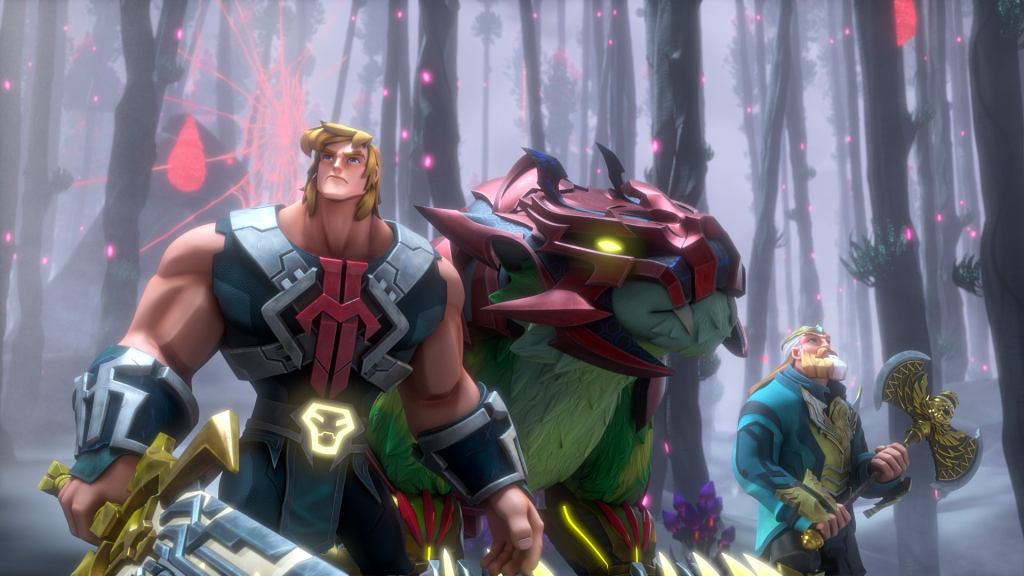
Like I said, I wasn’t a fan of He-Man growing up, but I eventually became a fan of the franchise thanks to Netflix and how much I loved Kevin Smith’s take on the series with Revelation. And seeing as how that series came out in 2021, I have not been a He-Man fan for very long. Before then I had occasionally seen reruns of the original series from the eighties, but it failed to impress me. Maybe if I were alive in 1983 and unspoiled by growing up during the animation renaissance of the late eighties and early nineties, I would understand its appeal a little more, but it failed to hold my interest. Even as a fan of animation history there wasn’t a lot about the series that truly entertained me, aside from making fun of it while I watched it MST3K-style. But the series has come a long way and has done an impressive job evolving into something more than just a toy commercial. Now I get just as much entertainment out of it as I do watching something like Star Wars, that other mythological franchise that was the catalyst for He-Man’s existence.

 Entertainment Junkie Blog