
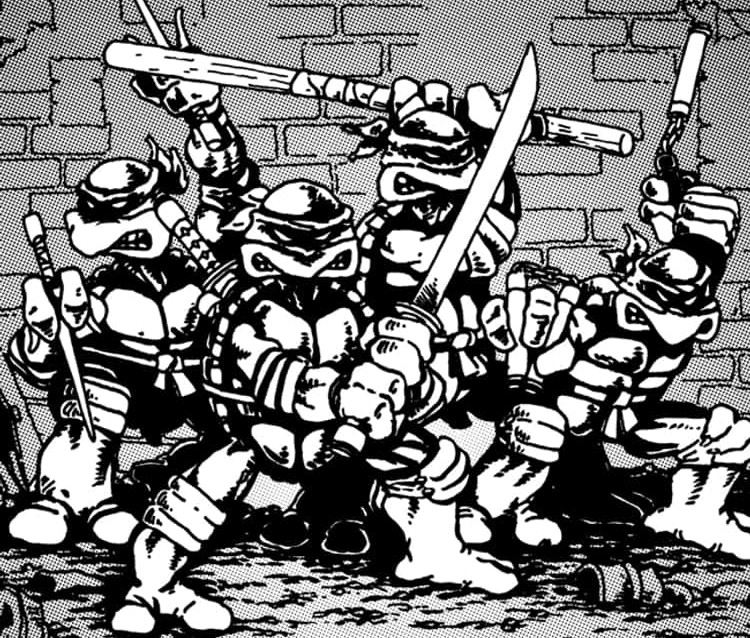
The Teenage Mutant Ninja Turtles series has had an unbelievable rise from underground comic to giant franchise. The original black and white indie comic from the eighties was a slightly dark story aimed at older readers but it became more widely known as a franchise aimed at kids once it was adapted to television with the hugely popular animated series which came out just three years after the comic made its debut. Another unique aspect of this franchise is that no matter where it goes, success follows. It started out as a hugely popular comic and soon became a hugely popular TV show, a hugely popular series of films, a hugely popular series of video games and a hugely popular toyline. For something with humble and satirical beginnings in the world of indie comics, it would apparently end up arriving at just the right pop culture moment to resonate as something much more than its creators ever imagined.

The Ninja Turtles were created by Kevin Eastman and Peter Laird. Eastman was a young comic book reader from Portland, Maine who, like many young comic book fans, liked to make his own comics. But it wouldn’t be until he was in his early ’20s working at a restaurant (did they serve pizza there?) that his hobby started to become a career when he met newspaper and magazine illustrator Peter Laird in Massachusetts. Eastman and Laird teamed up to create various comics themselves while searching for underground comic publishers to distribute them. But they ultimately self-published their comics after founding their own independent comic company Mirage Studios in 1983 (they came up with the name “Mirage” because it wasn’t actually a real company – it was just two guys).
One day while coming up with ideas for comics, Eastman drew a funny picture of a turtle standing on its hind legs wearing a mask and holding nunchucks. As soon as Laird came up with the idea to make Eastman’s ninja turtle a teenage mutant, they decided to make it a team of ninja turtles, came up with their radioactive gene-altering backstory, wrote and drew a one-shot story set in the streets of New York City and ended up self-publishing it in 1984.


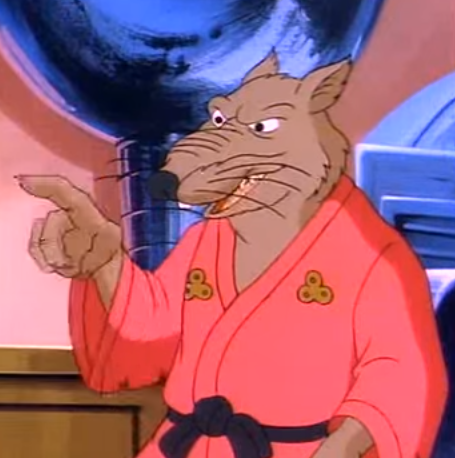
While serious in nature, the comic was a satirical take on many common comic book clichés at the time, including the mutant element of comics like Marvel’s X-Men, the teenage element of comics like DC’s Teen Titans, the ninja element of comics like Marvel’s Daredevil and the funny talking animal element of comics like Cerebus the Aardvark (even the Ninja Turtles’ sensei Splinter was a play on Daredevil’s sensei Stick). Then came the quirky but inspired decision to name the four lead turtles after Italian Renaissance artists (Leonardo, Raphael, Donatello and Michelangelo). There was even a villain in the comic named Shredder who was the leader of an evil ninja organization known as the Foot Clan.
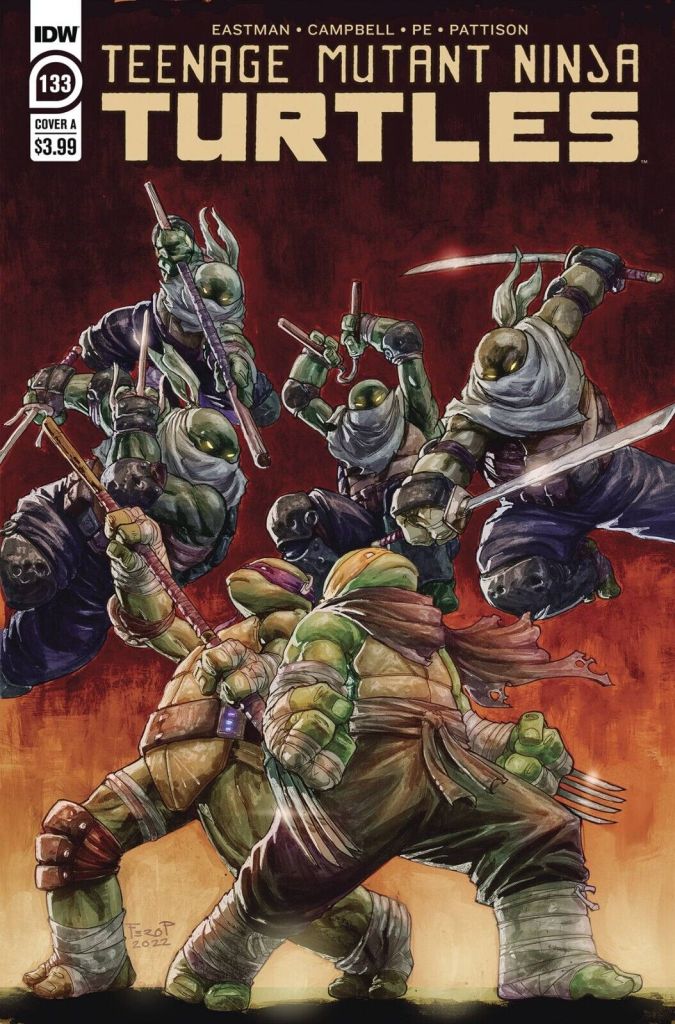
Eastman and Laird were able to pay for advertisements in Comic Buyer’s Guide Magazine and print multiple copies of the book thanks to a loan from Eastman’s uncle, and the publicity attracted the attention of comic distributors and soon comic fans, with all 3,000 copies made sold out in just a few weeks. Even though it was originally a one-shot, Eastman and Laird decided to continue the saga due to the first issue’s massive popularity. These original comics were so popular that they even led to a trend in the comic industry of more black-and-white comics, especially in the underground scene, as well as a trend of obvious copycats starring “Black Belt Hamsters” and “Kung Fu Kangaroos.” Those were short-lived but the Ninja Turtles comics continued into the nineties and beyond, with the main run finally coming to an end in 2014.


The first time the Ninja Turtles were adapted to the screen, that was the beginning of the Turtles’ entry into mainstream popularity. The origin of the Saturday morning cartoon began with New York licensing agent Mark Freedman who previously licensed another group of cartoon animals: those of Hanna-Barbera. Freedman caught wind of the popularity of the Ninja Turtles comic and saw potential in its appeal to the toy market, although a skeptical Playmates Toys requested that the Ninja Turtles comic be adapted into a television series before they would commit to the task of creating toys based on the characters, so Ninja Turtles creators Laird and Eastman were approached with a deal and they agreed to license the television rights of the Ninja Turtles to Playmates, who hired the animation studio Fred Wolf Films to produce the series while Playmates handled the manufacturing of the action figures and playsets that were associated with it.
The TV series made its debut in 1987 initially running as a five-part miniseries in syndication before becoming a full-fledged 13-episode season by 1988, running for 10 seasons total from 1987 to 1996, moving from syndication to Saturday mornings on CBS beginning in 1991. It was drastically different in tone from Eastman and Laird’s Daredevil parody because Playmates understandably wanted to target the audience who would be most likely to buy their toys, but kids loved the show so that would end up being the correct decision, which is a fact even Peter Laird agreed with even though he was not a fan of the kid-friendly approach to the characters.
This series introduced many elements which would end up becoming signature Ninja Turtles mainstays, including the color-coded masks, the characters’ love for pizza, their various catchphrases (“Cowabunga!”) and their distinct personalities, with Leonardo (voiced by Cam Clarke) the straight-laced leader in the blue mask who wields a katana, Donatello (Barry Gordon) the brainy one in the purple mask who wields a bō staff, Raphael (Rob Paulsen) the wise-cracking dude with attitude in the red mask who wields two sai, and Michelangelo (Townsend Coleman) the goofy party animal in the orange mask who wields a pair of nunchakus. These personalities have mostly stayed consistent throughout all the various Ninja Turtles iterations although Raphael would later become more known for being the short-tempered hothead of the group.


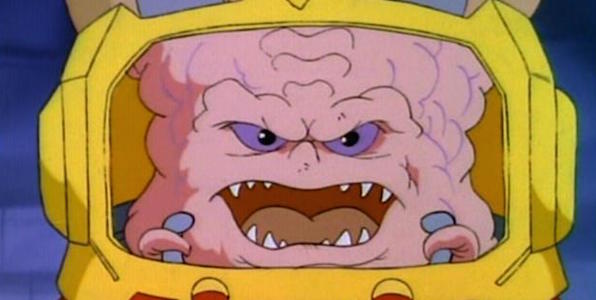
In addition to their rat sensei Splinter (Peter Renaday), other Turtle allies in the TV series included Channel 6 TV reporter April O’Neil (Renae Jacobs) and hockey mask-wearing street vigilante Casey Jones (Pat Fraley) who both first appeared in the comics (although April was originally a computer hacker, not a reporter) and would become fan favorite characters and recurring additions to many Turtles adaptations from that point forward. Villains in the series included Foot Clan leader Shredder (James Avery), Shredder’s two henchmen Bebop the warthog (Barry Gordon) and Rocksteady the rhino (Cam Clarke), robot inventor Baxter Stockman (Pat Fraley) and an evil, disembodied brain named Krang (Pat Fraley) who moves around in the body of a human-like exo-suit.


There were the typical negative reactions to the violence and toy-based commercialism surrounding a show aimed at kids which had also dogged He-Man and G.I. Joe, but Playmates likely did not care because the Ninja Turtles franchise was a colossal juggernaut that proved successful both on TV sets and in toy stores, with toy figures that were only third in popularity behind G.I. Joe and Star Wars.
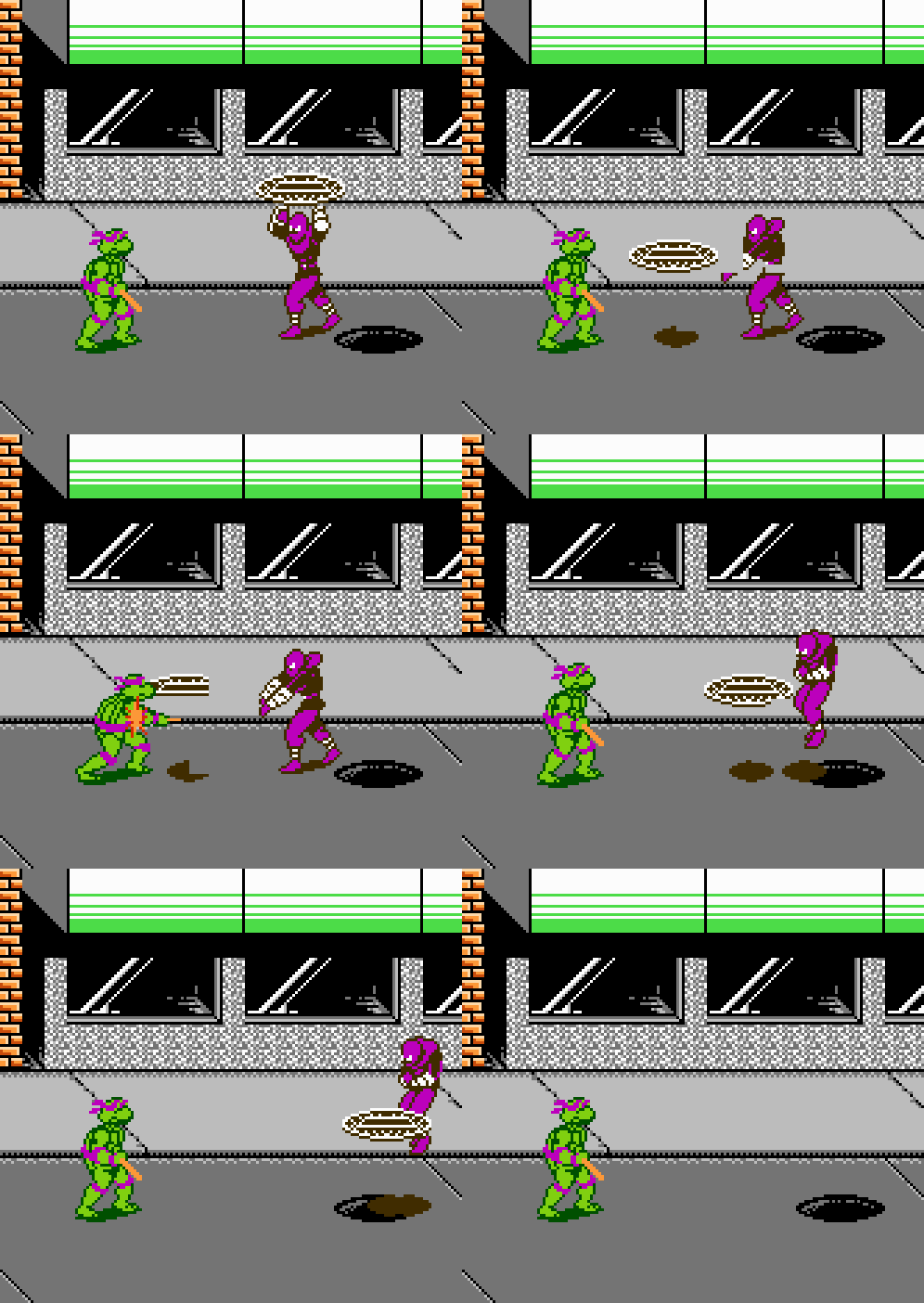
This successful endeavor led to the expansion of the franchise into the world of video games, including a series of popular beat-’em-up games by Japanese developer Konami which had the rare distinction of being a series of licensed games which were both commercially successful and well-respected in the gamer community, with some of their most popular games being the 1989 arcade game Teenage Mutant Ninja Turtles, the 1991 NES game Teenage Mutant Ninja Turtles III: The Manhattan Project and the 1991 arcade game Teenage Mutant Ninja Turtles: Turtles in Time, ported to the Super NES in 1992 and becoming one of that console’s best games. Most recently the 2022 game Teenage Mutant Ninja Turtles: Shredder’s Revenge developed by Tribute Games continued the tradition of great Ninja Turtles beat-’em-ups.

This popularity also led to a live-action film trilogy in the nineties featuring performers in rubber suits created by Jim Henson’s Creature Shop, including the commercially successful Teenage Mutant Ninja Turtles (1990) in which the Turtles go on a quest to save Splinter, the slightly less commercially successful Teenage Mutant Ninja Turtles II: The Secret of the Ooze (1991) which sheds more light on the backstory of the Turtles, and the even less commercially successful Teenage Mutant Ninja Turtles III (1993) in which the Turtles go back in time to feudal Japan. Critics were not big on any of these, but they continue to have their passionate fans to this day.


After this came various TV shows and movies which all have various degrees of commercial and artistic success.
There was a two-episode Japanese OVA subtitled Legend of the Supermutants which came out in 1996, was largely based on the American animated TV series and featured the Turtles obtaining super powers.

There was the short-lived live-action TV series Ninja Turtles: The Next Mutation from the same producers as Power Rangers which aired on Fox Kids from 1997 to 1998 and became known for introducing a female Ninja Turtle named Venus.

There was a second animated TV series which aired for 7 seasons from 2003 to 2009 on FOX’s Saturday morning block FoxBox and later 4KidsTV. That series went through various settings and art styles through its lifetime and it culminated in the 2009 TV movie Turtles Forever, which featured an amusing crossover between the Turtles of that series and the Turtles of the original animated series.

There was a computer-animated movie in 2007 called TMNT which was written and directed by Kevin Munroe and produced by Imagi Animation Studios.

Following the sale of the Ninja Turtles franchise to Viacom in 2009, there came an entertaining and stylish computer-animated TV series which ran on Nickelodeon for 5 seasons from 2012 to 2017.

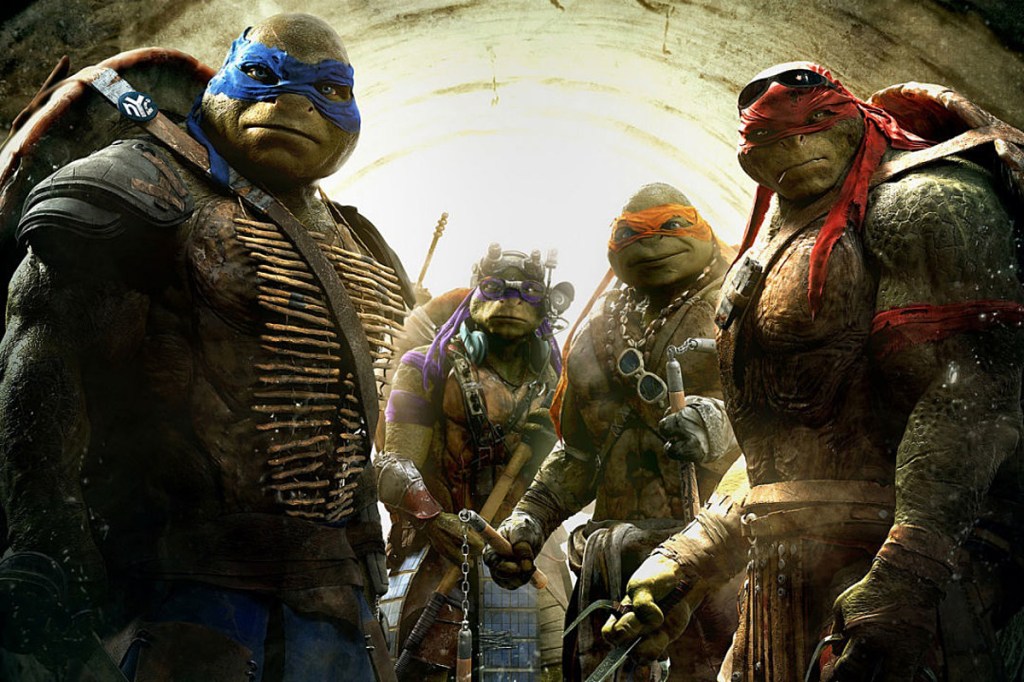
In 2014 there was a live-action film produced by Michael Bay and directed by Jonathan Liebesman which got mostly negative reviews followed by a 2017 sequel subtitled Out of the Shadows directed by Dave Green which also got negative reviews but unlike the 2014 film failed to break even at the box office.
Nickelodeon also made another visually striking animated series called Rise of the Teenage Mutant Ninja Turtles, this one in 2D. It ran for 2 seasons from 2018 to 2020 and led to a 2022 feature film released on Netflix which served as the series finale. I found this show to be the funniest, best animated and most creative of all the Ninja Turtles TV adaptations.

Their latest screen adaptation is Teenage Mutant Ninja Turtles: Mutant Mayhem (2023) which is directed by The Mitchells vs. The Machines co-director Jeff Rowe, produced by Seth Rogen and Evan Goldberg’s Point Grey and has received enthusiastic reviews for its unique visual style, heartfelt story, authentic representation of teenagers and the way it captures all the franchise’s most appealing aspects, with several film critics even calling it the Turtles’ best film. Plus a 2D-animated spin-off TV series called Tales of the Teenage Mutant Ninja Turtles is reportedly in the works for Paramount+ with Point Grey returning to produce.

I was an early Ninja Turtles fan. The Teenage Mutant Ninja Turtles TV series from the eighties was one of the shows my family loved (plus we had a lot of Ninja Turtle action figures in our toy box) and the franchise has surprisingly never really lost its appeal for me since those days. In fact the longer the Turtles hang around, the more talented the people who try their hand at adapting the series for modern audiences. The latest film Mutant Mayhem is even the first time the teenage characters at the center of the series were voiced by actual teenagers. So no, I have not grown out of my Turtle fever, because the series continues to surprise me all the time. After nearly four decades, I have to say the pizza is still hot.
 Entertainment Junkie Blog