

Sterling Holloway was a man who did it all in Hollywood. He was a regular on stage, film, radio and television throughout the 20th century. But he enjoyed doing voices for animation the most because it kept him in touch with his inner child, and the films he made with Disney are by far his most widely known body of work, voicing a number of popular characters, some of whom continue to be popular to this day. He was even the first voice actor to be made an honorary Disney Legend, which shows how great his legacy is.
Before working for Disney, Holloway got his start moving from Cedartown, Georgia to New York City as a teenager to study drama, shortly thereafter getting small roles in theatre, including the revue and early Richard Rodgers success The Garrick Gaities in the 1920s, in which he was the singer who first introduced the world to the popular song “Manhattan,” which has been covered by many other artists since, including the Supremes and Ella Fitzgerald, as well as being covered in a number of films and television shows. That decade Holloway moved to Hollywood and began a long and successful career in the movies, especially in comedies. A genre Holloway was naturally gifted at thanks to his expert timing, his first film being a slapstick two-reeler called The Battling Kangaroo (1926), and since then he has acted regularly from the 1930s to the 1970s, working with such highly regarded directors as Frank Capra, Josef von Sternberg, George Cukor, Mervyn LeRoy, Ernst Lubitsch and Stanley Kramer, and appearing in classics from Gold Diggers of 1933 to It’s a Mad, Mad, Mad, Mad World.
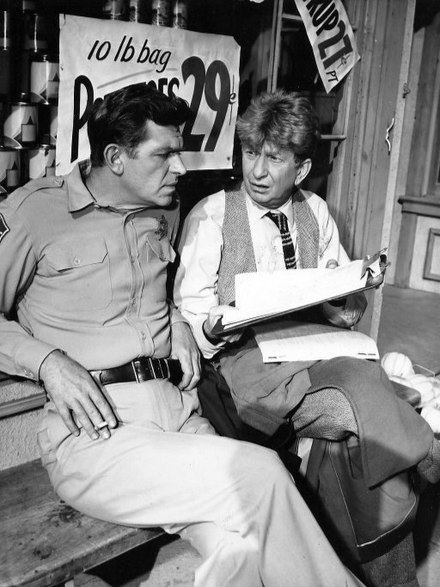
Holloway also had prominence on radio, becoming a voice celebrity with his distinctive way of speaking on such programs as Fibber McGee and Molly, as well as on television series like Adventures of Superman for which he played an eccentric inventor and The Life of Riley for which he had a recurring role as Waldo Binny, plus guest roles on The Adventures of Ozzie and Harriet, The Untouchables, The Andy Griffith Show and The Twilight Zone to name a few.


But Disney fans will recognize his voice instantly because Holloway had been providing it for many Disney films ever since the 1940s, spending an equal amount of time both voicing animated characters and narrating animated films. Walt Disney originally considered hiring Holloway to voice Sleepy in Snow White and the Seven Dwarfs, but he went with Pinto Colvig instead. Holloway’s first major voice role for a Disney film would end up being Mr. Stork in Dumbo (1941), a small but crucial role that he knocked out of the park with his signature sincere but funny acting style, and the Disney artists even made the character a subtle Holloway caricature.

Disney would bring Holloway back to voice Flower as an adult in Bambi (1942), but once Disney started focusing on package features in the forties due to the financial struggles of the War years, Holloway started being used more prominently as a narrator, beginning with The Three Caballeros (1944), for which “Professor” Holloway narrated the segment “The Cold-Blooded Penguin” about a penguin named Pablo who leaves the South Pole to enjoy the warmer climate of South America. Holloway would also provide narration for the “Peter and the Wolf” segment of Make Mine Music (1946) followed by regular jobs narrating Disney short films including Lambert the Sheepish Lion, Susie the Little Blue Coupe and The Little House, all released in 1952, as well as narrating the Fun and Fancy Free segment “Mickey and the Beanstalk” when that segment re-aired on television as part of the Disney anthology series in 1955, and narrating Woolie Reitherman and Bill Peet’s animated short Goliath II (1960) which told the story of a miniscule elephant who struggles to earn the respect of his herd and was also the first Disney film to be animated using the Xerox process rather than hand-inking (pre-dating One Hundred and One Dalmatians by a year).


But Holloway continued voicing animated characters in the fifties, sixties and seventies as well.
The Cheshire Cat from Alice in Wonderland (1951) is not only one of my favorite Sterling Holloway roles but also one of my favorite animated characters of all time because you can’t really tell what his agenda is or even if he has an agenda at all. He could be the smartest character in the movie or the most insane character in the movie, and Holloway captures his mysterious nature well with a vocal performance that comes off at various times clownish, sinister and stupefyingly mad.

Holloway could do equally well voicing more straight and sincere characters, such as in the Oscar-nominated 1953 film Ben and Me, for which Holloway voices a mouse named Amos who befriends Benjamin Franklin in the 1700s and contributes to much of Franklin’s success, including the invention of bifocals, the founding of the Pennsylvania Gazette and Franklin’s experiments with electricity.

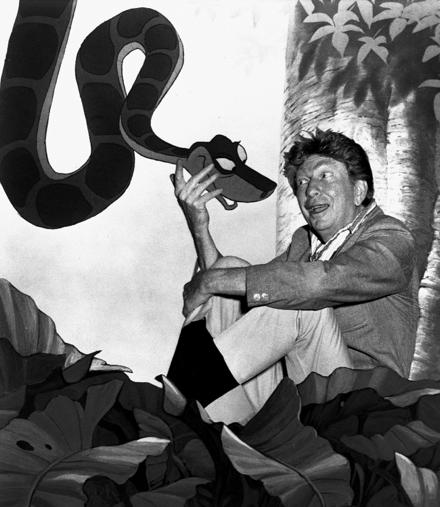
Kaa from The Jungle Book (1967) was Holloway’s first truly villainous role and while the hapless python had his comical moments, Holloway once again brought out his sinister side with aplomb giving an understated and very snake-like performance.

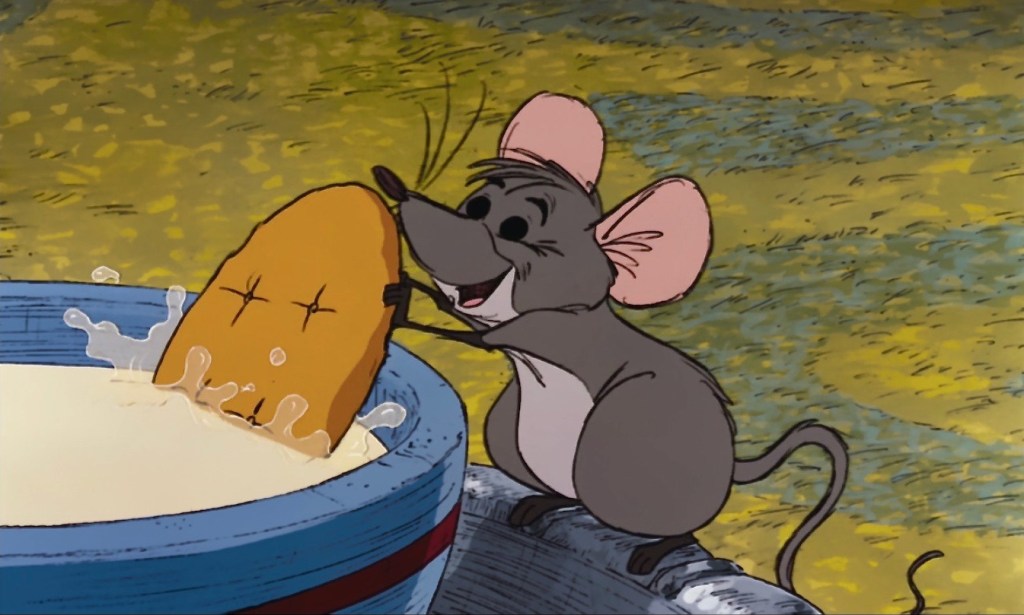
Roquefort from The Aristocats (1970), an underrated character in the world of Disney sidekicks, was the second mouse Holloway voiced for the studio, an apparent challenge for Holloway who said it was hard to voice a mouse without sounding like Mickey, but it brought him back full circle to what he has always been great at: small but critical supporting roles.
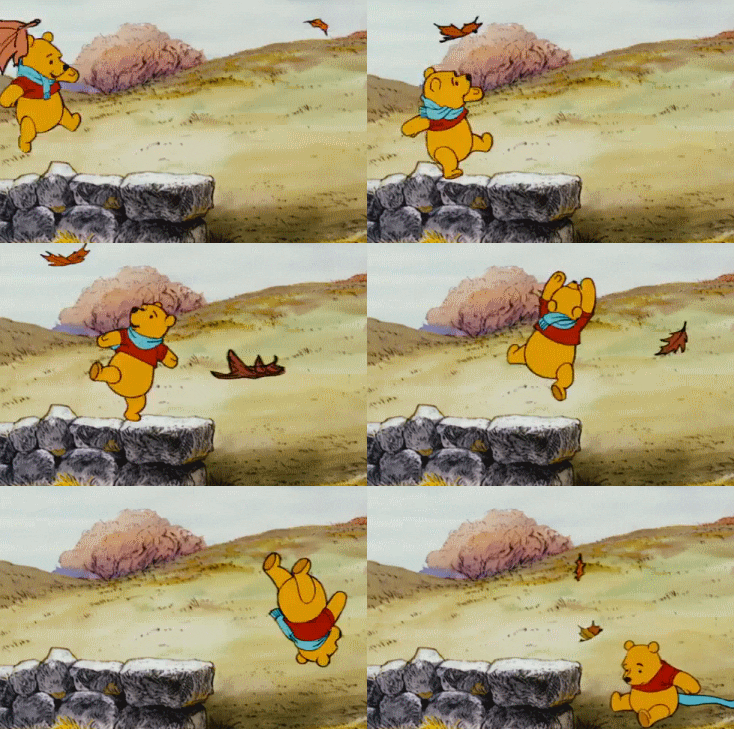
The final animated character Holloway voiced for Disney was his most famous. Holloway was the first voice actor to bring Disney’s version of Winnie the Pooh to life in all three of the featurettes that would go on to make up the feature film The Many Adventures of Winnie the Pooh (1977), as well in the bridging sequences for that film. Holloway brought a memorably silly yet earnest vocal performance to the character and it remains the biggest highlight of his career. Holloway set a clear blueprint for future Pooh voice actors like Hal Smith and Jim Cummings who have basically helped Pooh remain a charming screen star to this day by summoning Sterling Holloway’s charm.

When Disney released the animated television series The New Adventures of Winnie the Pooh in 1988, you may recall that Paul Winchell reprised his role as Tigger, but you may not know that Sterling Holloway was also approached to return as Pooh. But it turned out Holloway was too old to perform the character in the same way, so Jim Cummings was hired instead. A few years after that series premiered, however, they made it up to Holloway by honoring him as a Disney Legend.
Sterling Holloway died shortly after in 1992 at the age of 87.
 Entertainment Junkie Blog